

 Highlights
 Sample Itineraries
 See & Do
 Experience
 Events
 Plan a Trip
 Transport
 Local Life in Fukuoka City



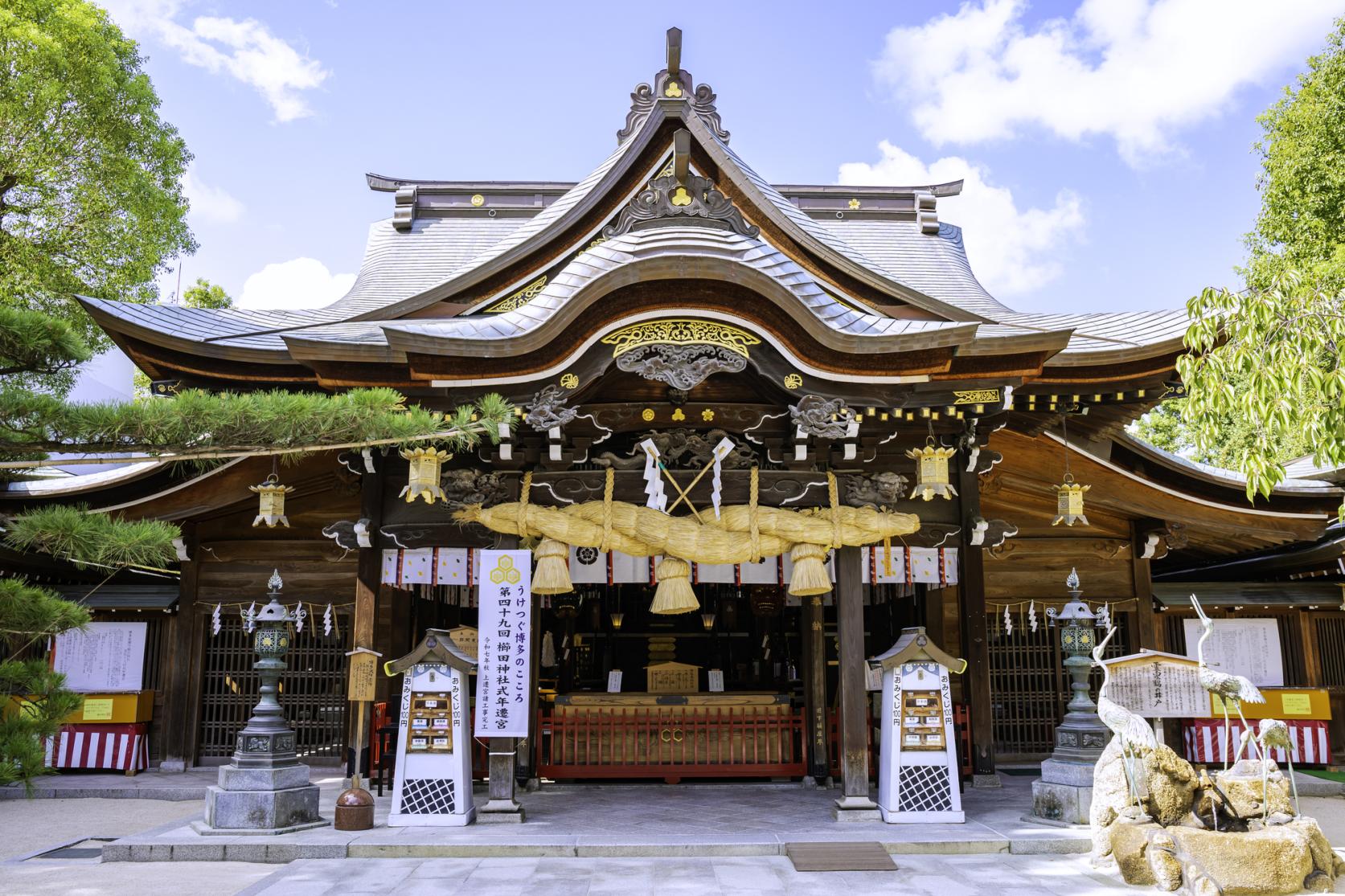
What is Kushida Shrine, the guardian shrine of Hakata? A comprehensive guide to highlights, goshuin, and access information
Kushida Shrine has continued serving as Hakata's guardian shrine for more than 1,250 years. Affectionately known locally as “Okushida-san,” it welcomes many visitors and worshippers during New Year. It is also renowned as the site dedicated to the Hakata Gion Yamakasa festival, a summer tradition of Hakata. There are numerous highlights on the shrine's premises that offer an experience of Hakata's history and traditional culture! This section introduces the charms of Kushida Shrine.
What is Kushida Shrine, the guardian shrine of Hakata?
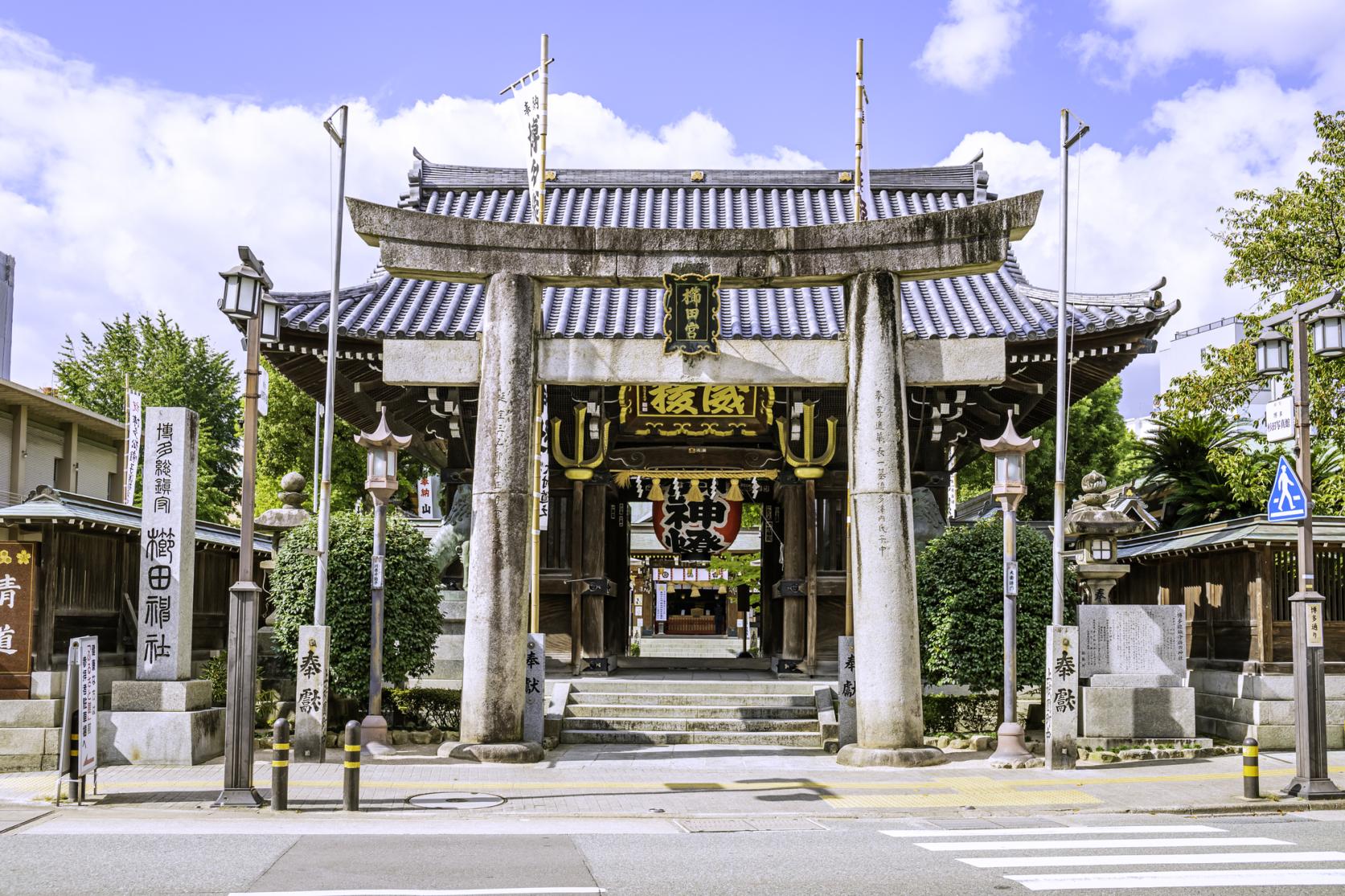
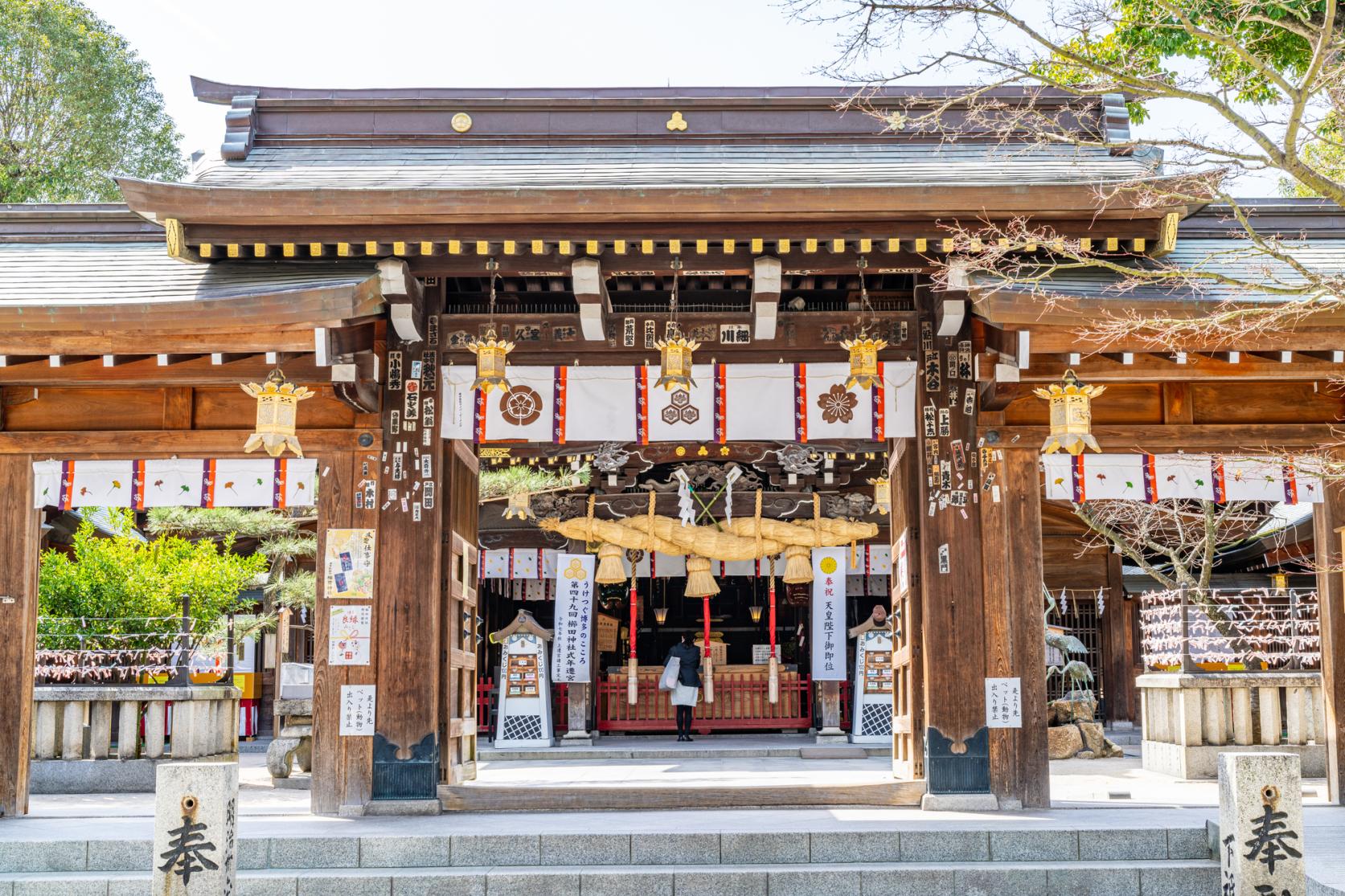
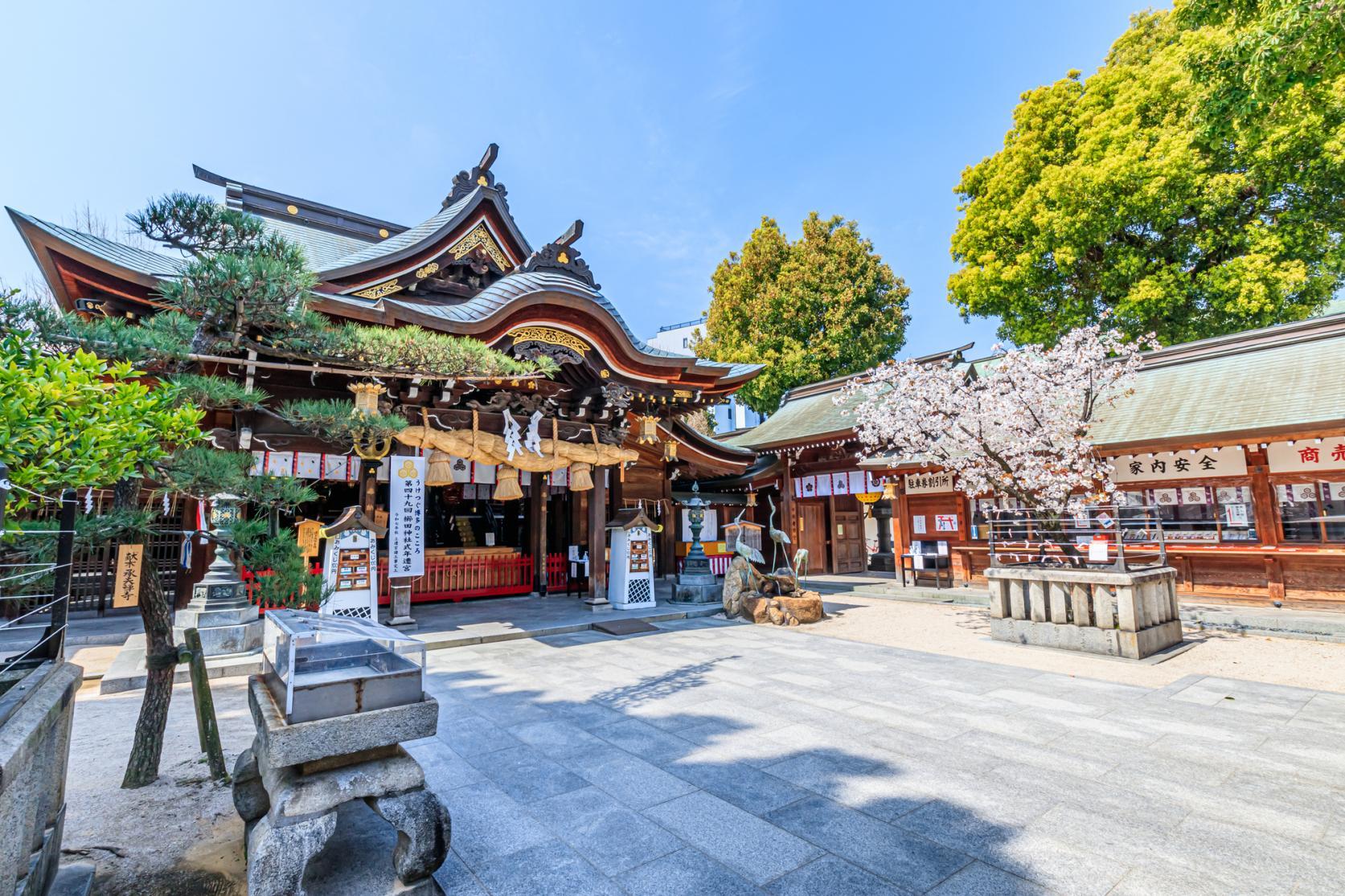
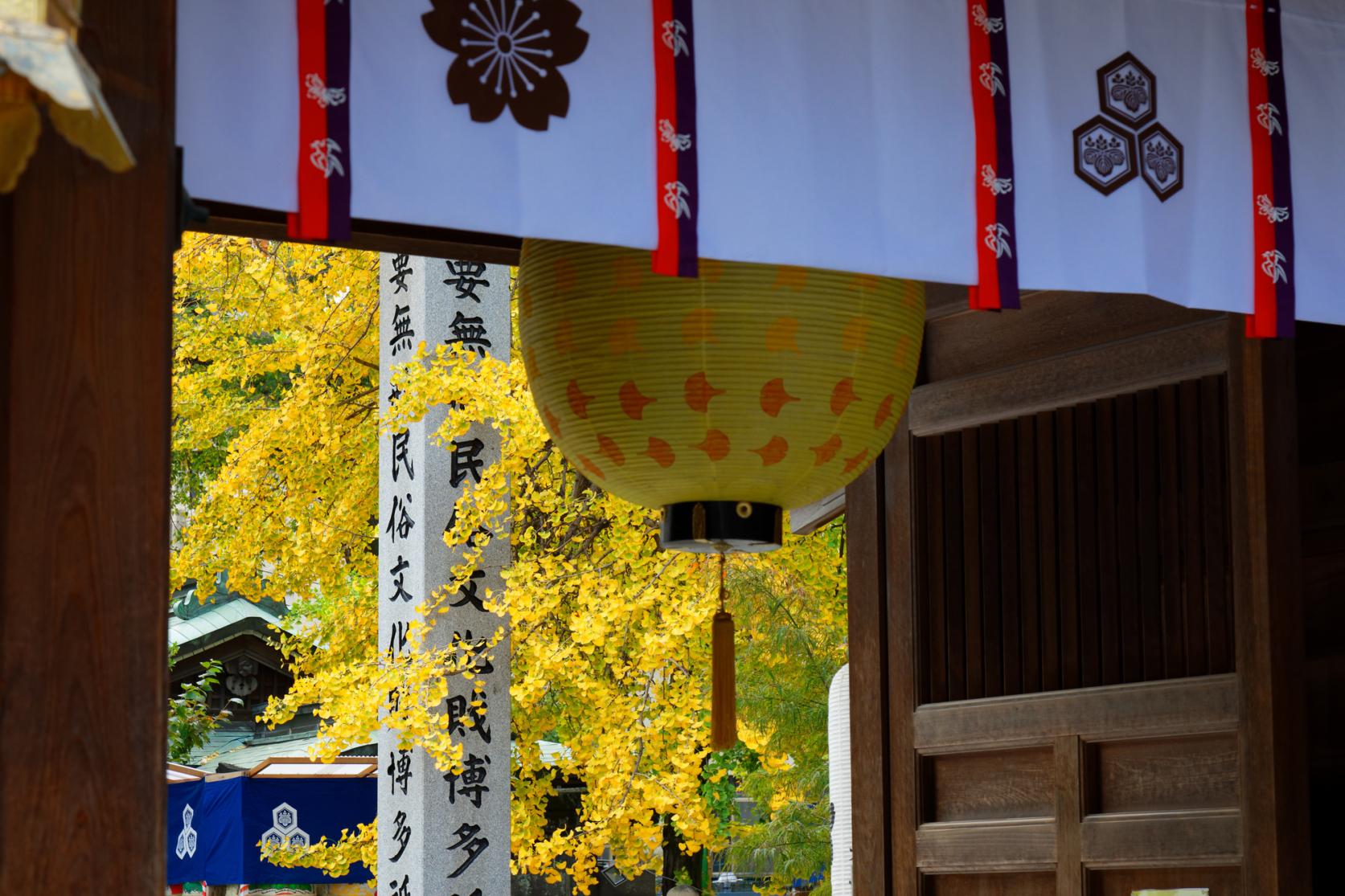
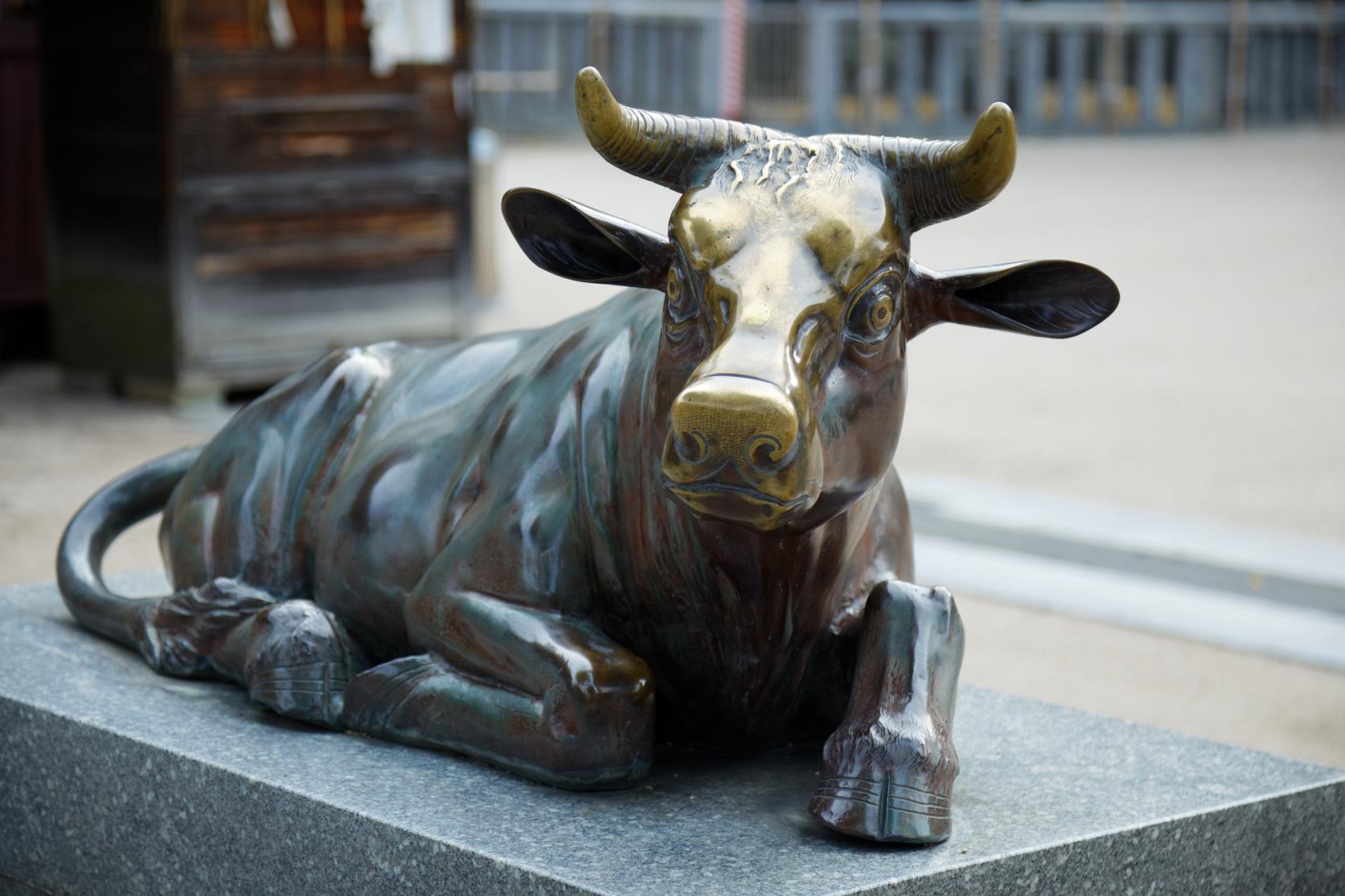
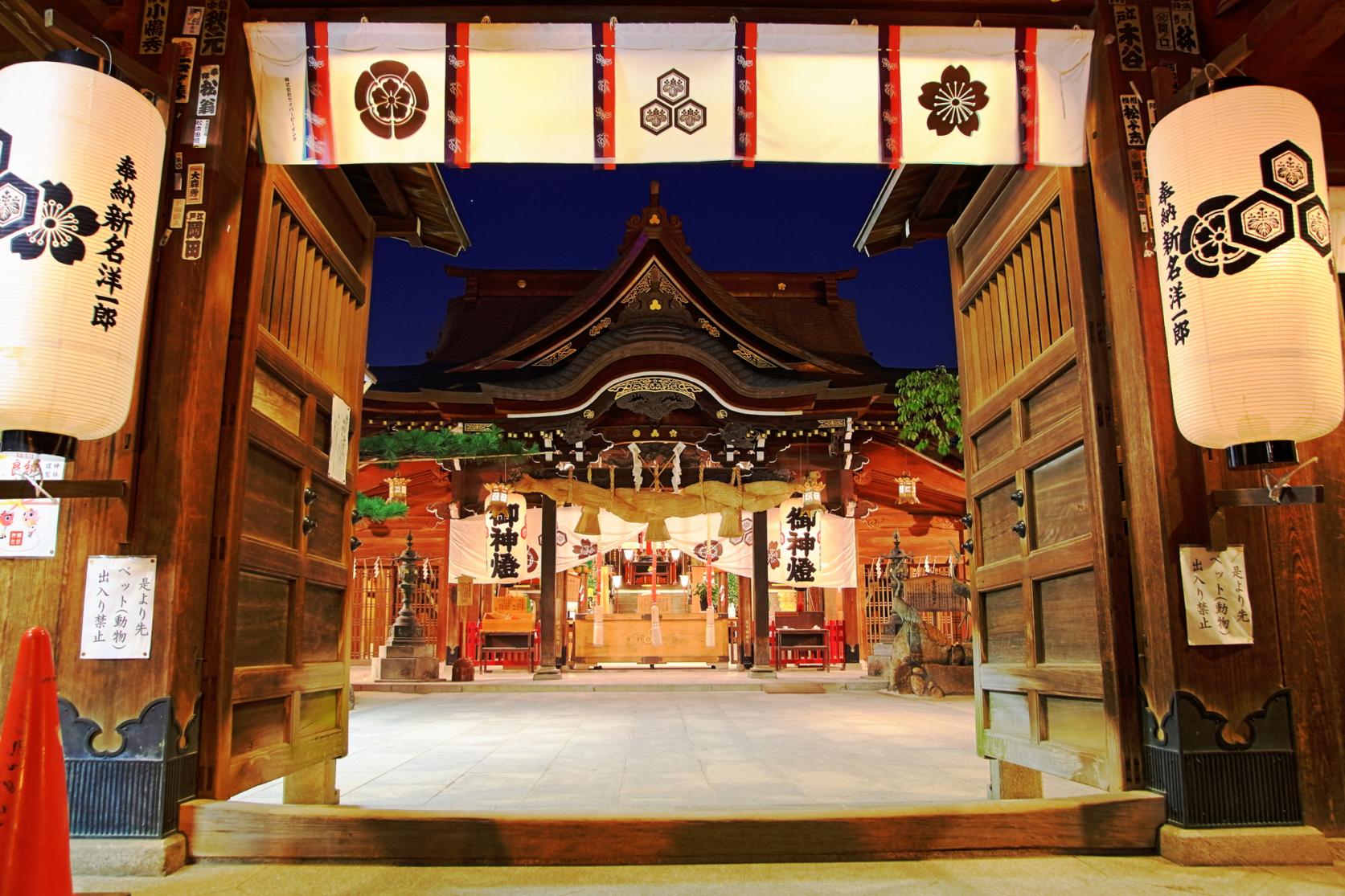
Kushida Shrine sits in the heart of Fukuoka City. According to legend, it was founded in 757 with the transfer of the deity from Ise Matsusaka's Kushida Shrine, making it the oldest guardian deity of Hakata. Although it was destroyed once by war, the majestic shrine buildings that stand today were erected in 1587 under the instruction of Toyotomi Hideyoshi, during the reconstruction of Hakata.
The shrine is also renowned for playing host to the Hakata Gion Yamakasa festival, one of Hakata's three major festivals that takes place every July. It has long been at the heart of Hakata's festival culture and continues to uphold this tradition today.
The three deities enshrined there, and their blessings
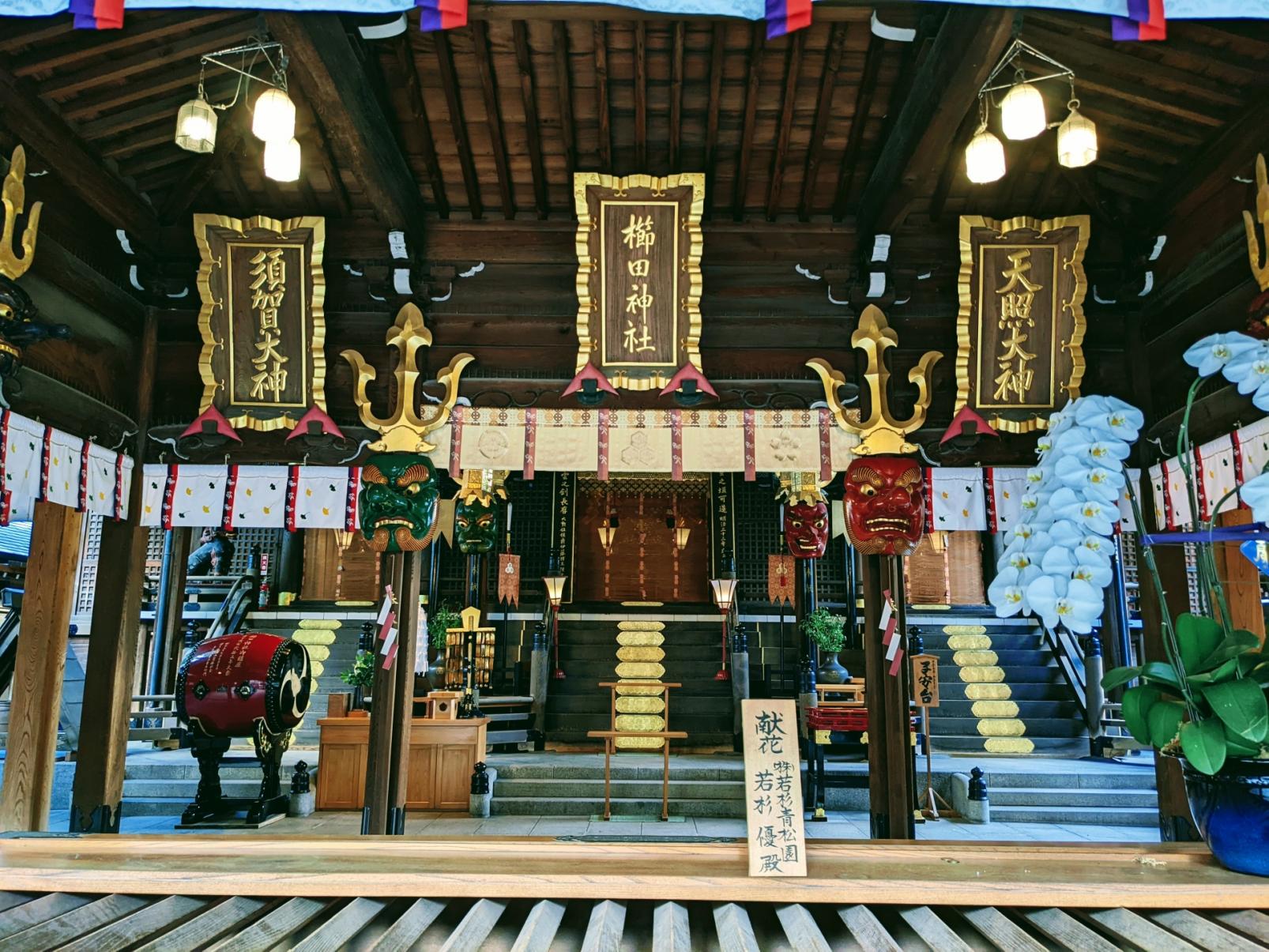
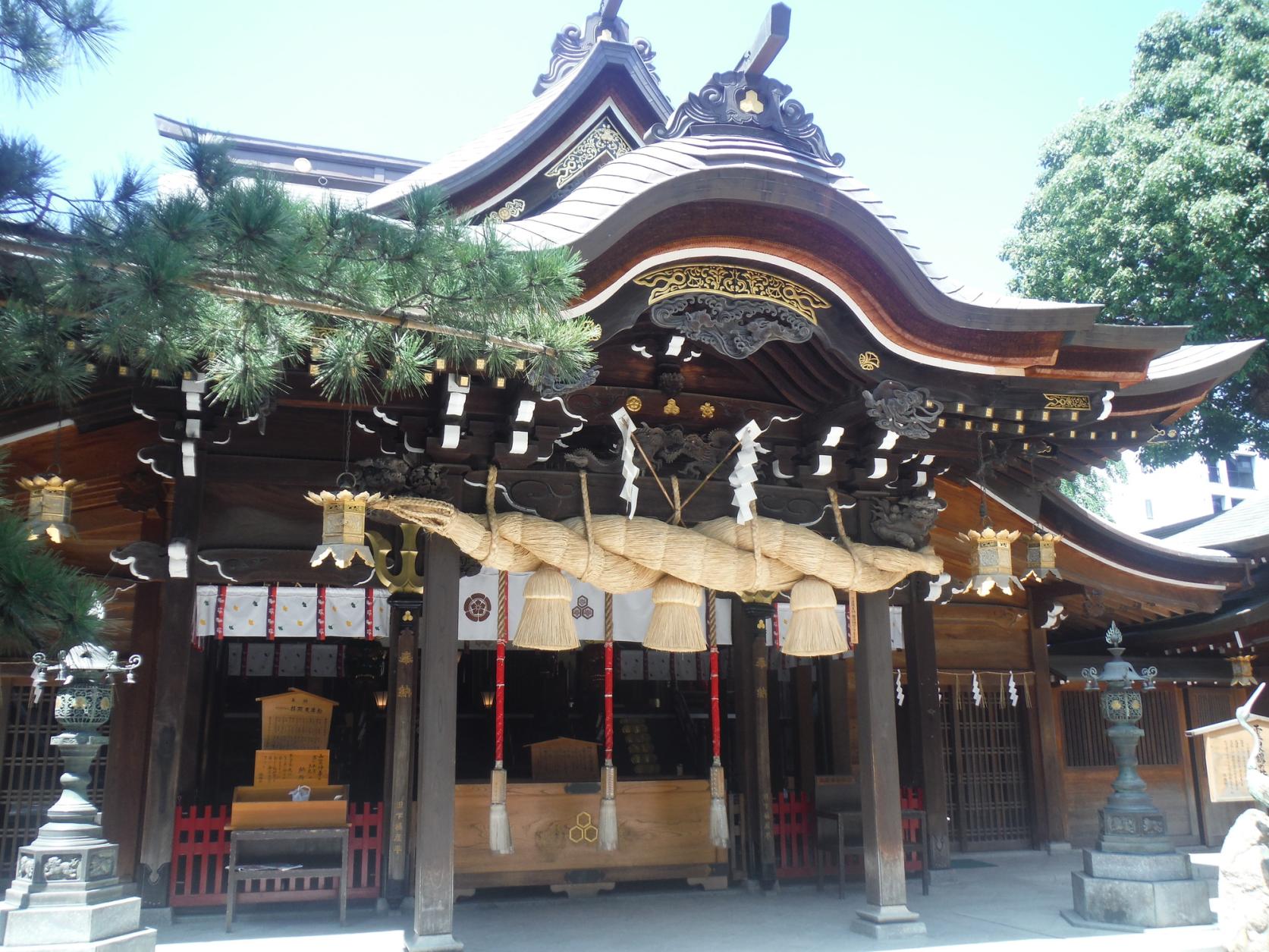
Kushida Shrine enshrines three deities, and three bells are arranged in a row in the worship hall. The central main hall, Kushida-gu enshrines Ohatanushi-no-Mikoto; the left hall, Ogami-gu, enshrines Amaterasu Omikami; the right hall, Gion-gu, enshrines Susanoo-no-Mikoto. Each hall embodies distinct divine virtues and roles, offering diverse blessings such as business prosperity, longevity, matchmaking, and good fortune along with protection from evil. Many people visit to worship and pay their respects.
Column
A powerful spiritual spot only for those in the know: Meoto Ebisu Shrine
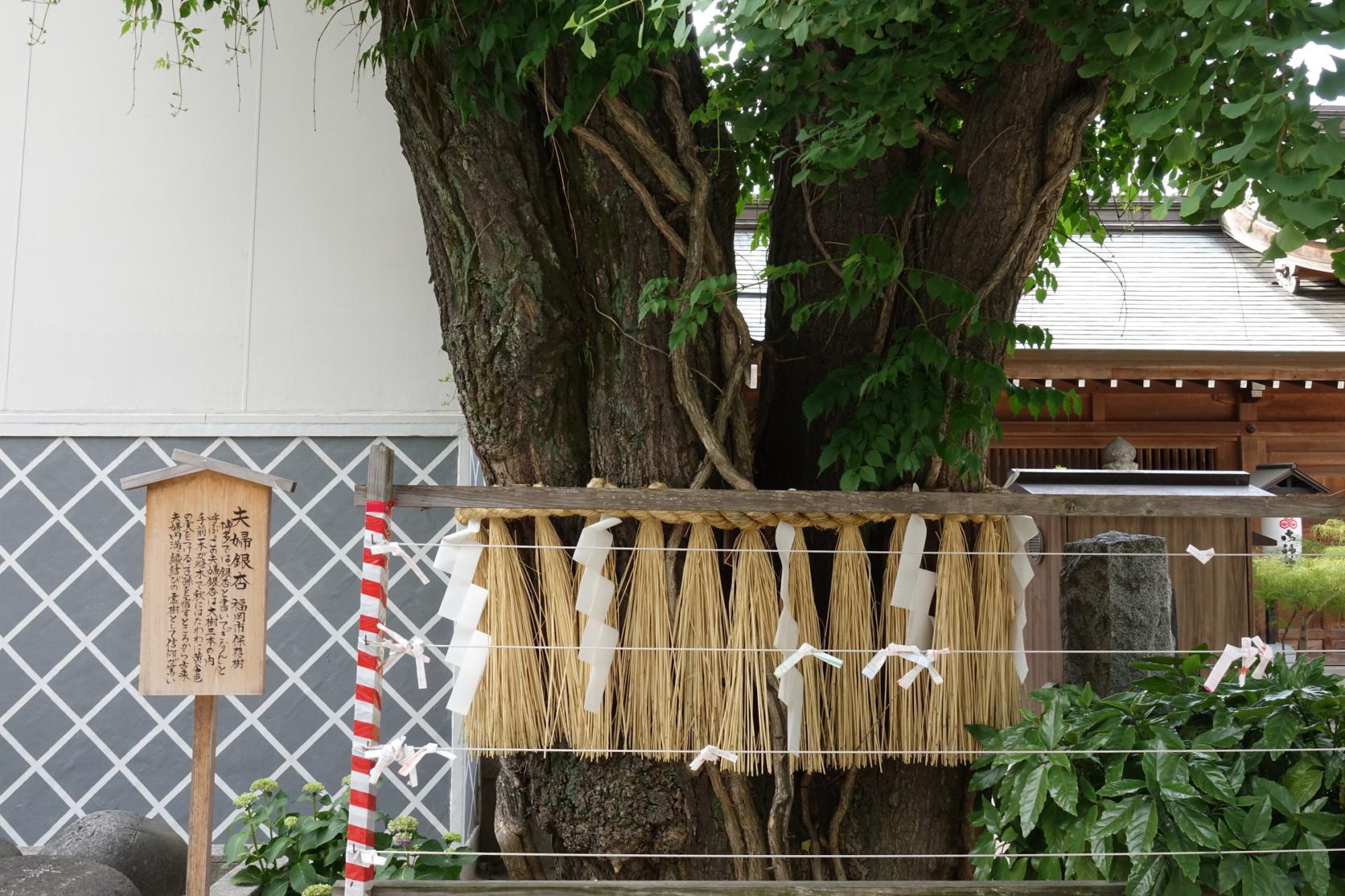
Meoto Ebisu Shrine, situated within the precincts, is a rare shrine in Japan that enshrines a pair of male and female Ebisu deities. It is said to grant blessings for bountiful catches, business prosperity, and marital harmony. Opposite the worship hall stands a sacred tree called the "Meoto Ginan" (“Couple Ginkgo”). It is laden with abundant fruit in autumn, making it revered as a symbol of the prosperity of descendants. Every October, a unique ritual called “Ginan Otoshi” (making the ginkgo nuts fall) is performed, where participants shake the branches with bamboo poles to make the nuts fall from the tree.
Majestic two-storied gate that welcomes visitors with its magnificent style
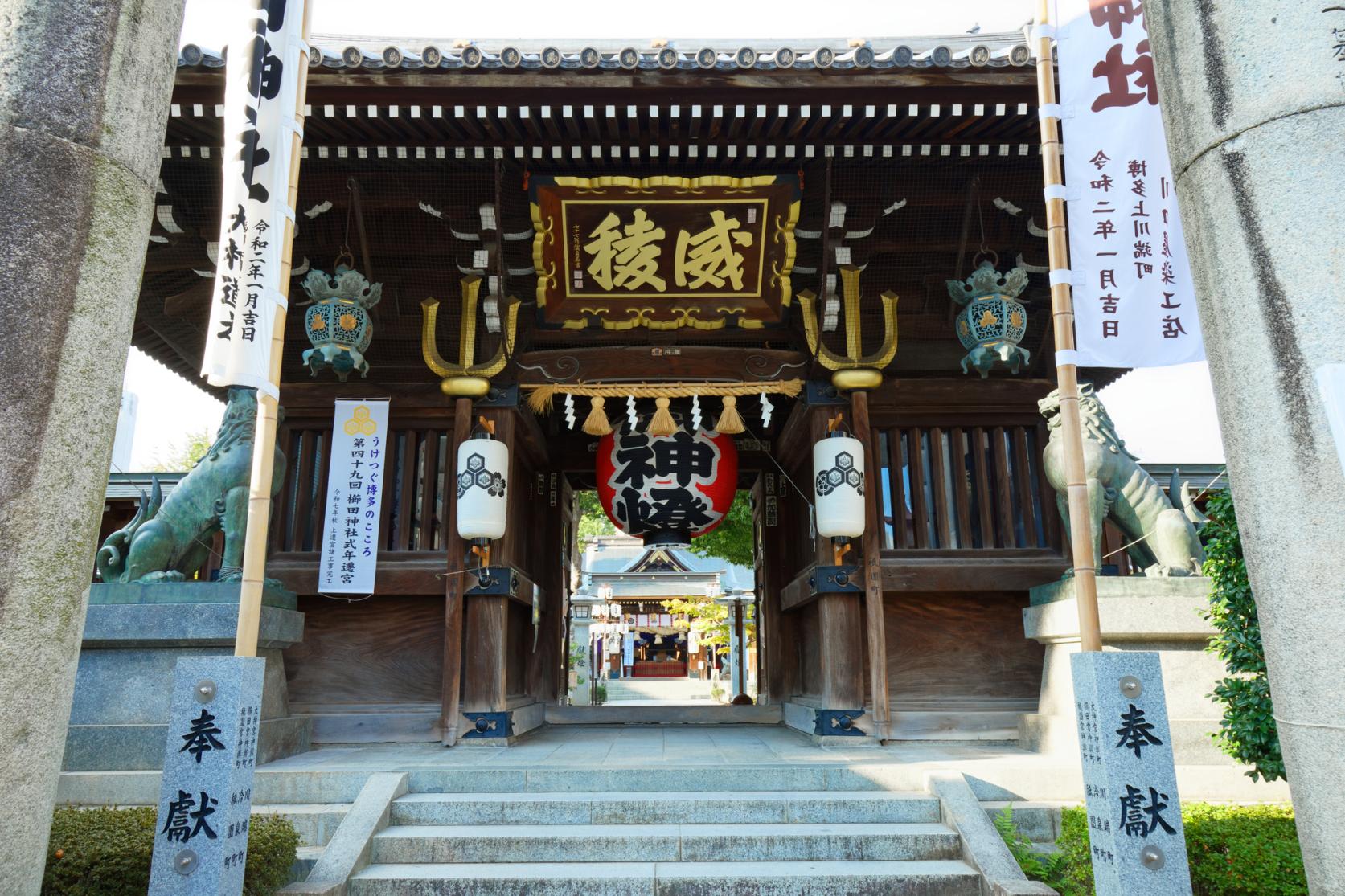
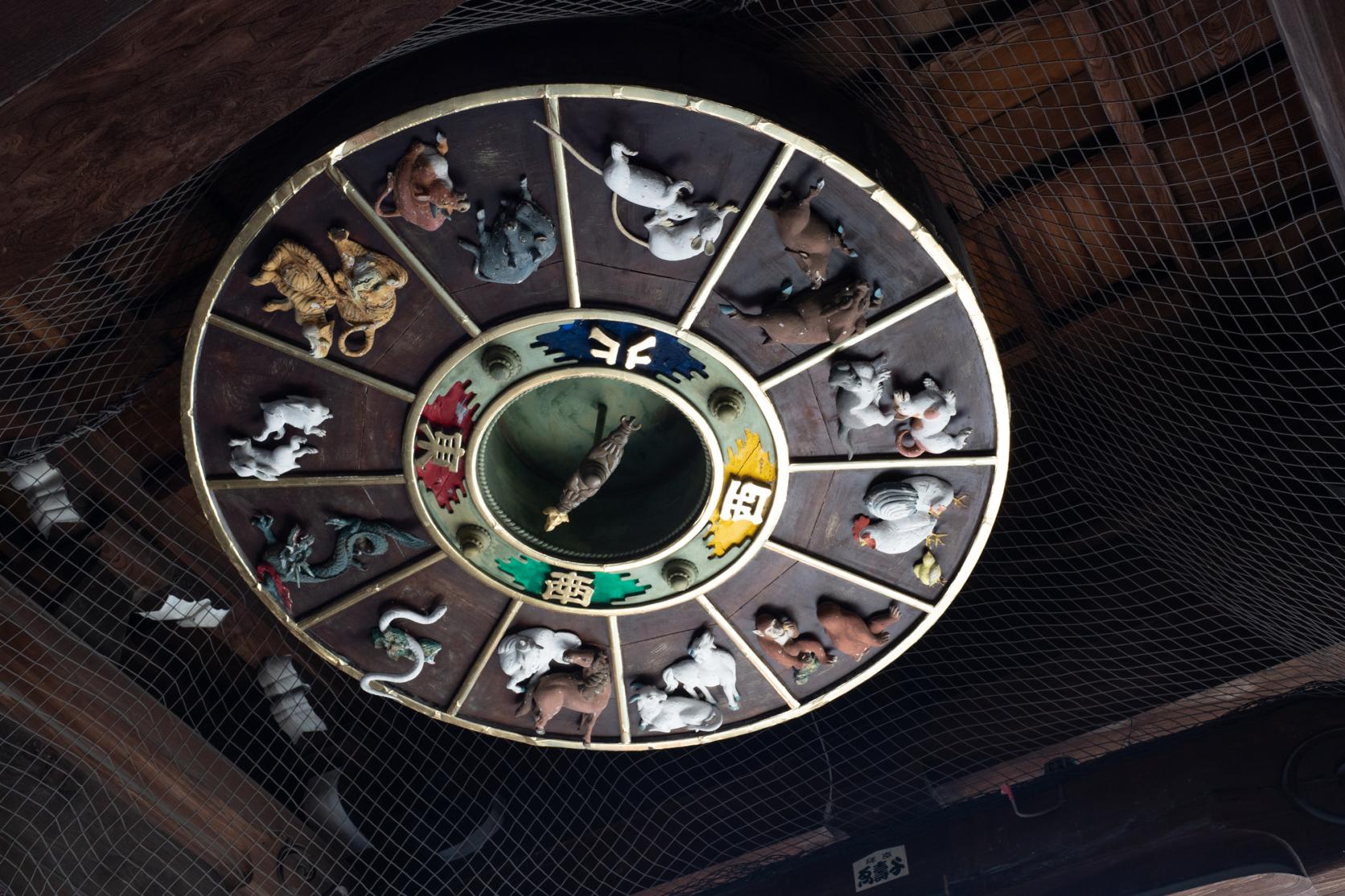
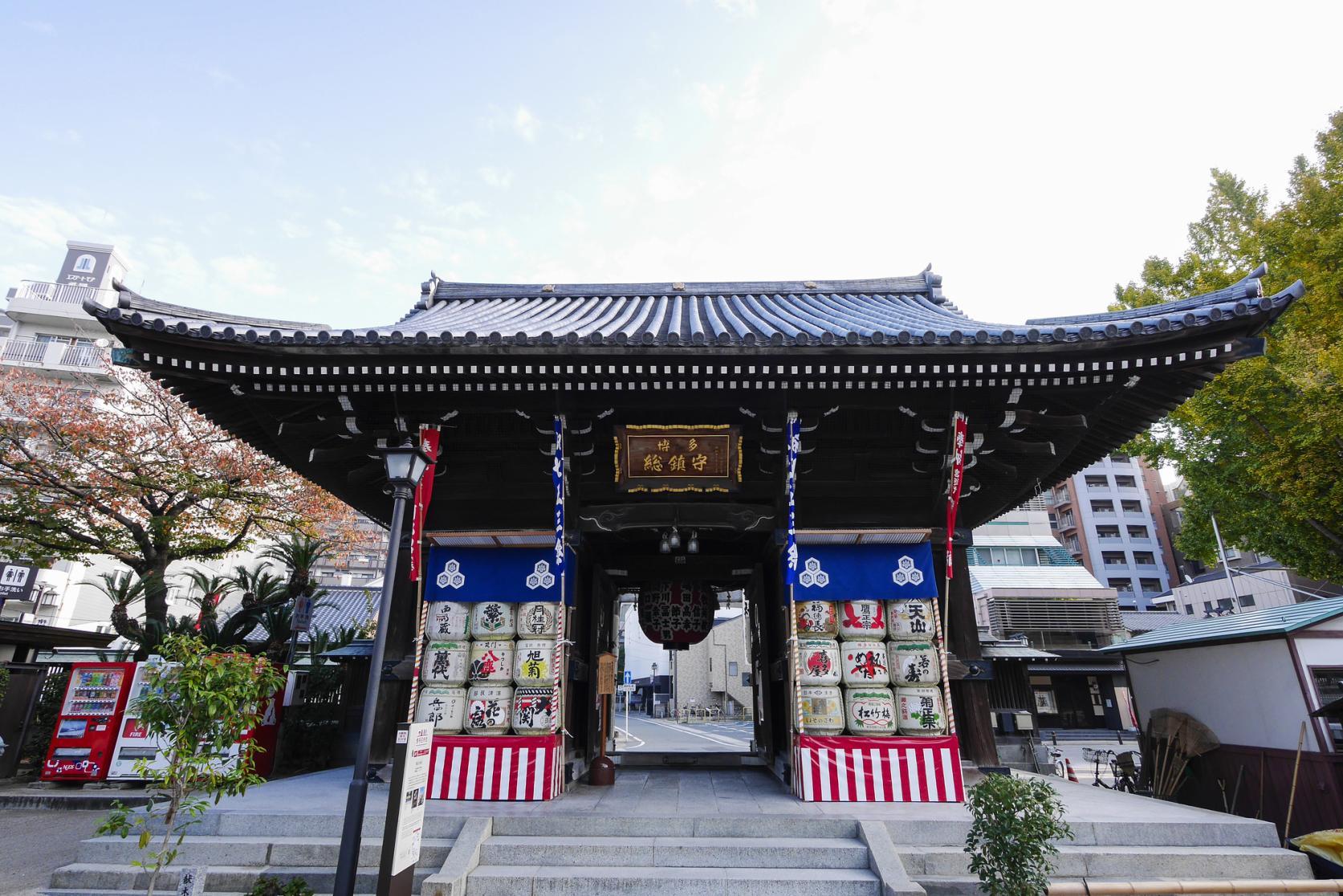
When passing through the two-storied main gate, pause for a moment and look up. Hanging from the ceiling is a vibrantly colored “Eto Eho Ban” (a picture disc featuring the 12 animals of the zodiac, indicating the direction of good fortune) crafted by an artisan specializing in Hakata dolls. The inner circle of the disc shows the cardinal directions, while the outer ring is inscribed with the twelve zodiac animals. A central arrow points to the direction that brings good fortune for the year. On New Year's Eve every year, the arrow is rotated to show the direction of good fortune for the coming year, so look toward that direction and make a wish for good luck throughout the year.
"Kushida no Ginan" (Kushida's ginkgo), a natural monument designated by the prefecture
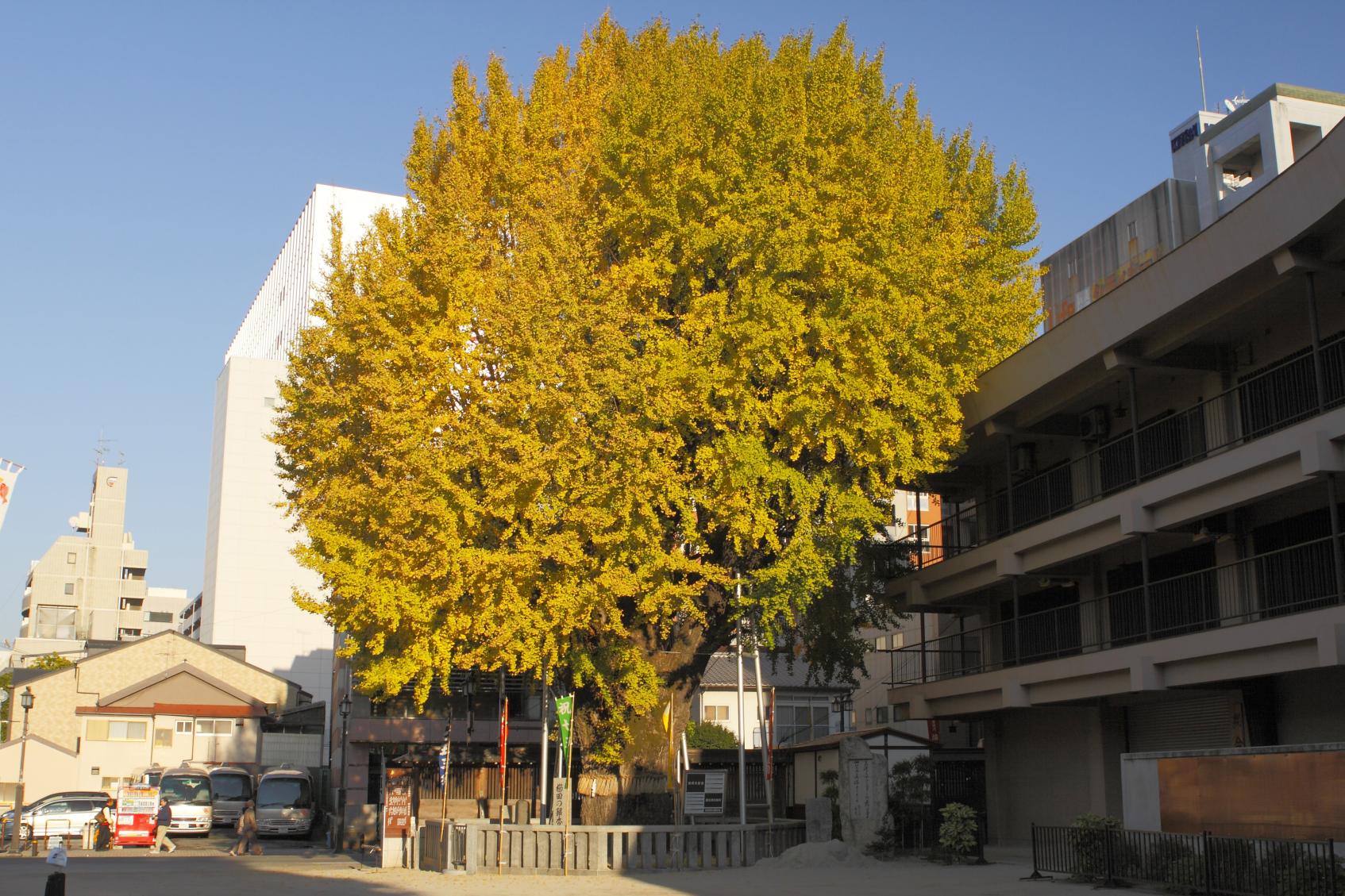
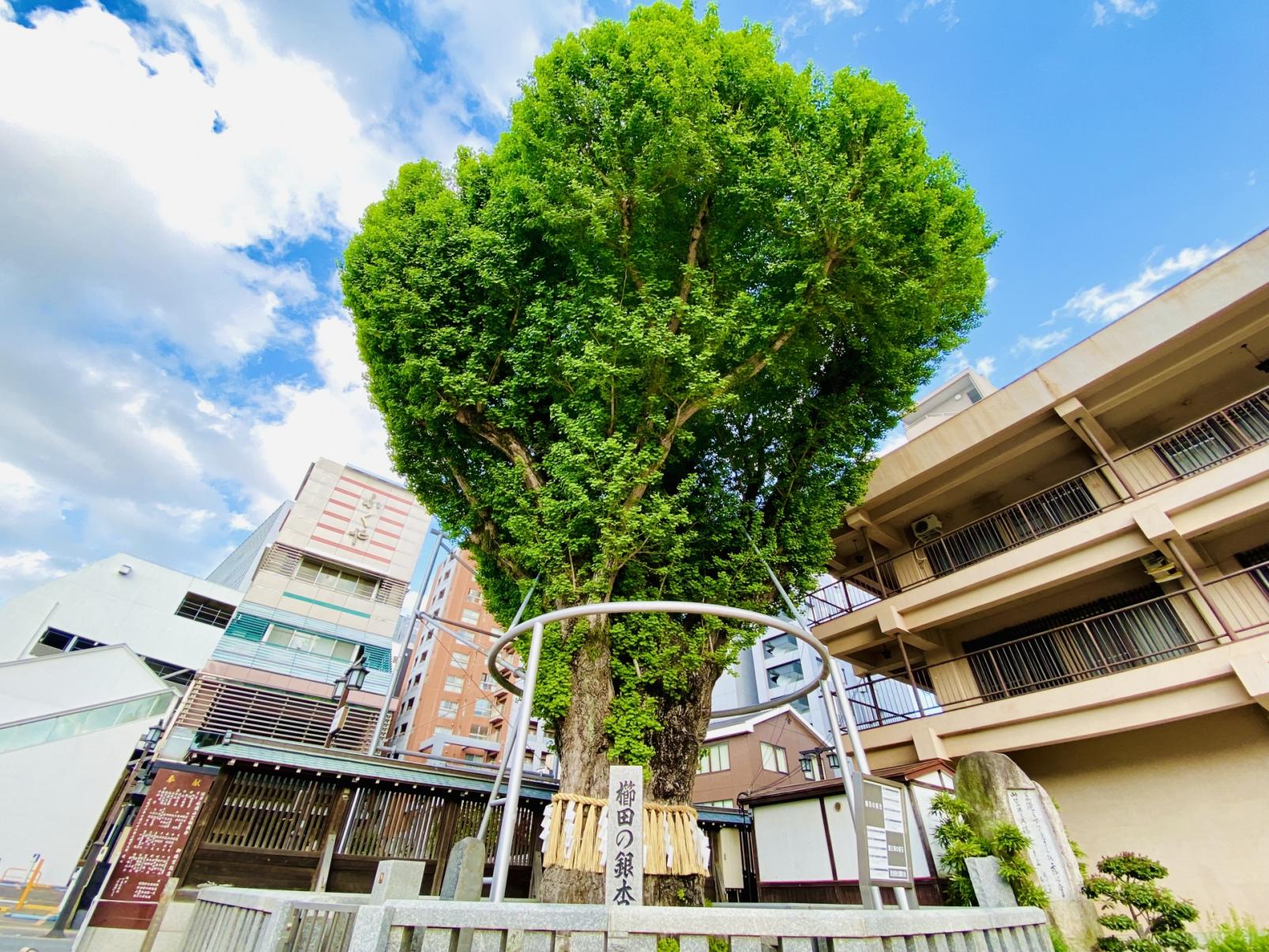
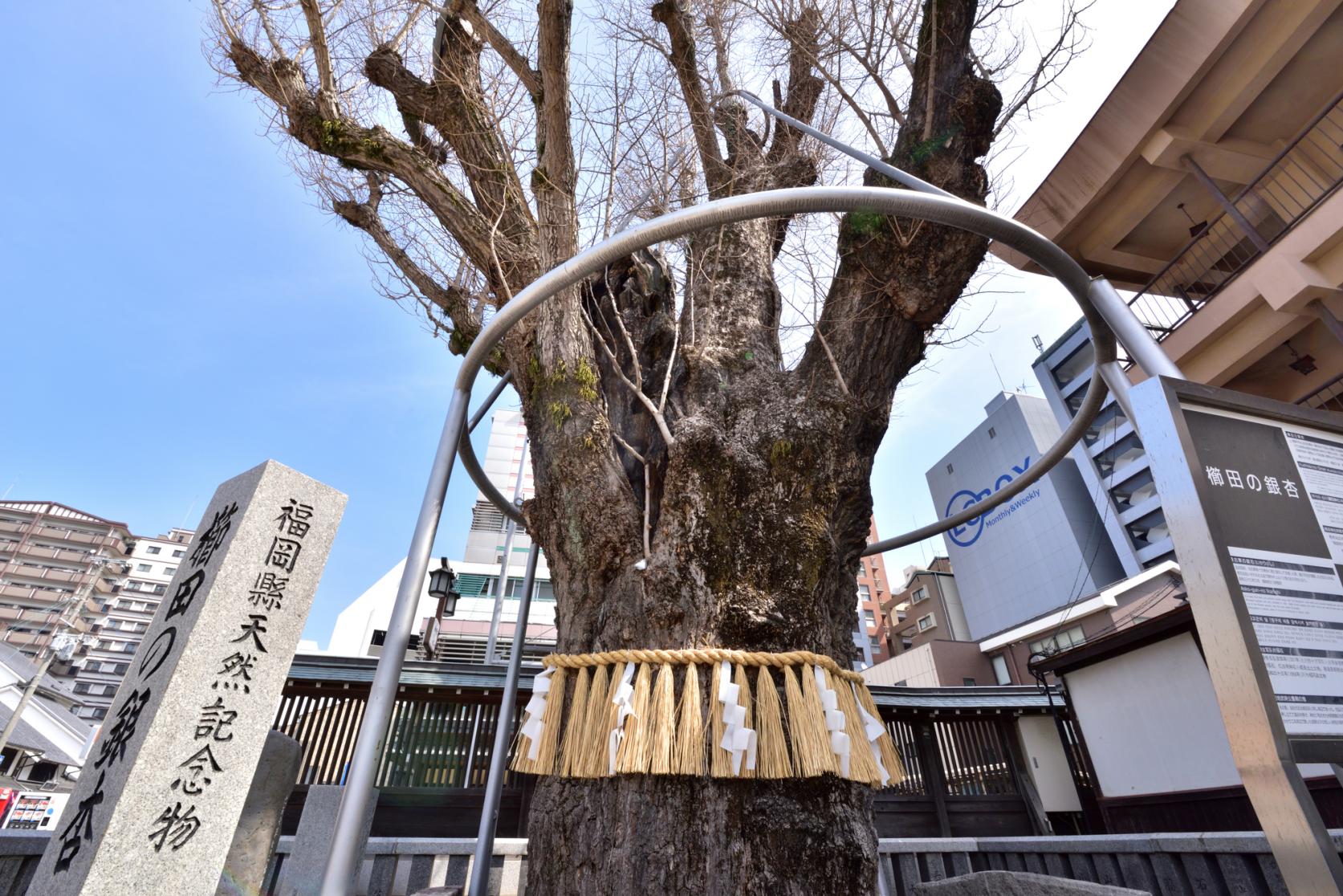
Towering beside the two-storied gate is "Kushida no Ginan" (Kushida's ginkgo), a massive Japanese ginkgo tree. This sacred tree, said to be over a thousand years old, has been revered as a symbol of longevity since ancient times. As autumn deepens, the fallen leaves form a golden carpet across the shrine grounds. This beautiful sight is also one of the shrine's highlights.
Gorgeous and resplendent kazariyama floats
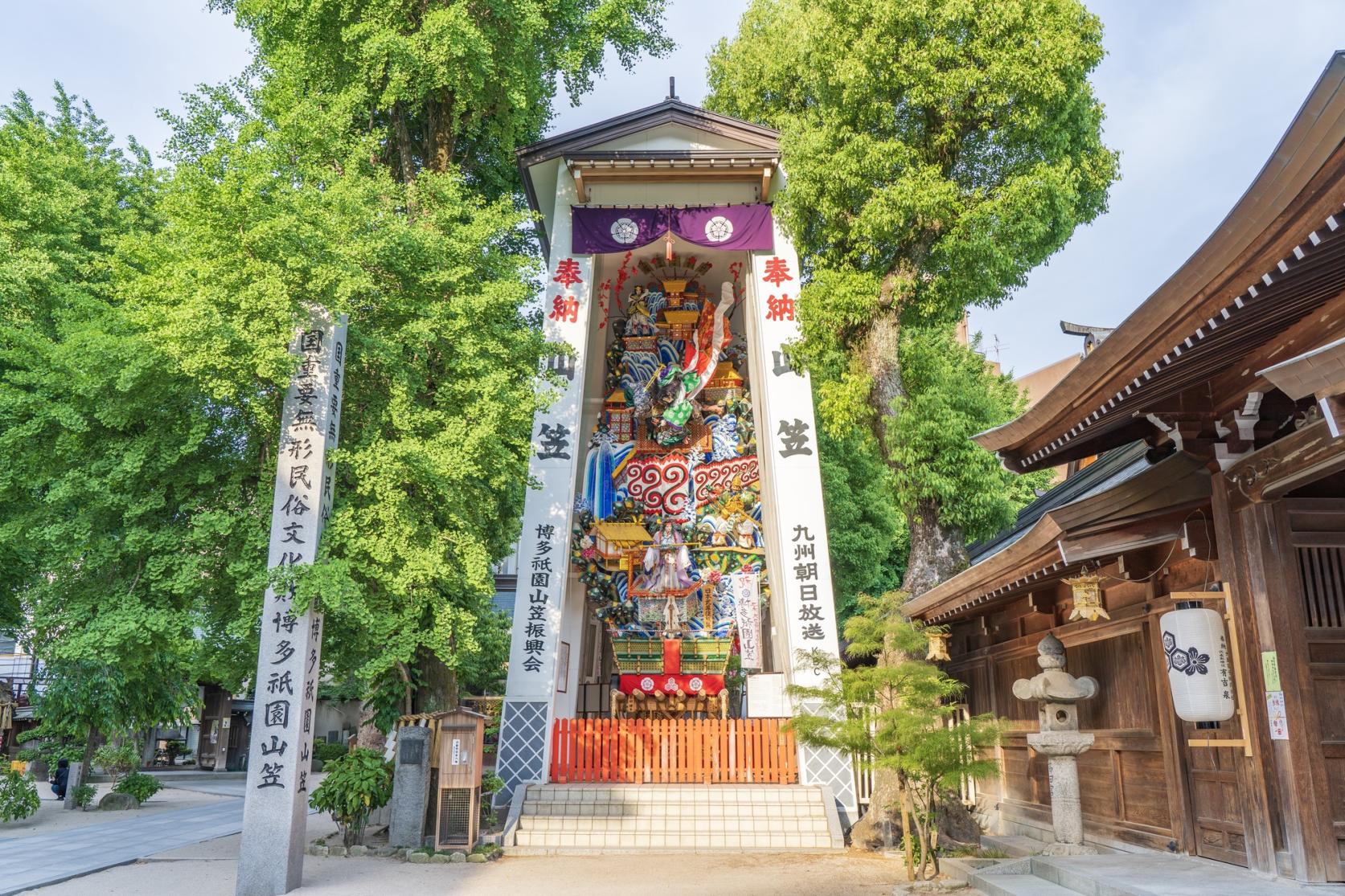
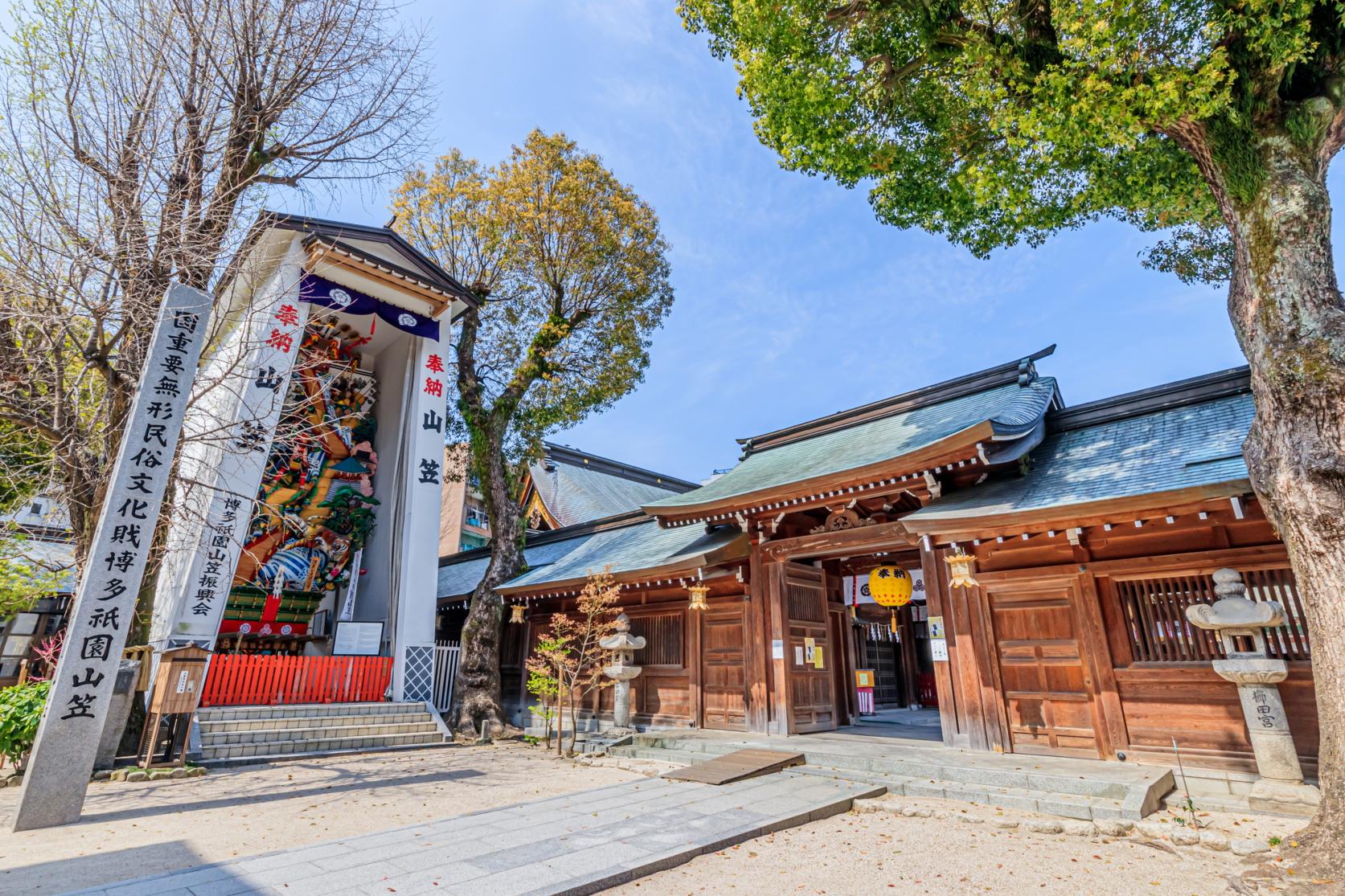
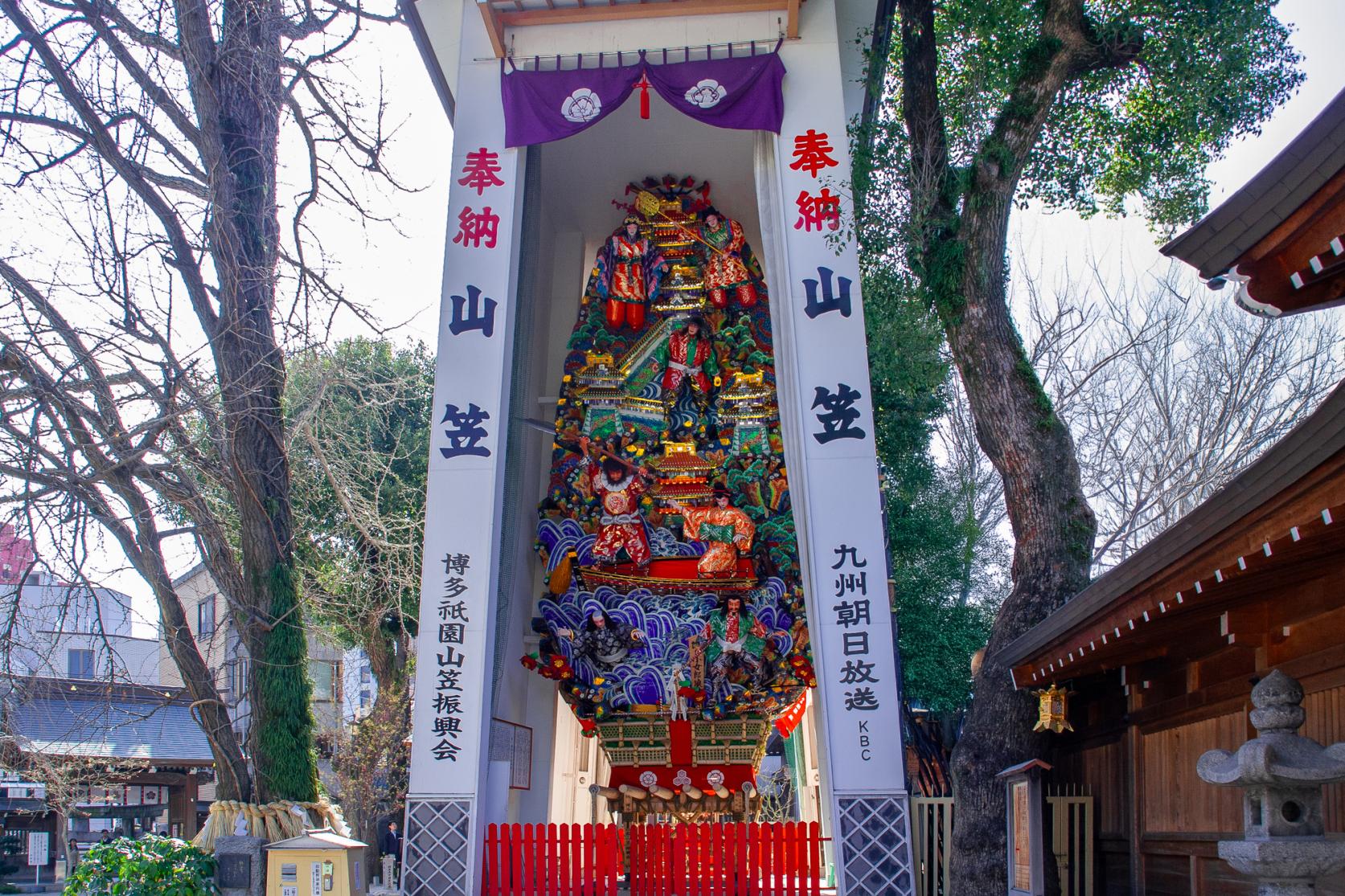
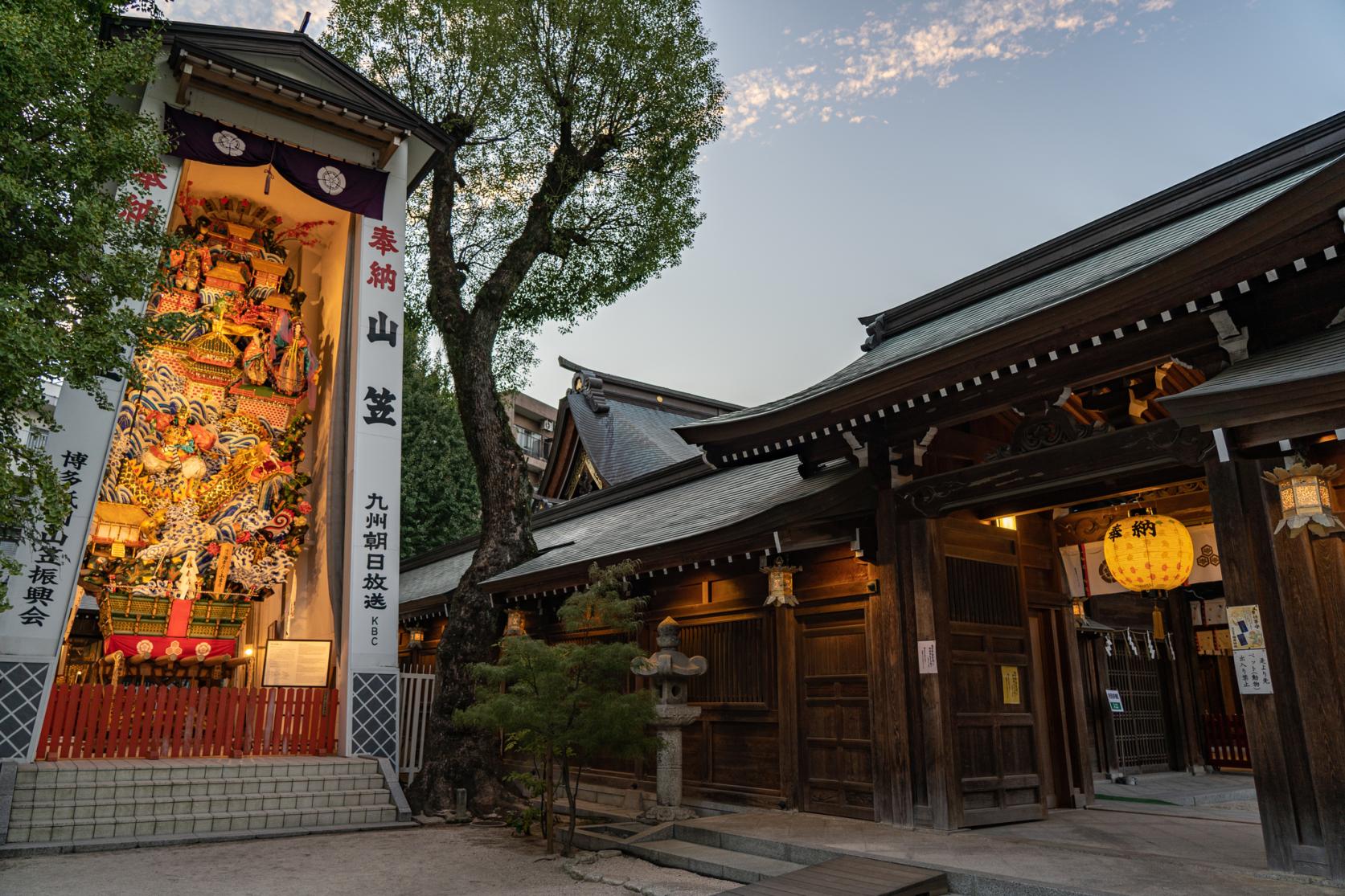
Kazariyama (decorative floats) displayed within the shrine grounds allow visitors to experience the excitement of Hakata Gion Yamakasa, a summer tradition, all year round. They are publicly displayed at various locations throughout Fukuoka City during the festival period. While the floats are typically dismantled after the festival ends, visitors can admire their gorgeous and resplendent decorations year-round, except in June. The impressive decorations, reaching approximately 13 m in height, are simply masterpieces. The front and rear ends feature scenes depicting warriors and stories, showcasing the skills of Hakata doll artisans. Take your time to appreciate the meticulously detailed decorations. Moreover, the floats are newly crafted and replaced on July 1 every year, so visitors can enjoy floats with different themes each time they visit.
Countless other attractions!
The precincts of Kushida Shrine are filled with many other unique attractions that tell the story of Hakata's culture and history. Enjoy a leisurely walk as you explore.
-
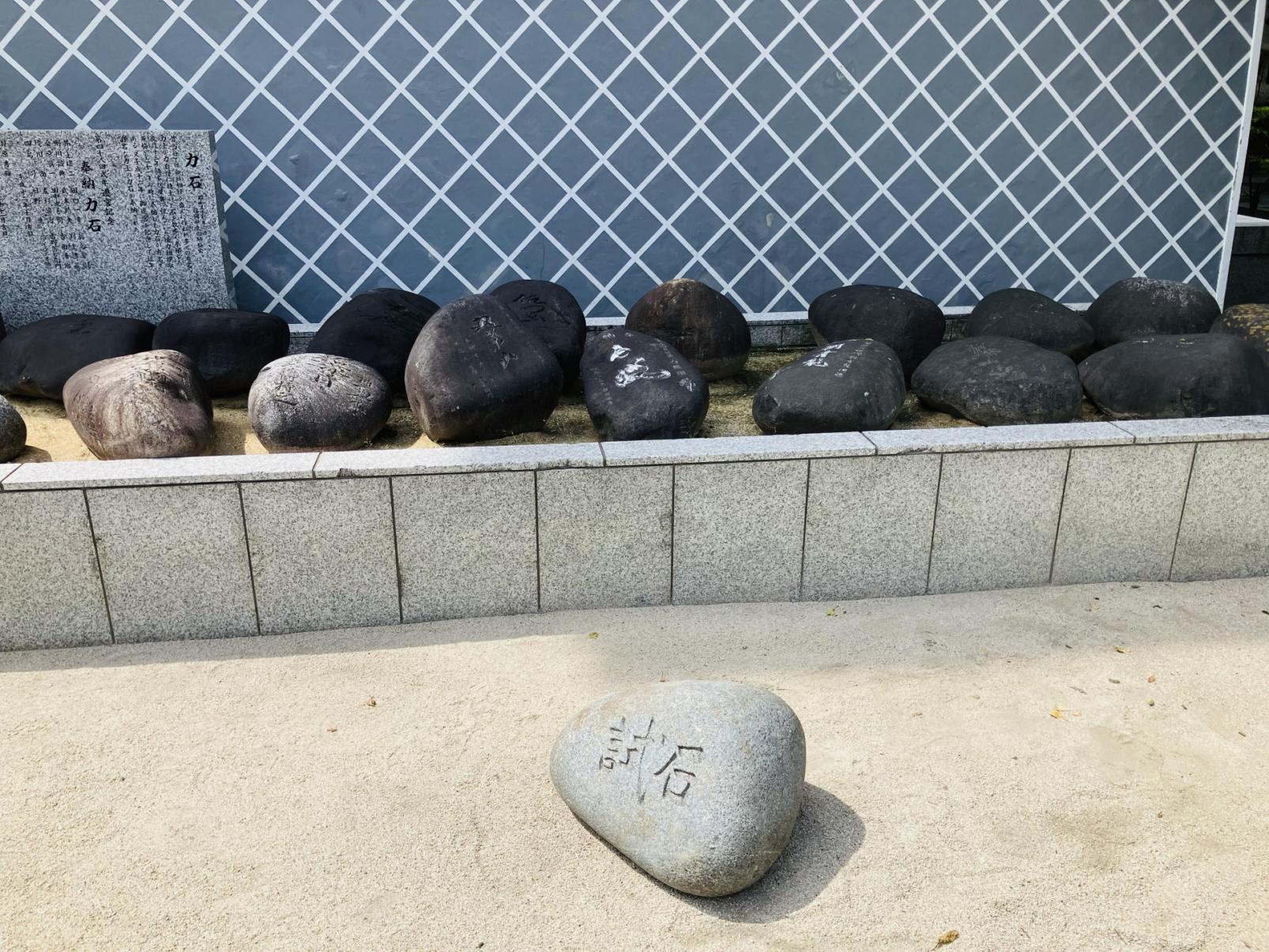
Chikara-ishi (power stones)
Lined up in a corner of the grounds are chikara-ishi ("power stones"). Long ago, men boasting of their strength would compete by lifting these stones. In recent years, stones dedicated by successive generations of famous sumo wrestlers have also been added, and finding their names is part of the fun. Tameshi-ishi ("testing stones") are also available, so those with confidence in their strength should take up the challenge.
-
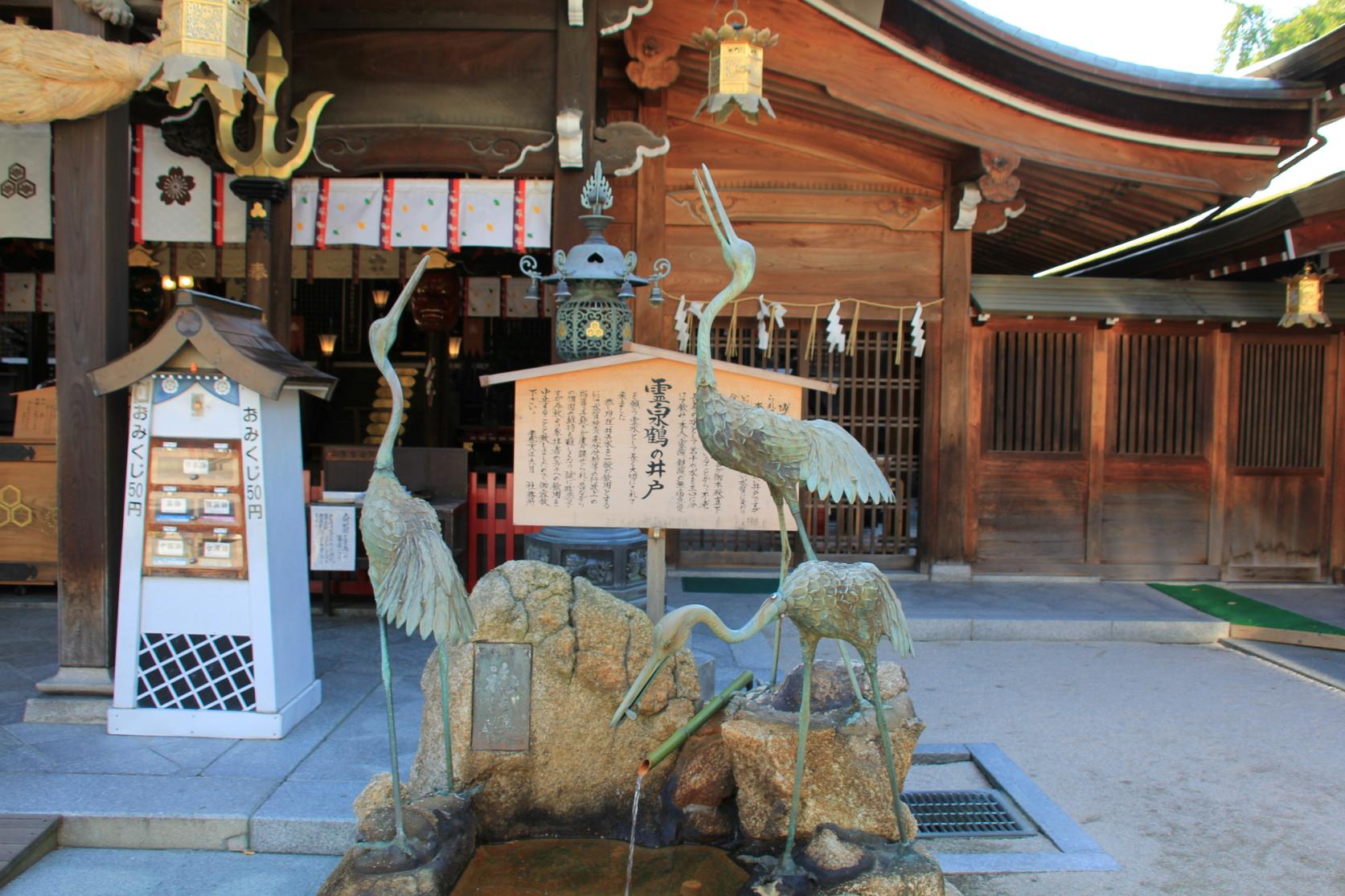
Reisen Tsuru no Ido (Sacred Crane Well)
To the right of the worship hall stands Reisen Tsuru no Ido ("Sacred Crane Well") surrounded by three cranes. It is said to grant the blessing of eternal youth and longevity through the sacred spring water bubbling up from beneath the main hall. While the water is unfortunately not drinkable, it is still widely revered as the “Water of Life” to this day.
-
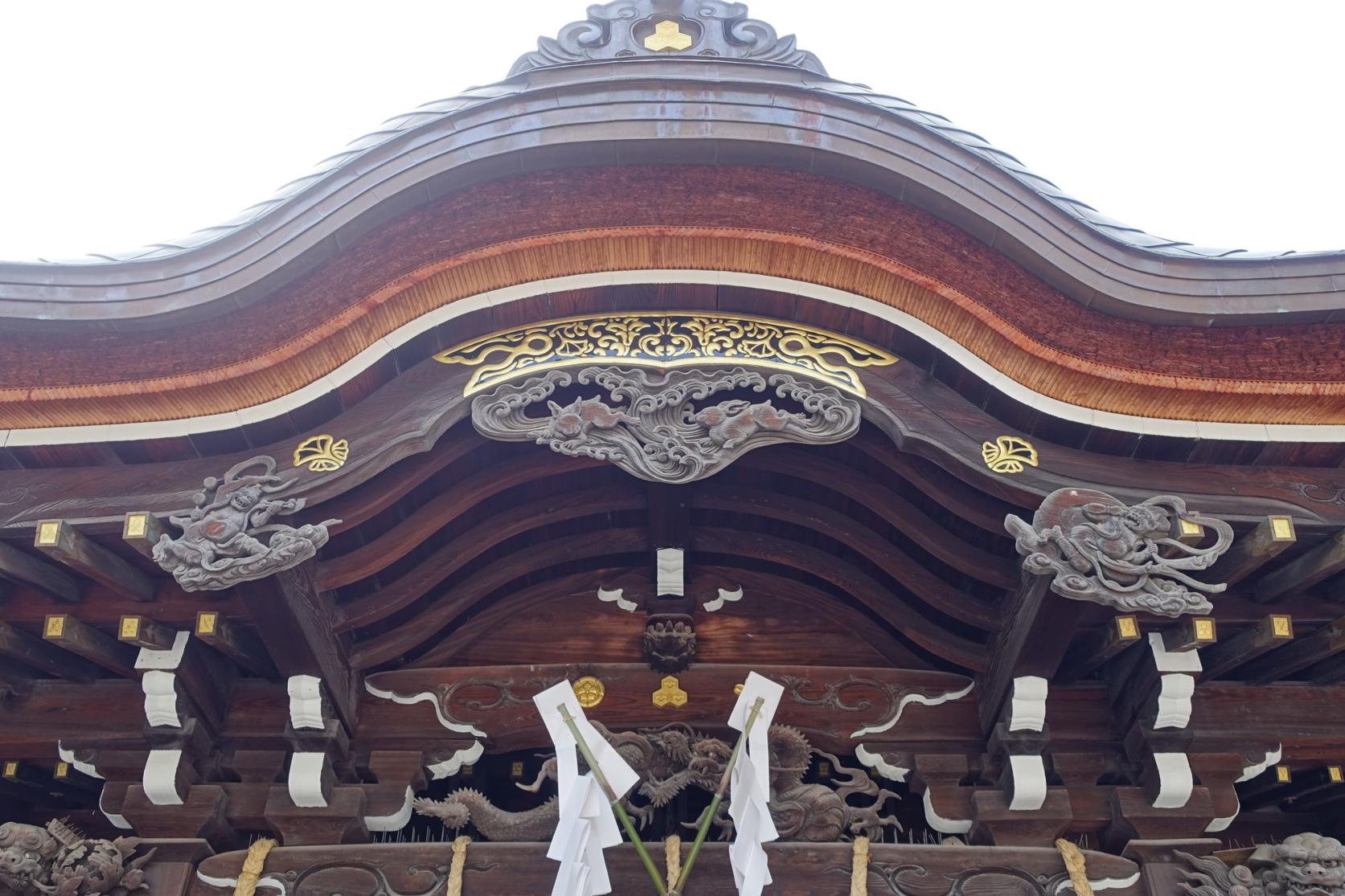
Sculptures of the Gods of Wind and Thunder
When visiting the shrine, raise your gaze slightly and take a good look at the gable of the worship hall. You will discover sculptures of the Gods of Wind and Thunder displayed there. On closer examination, you will see that the God of Wind on the right is sticking his tongue out as if escaping from the God of Thunder on the left. Their humorous and endearing expressions are sure to bring a smile to your face.
-
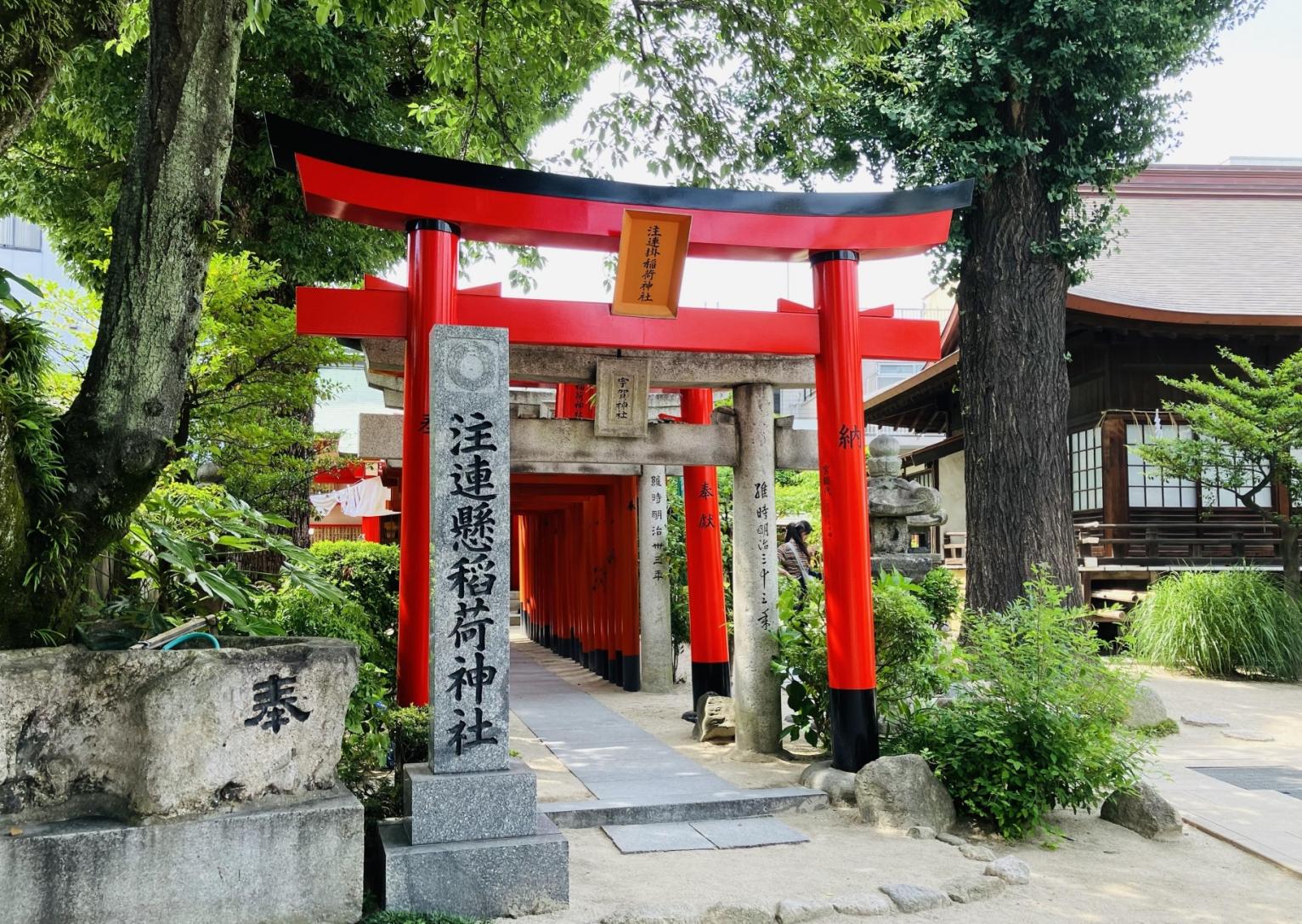
Shimekake Inari Shrine
Shimekake Inari Shrine sits quietly behind the main shrine, and it is notable for its striking row of vermilion torii gates. Also known as “Ashidome Inari,” it is worshipped as the deity that grants blessings of business prosperity, with "ashidome" meaning customers “stopping their feet” in front of shops. The incredible tunnel of torii gates is also a popular photo-taking spot for visitors.
-
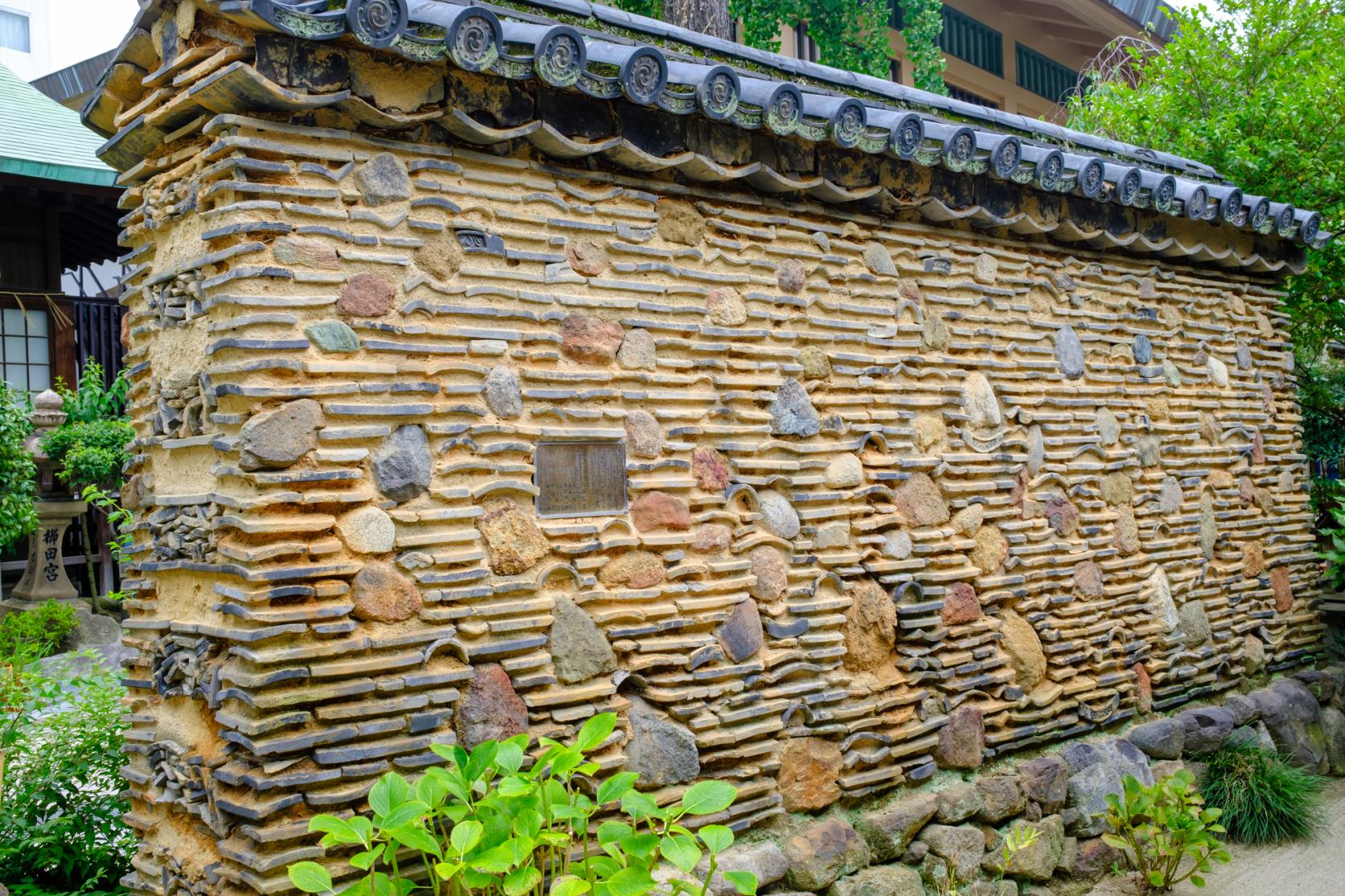
Hakata-bei
To the right of the worship hall stands a preserved earthen wall known as “Hakata-bei.” This wall, which has a distinctive character, was built by embedding stones and tiles, salvaged from fires, during the post-war reconstruction of Hakata by Toyotomi Hideyoshi. It stands as a symbol of revival, conveying Hakata's history to the present day.
Kushida Shrine's festivals
Kushida Shrine hosts lively traditional events throughout the year. Here, we introduce three festivals dedicated to each enshrined deity.
Setsubun Taisai (February)
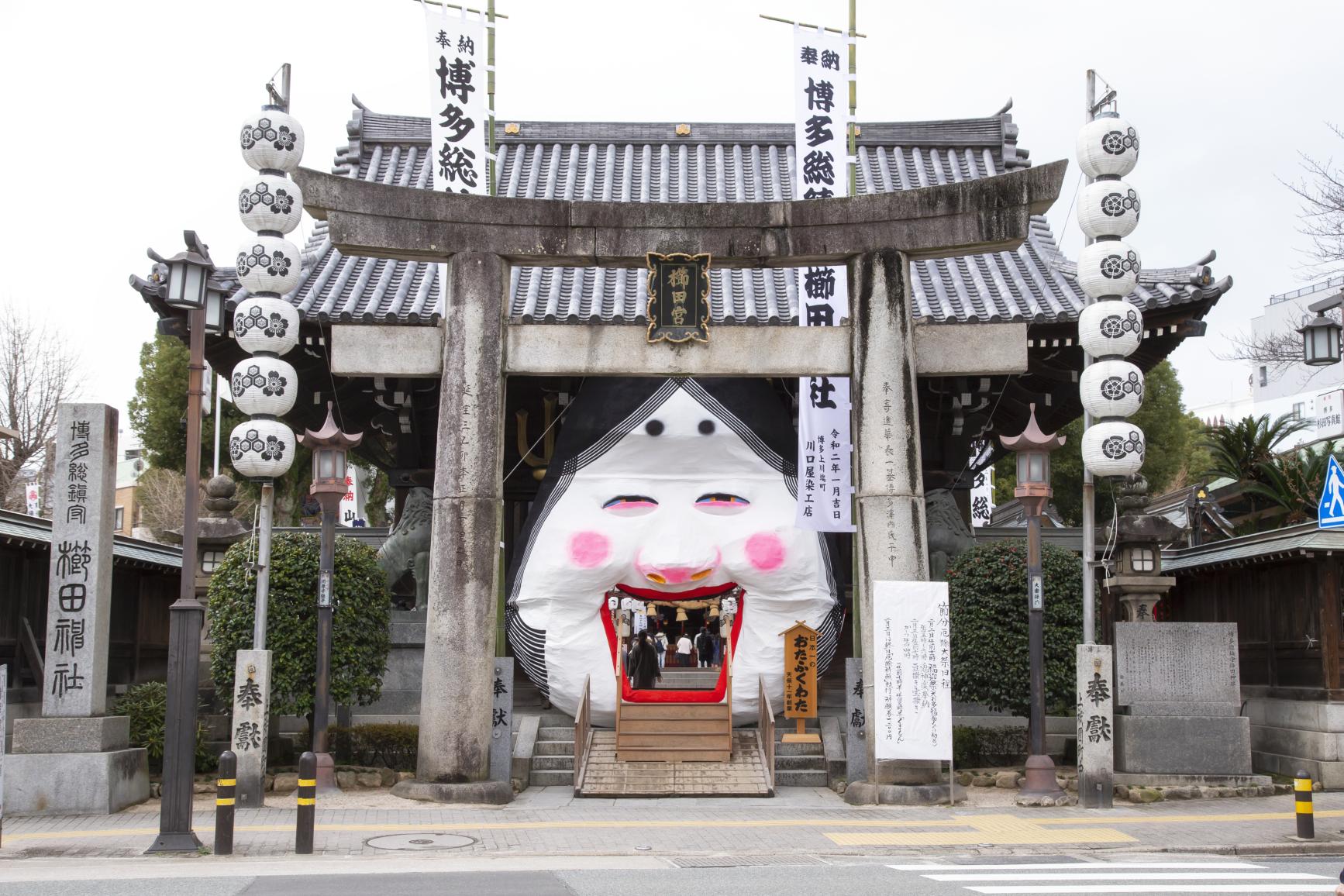
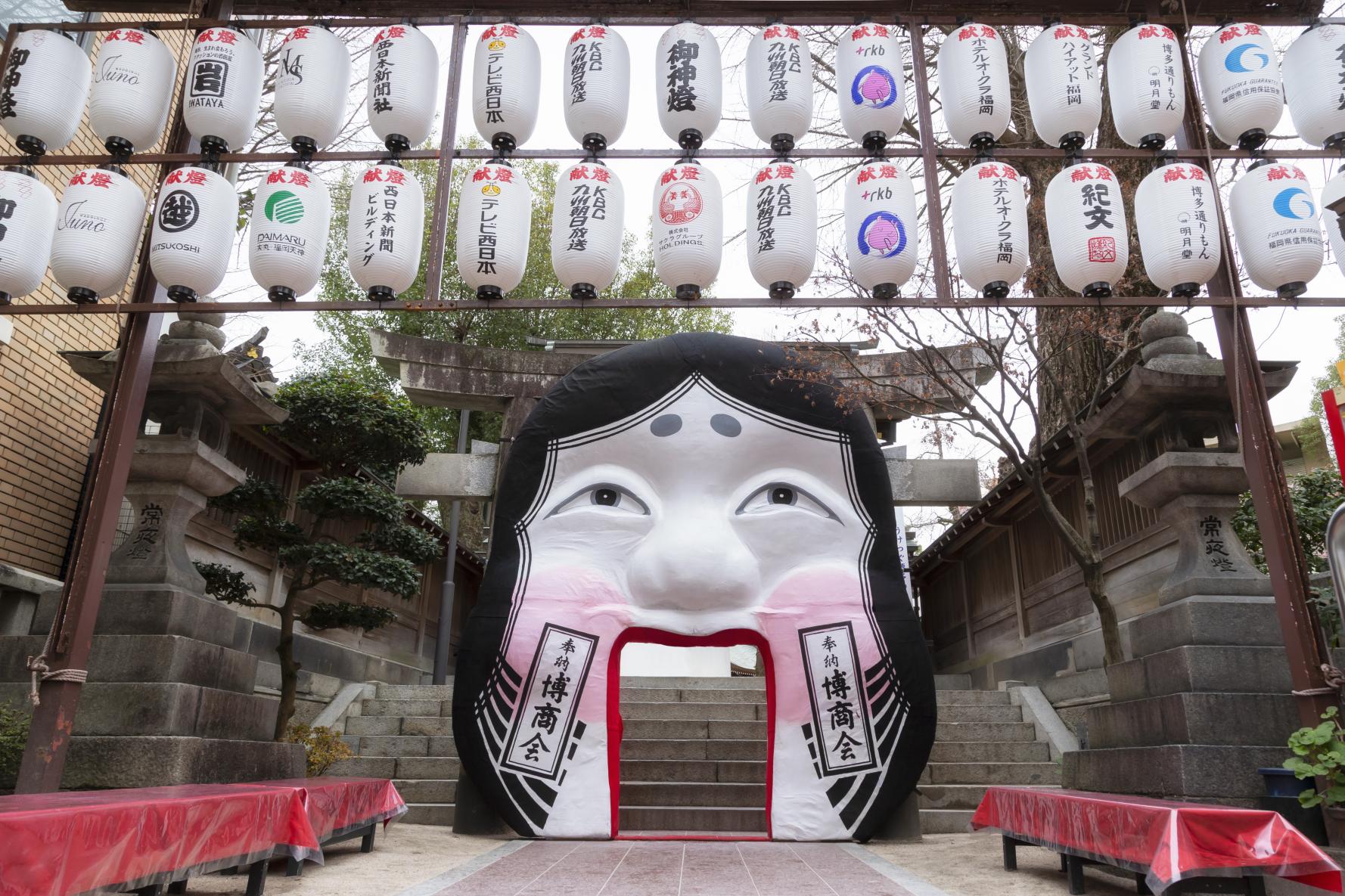
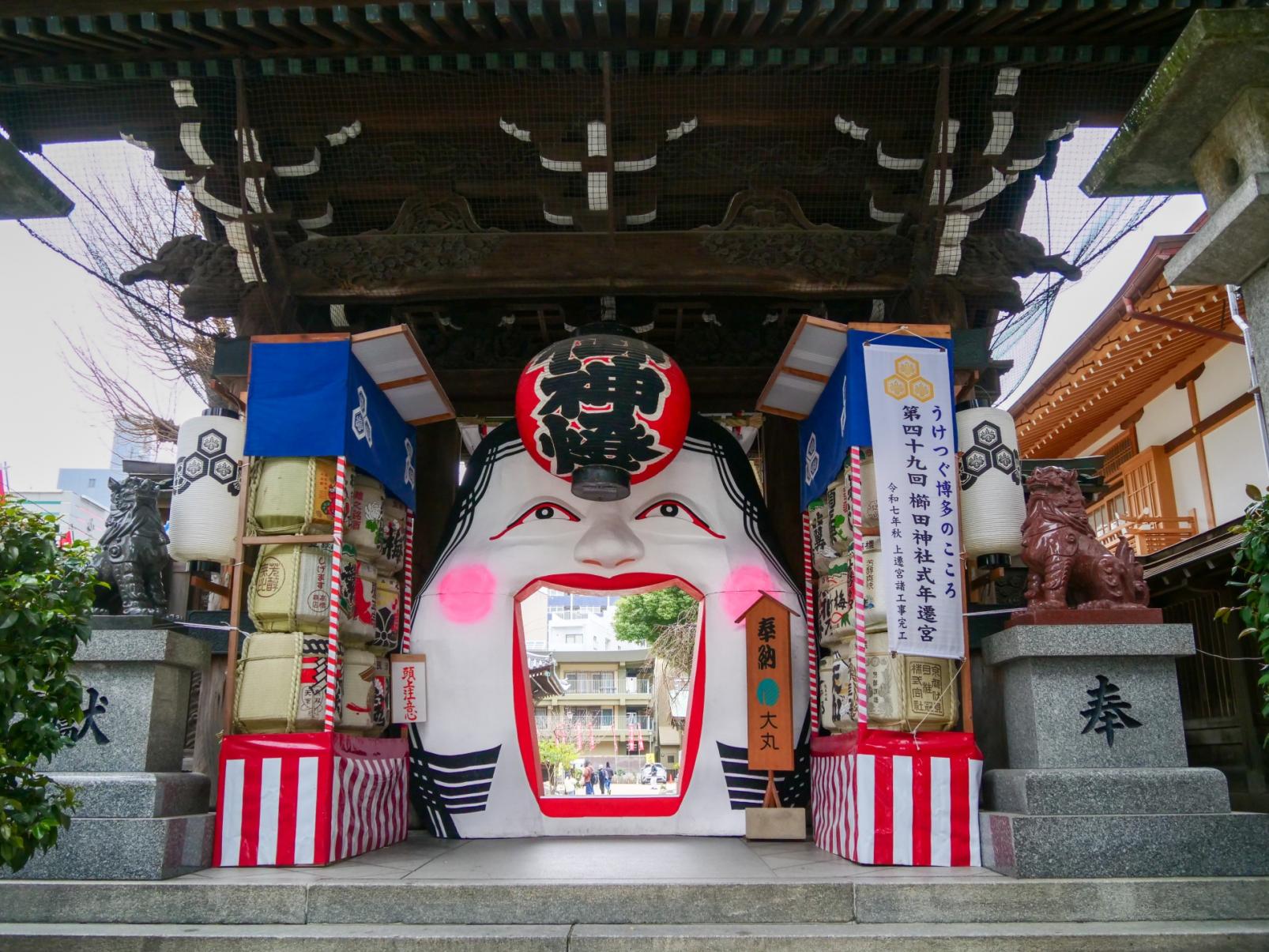
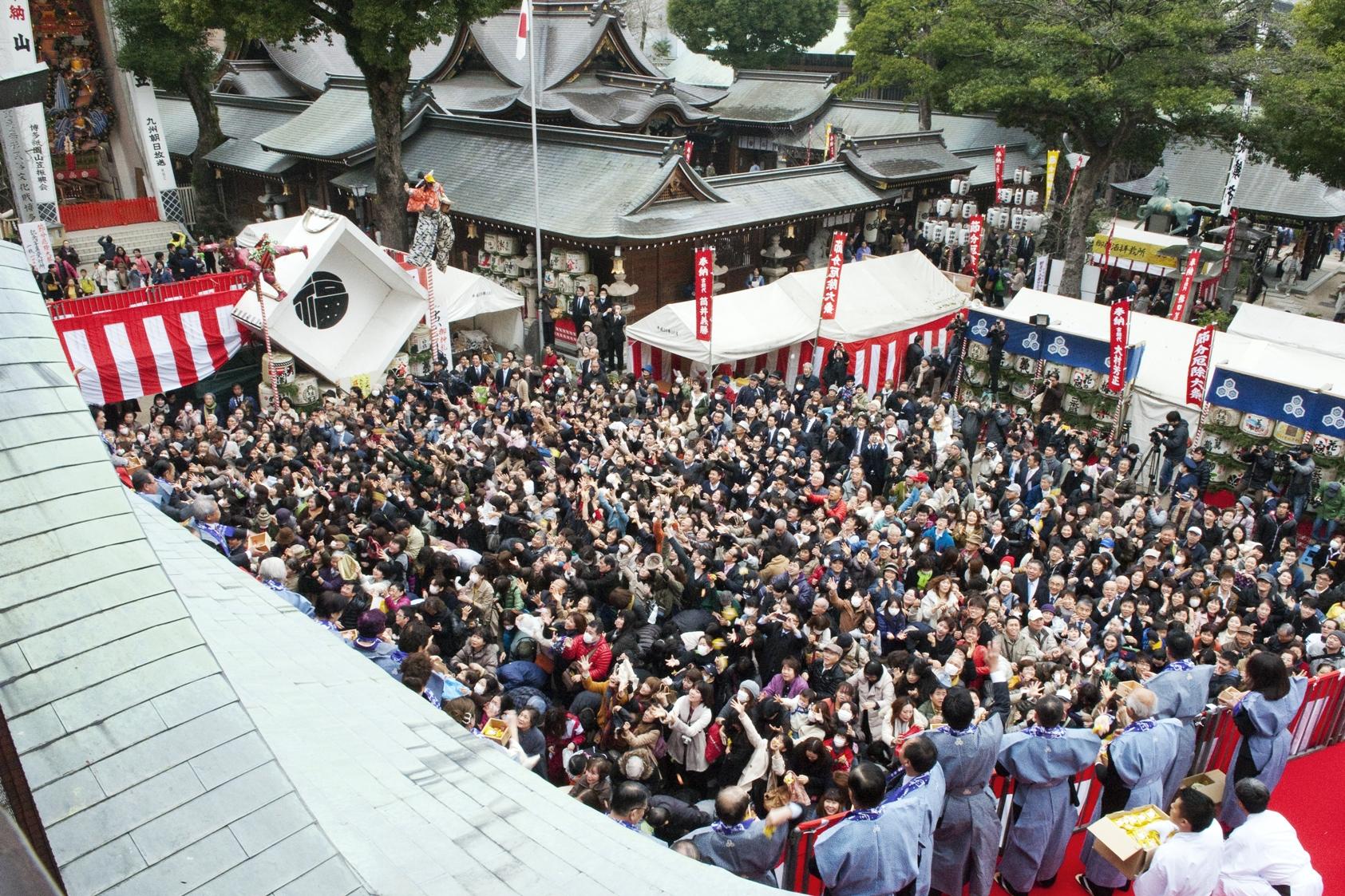
This is a winter tradition that draws large crowds every year. Ahead of Setsubun, Japan's largest Otafuku (masks depicting a smiling woman) each standing about 5 meters tall, are installed in three directions: the main two-storied gate, north gate, and south gate, welcoming visitors into the shrine. Walking through the wide-open mouths of these masks is believed to bring blessings for business prosperity and safety for the household. On the day of Setsubun itself, a bean-throwing ritual is performed on a special stage, and the shrine's grounds exude the fervor of worshippers eager to draw in good fortune for the year.
Hakata Gion Yamakasa (July)
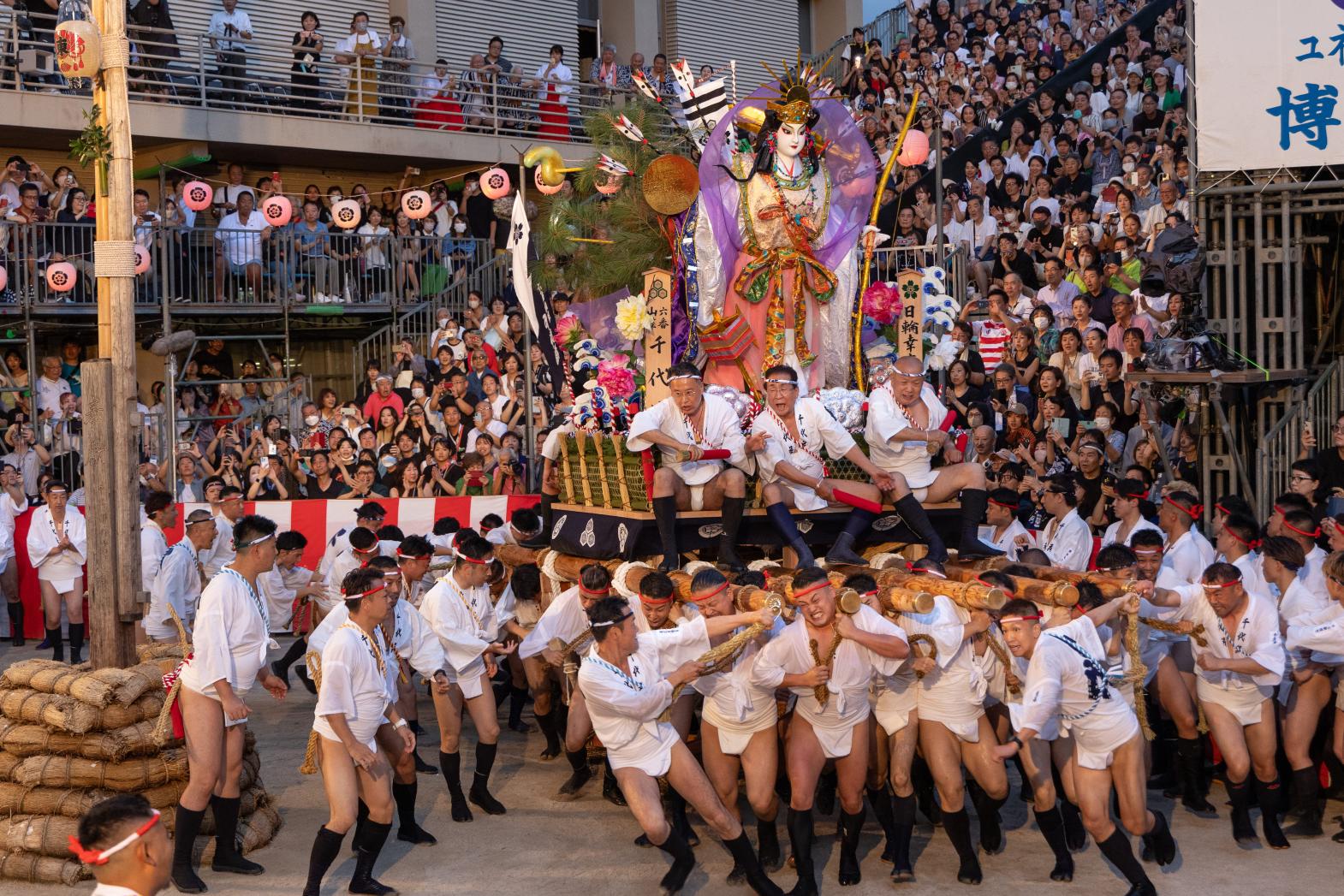
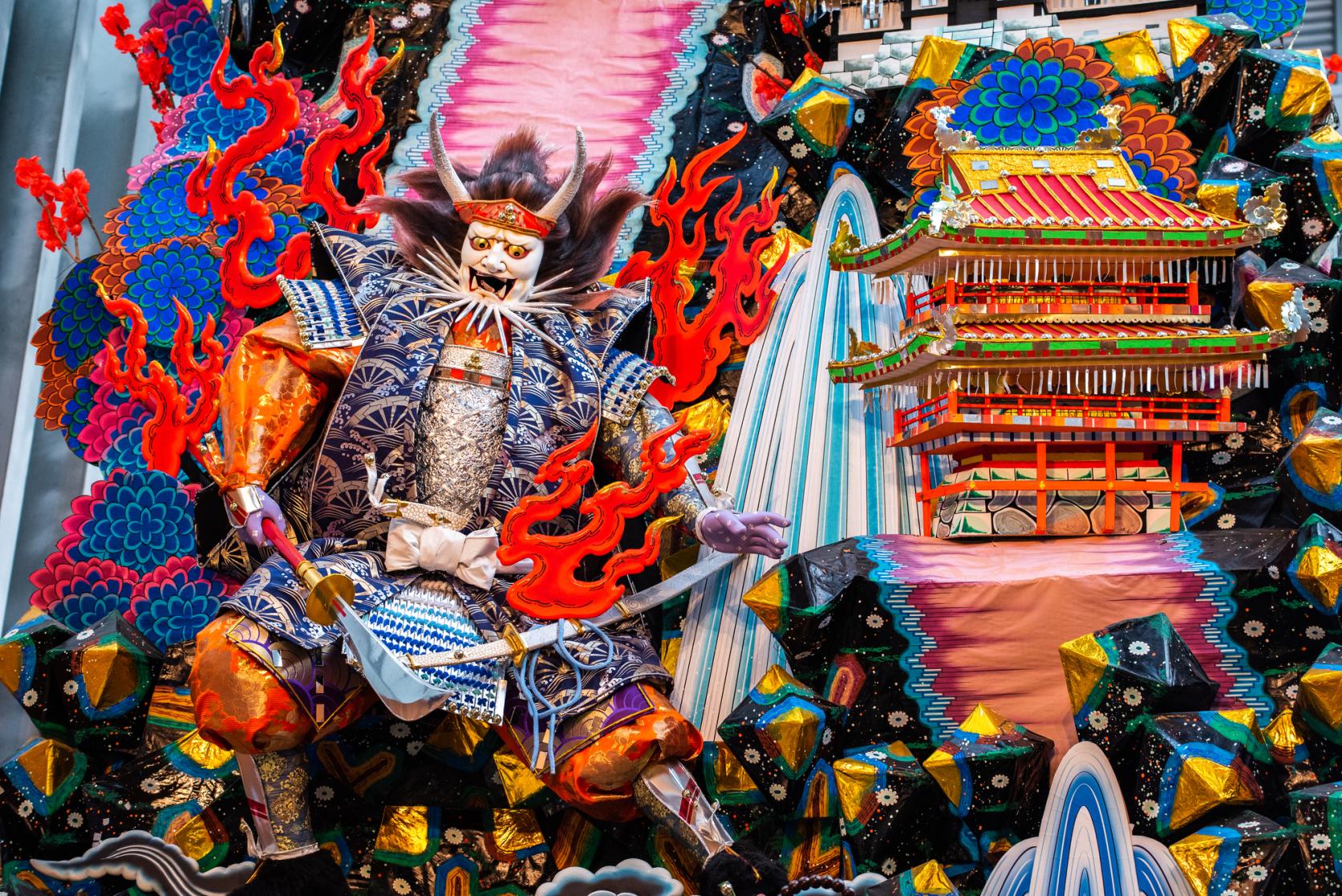
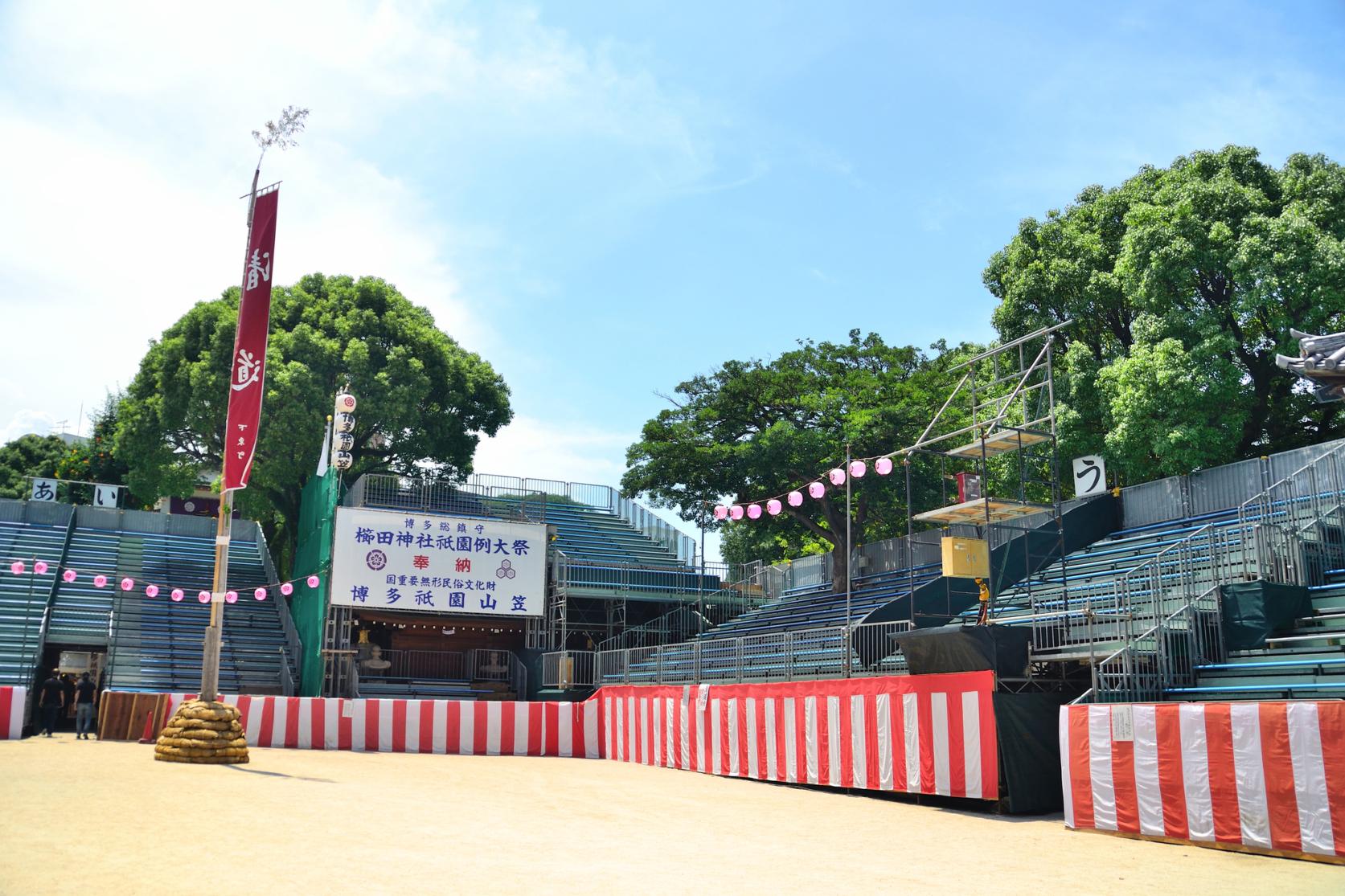
The Hakata Gion Yamakasa festival, held from July 1 to 15, is a sacred ritual in which yamakasa (floats) are dedicated to Kushida Shrine to pray for good health and safety. It is Hakata's largest festival and is registered as a UNESCO Intangible Cultural Heritage. Throughout the festival period, gorgeous and resplendent kazariyama floats are displayed throughout the city, captivating all who see them. The climax is the “Oi Yamakasa” race, which sees men carrying the one-ton floats and shouting “Oi-sa!” as they enter Kushida Shrine. They then dash out of the shrine precincts through the city streets in a timed race toward the finish line.
Hakata Okunchi (October)
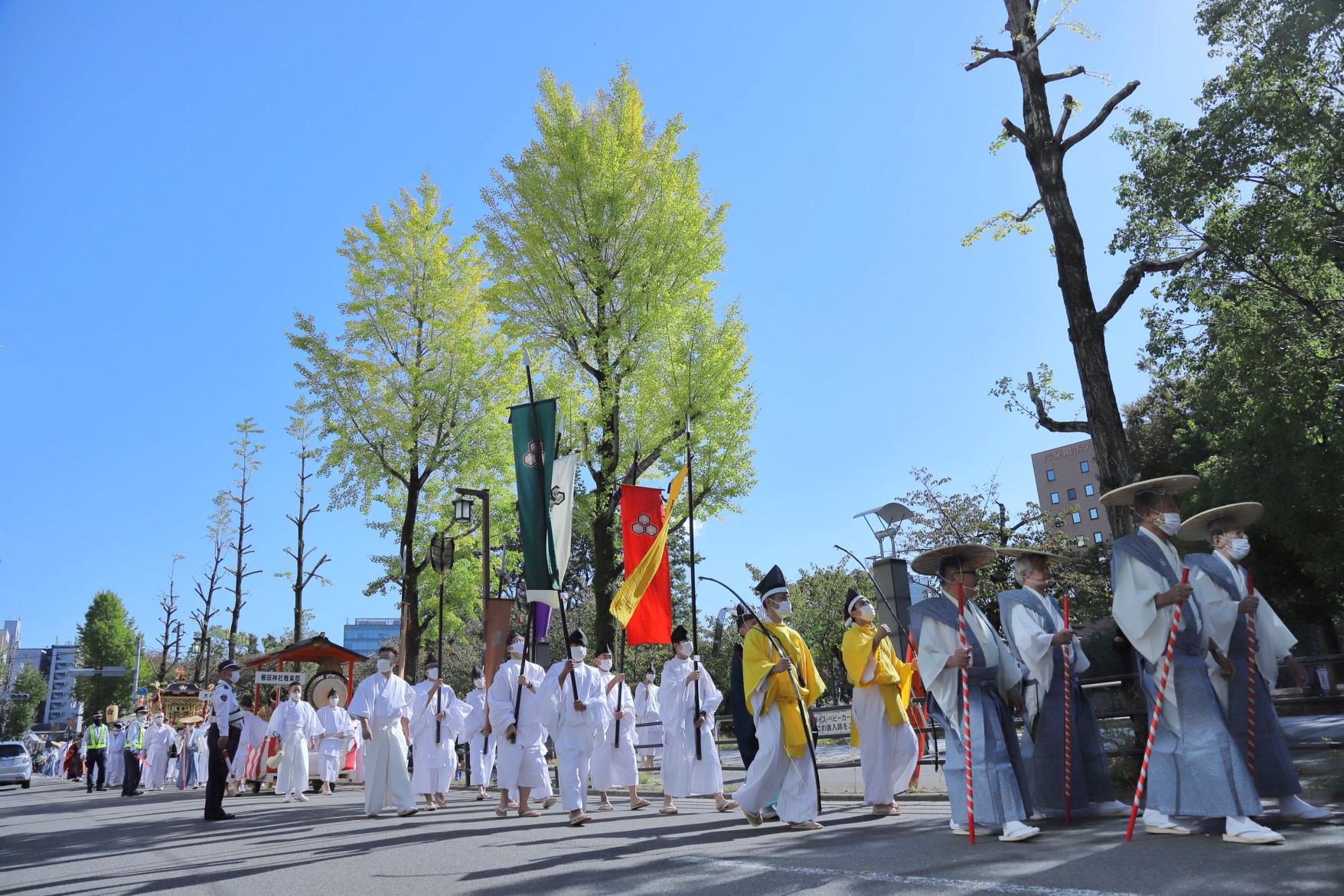
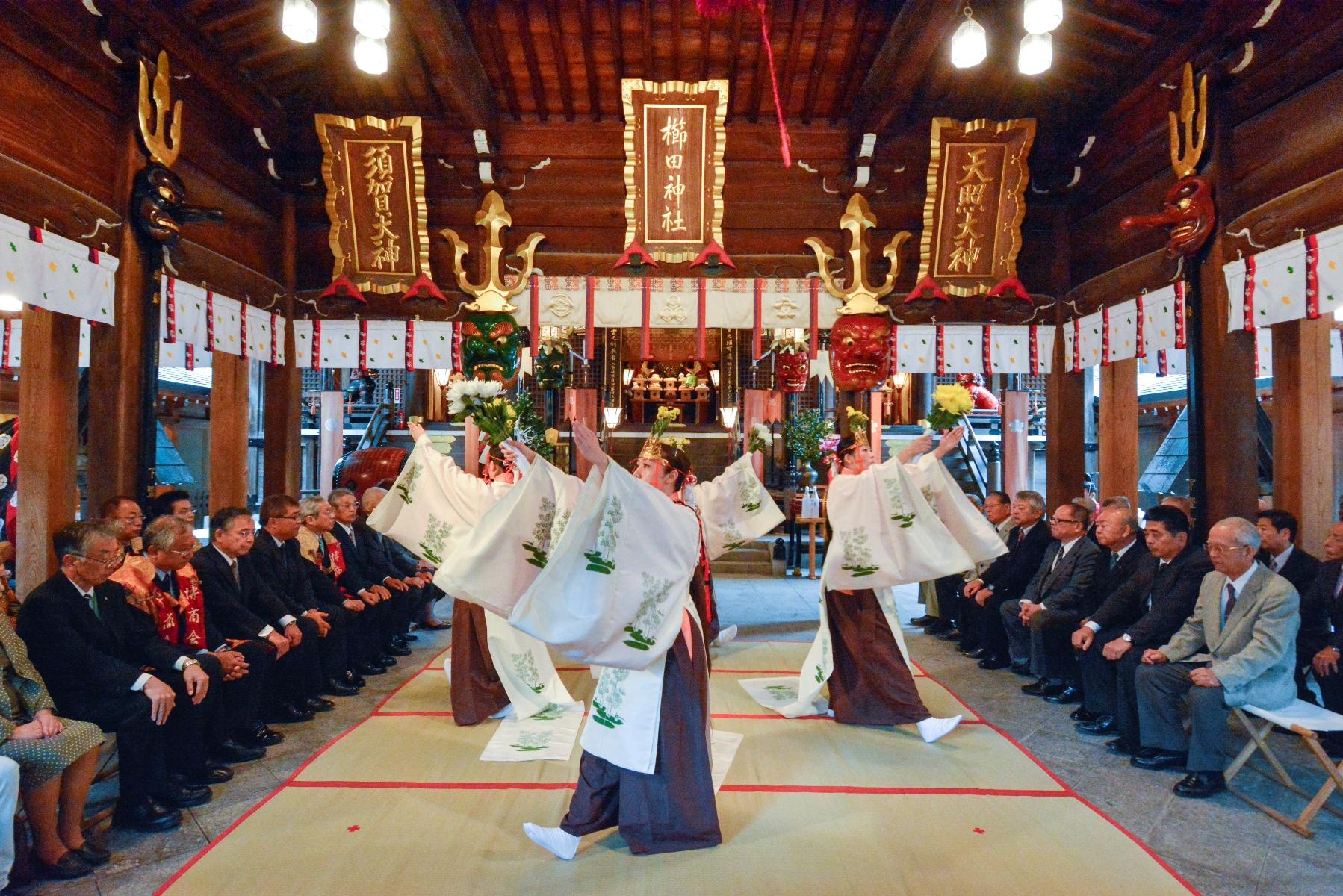
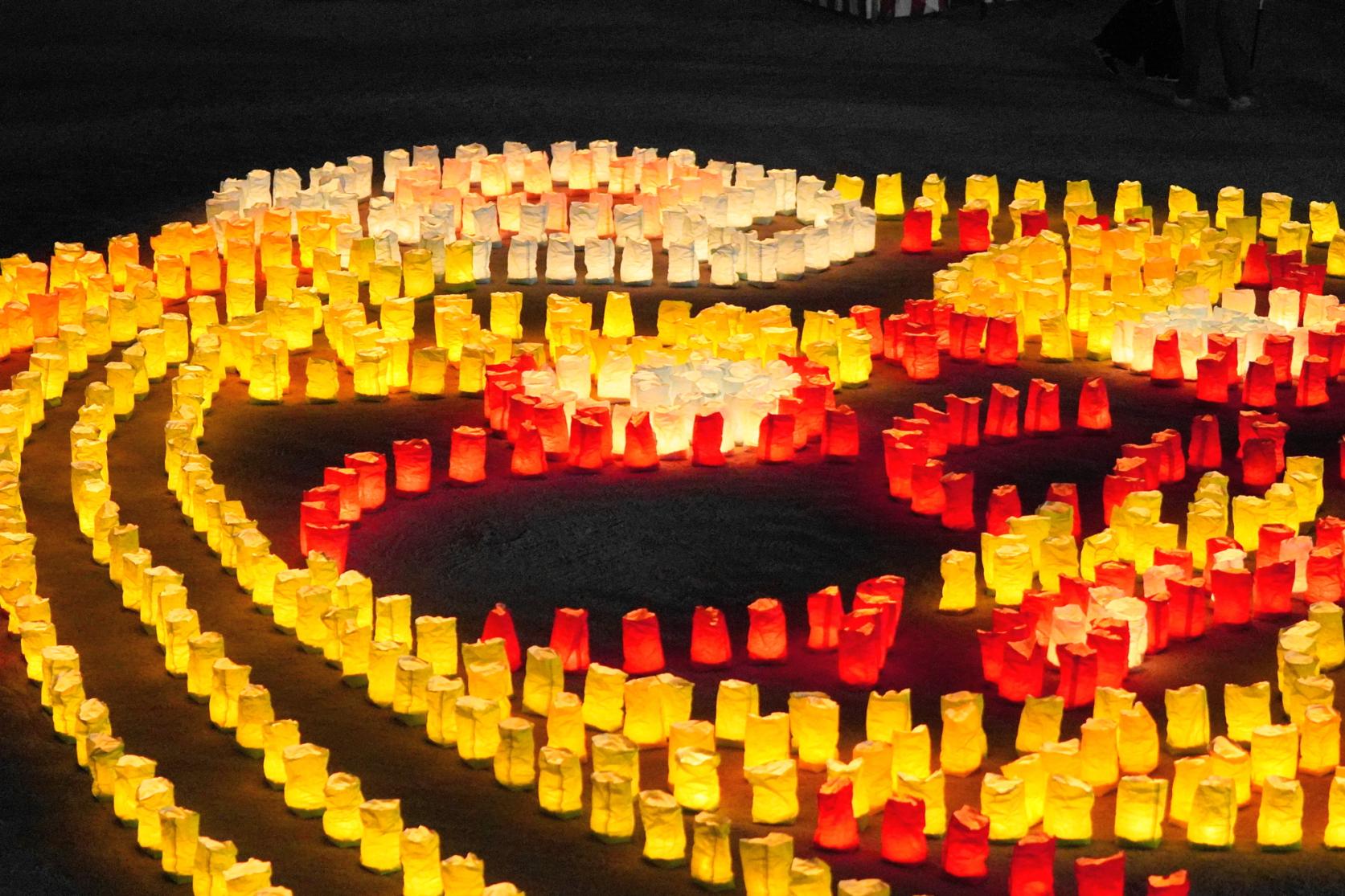
This is a grand autumn festival held annually on October 23 and 24. This traditional event, held continuously over the past 1,200 years to express gratitude for the autumn harvest, counts among Japan's three major Kunchi festivals alongside those of Nagasaki and Karatsu. The main highlight is the Gojinko Parade, where a mikoshi (portable shrine) pulled by an ox cart winds its way through the town. This is followed by a children's procession and brass bands, creating a vibrant festival atmosphere. From evening, the Sentomyo ("Thousand Lanterns") event is held, illuminating the shrine grounds with thousands of lanterns arranged to form intricate patterns, creating a fantastical glow.
Receive a goshuin (shrine stamp) and amulet as a memento of your visit
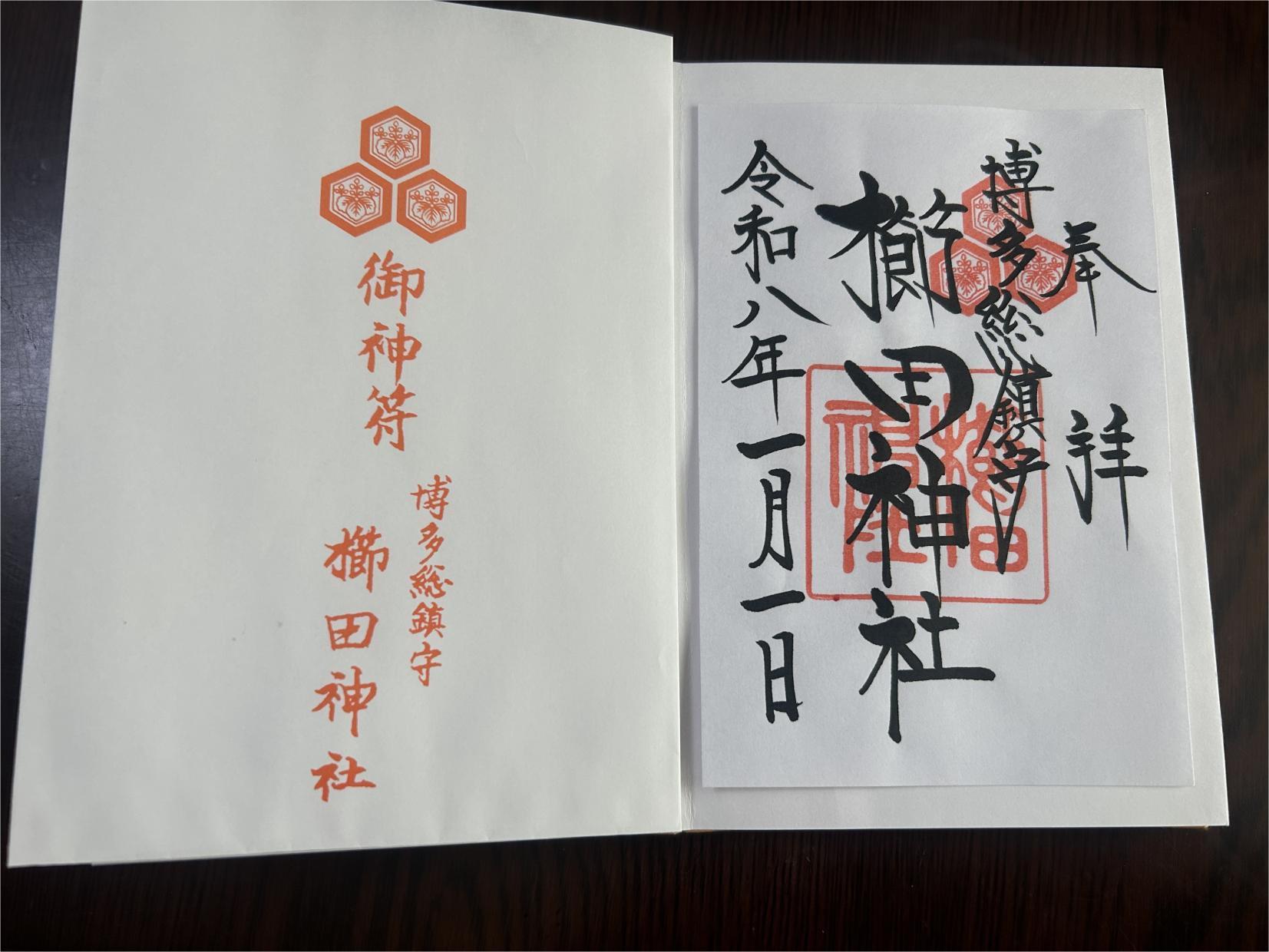
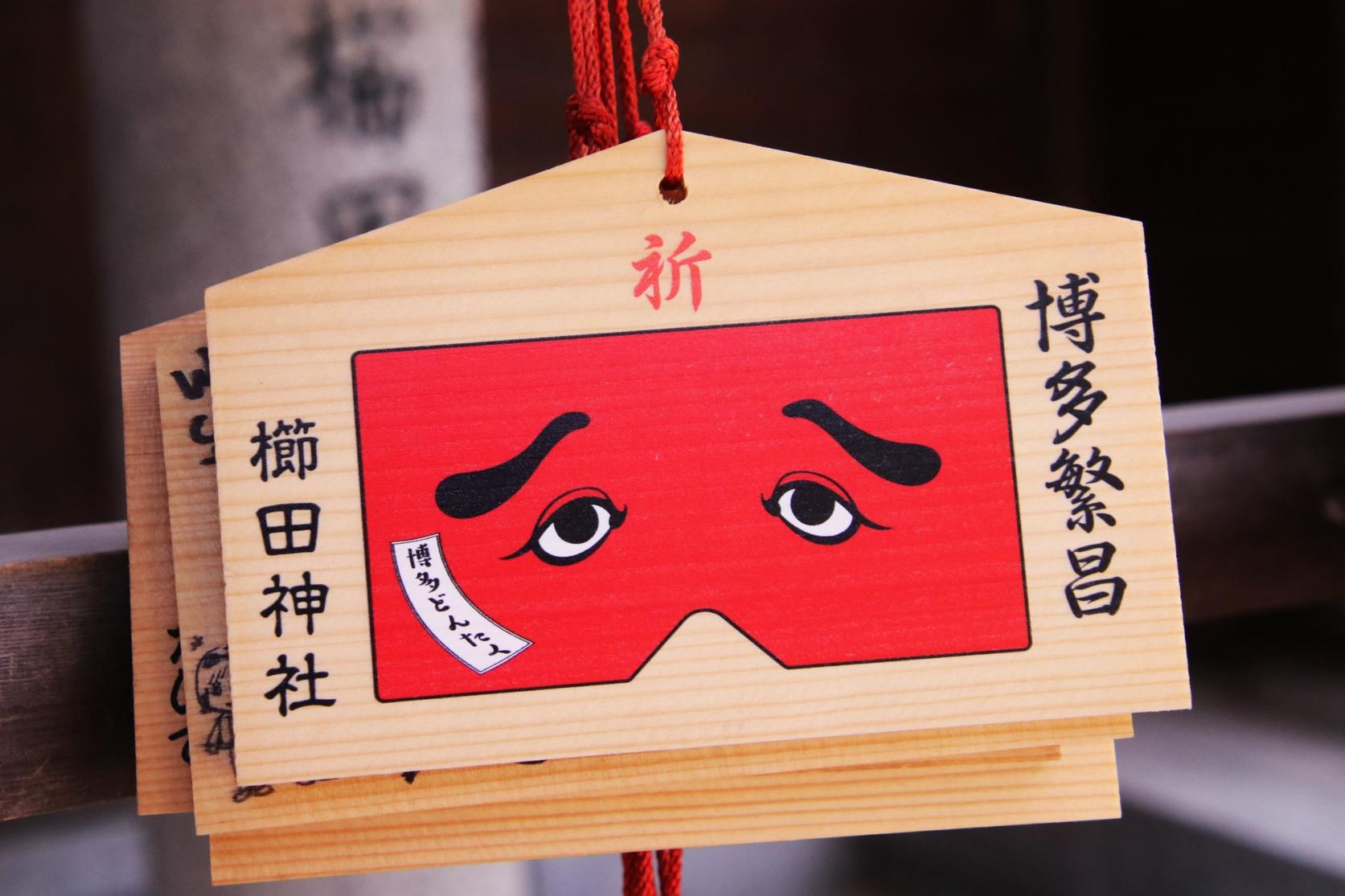
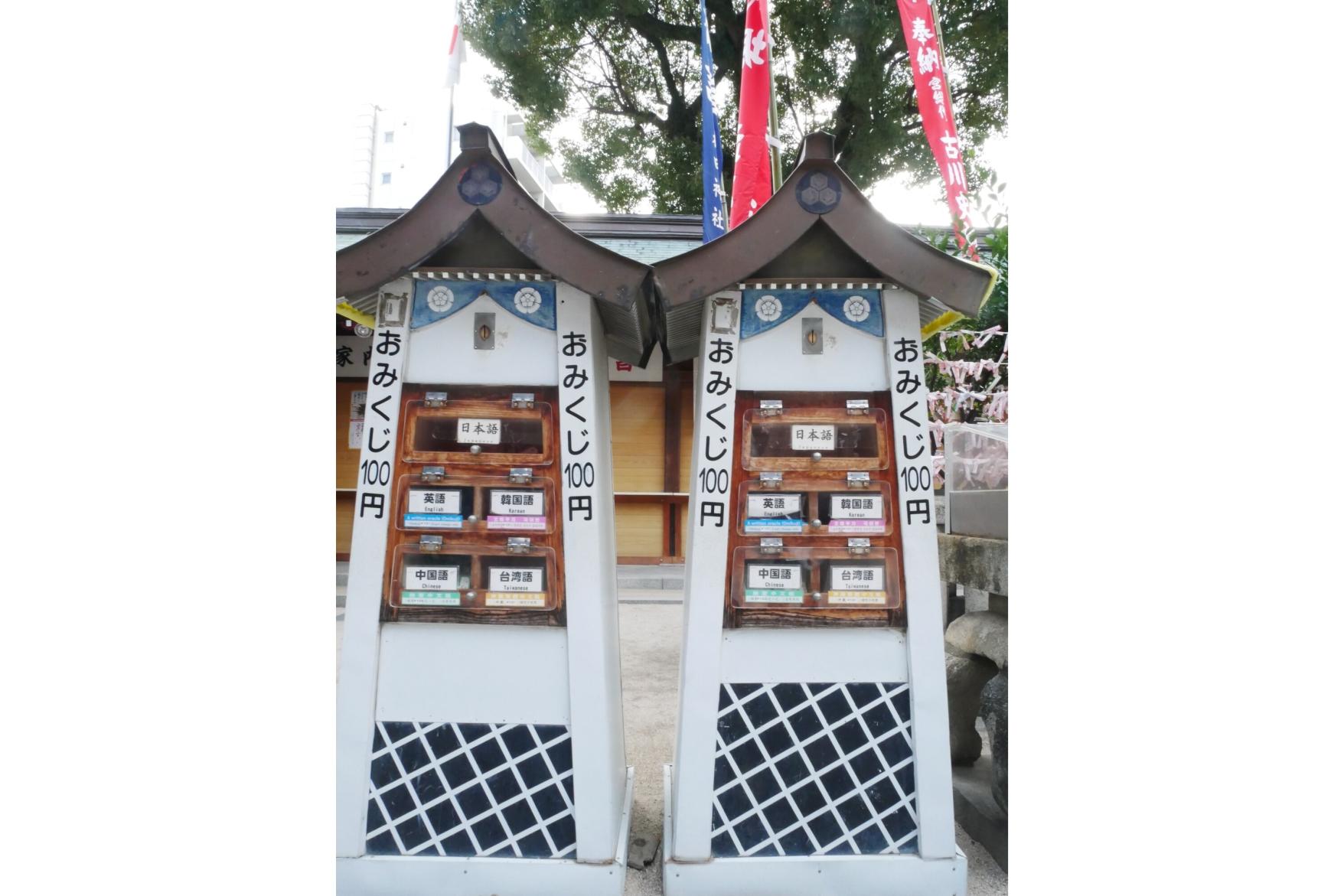
Goshuin (red shrine stamps) can be obtained at the shrine office located to the right of the main hall. Original goshuin stamp books featuring designs such as embroidery of yamakasa floats and Hakata's famous confectionery, niwaka senbei, are also available.
A wide range of omamori amulets are also available! Popular items include those made from Hakata-ori, a traditional Hakata craft, and amulets for good matches made with Hakata-style mizuhiki (decorative cords).
After the shrine visit, take a break with the famous “yakimochi"
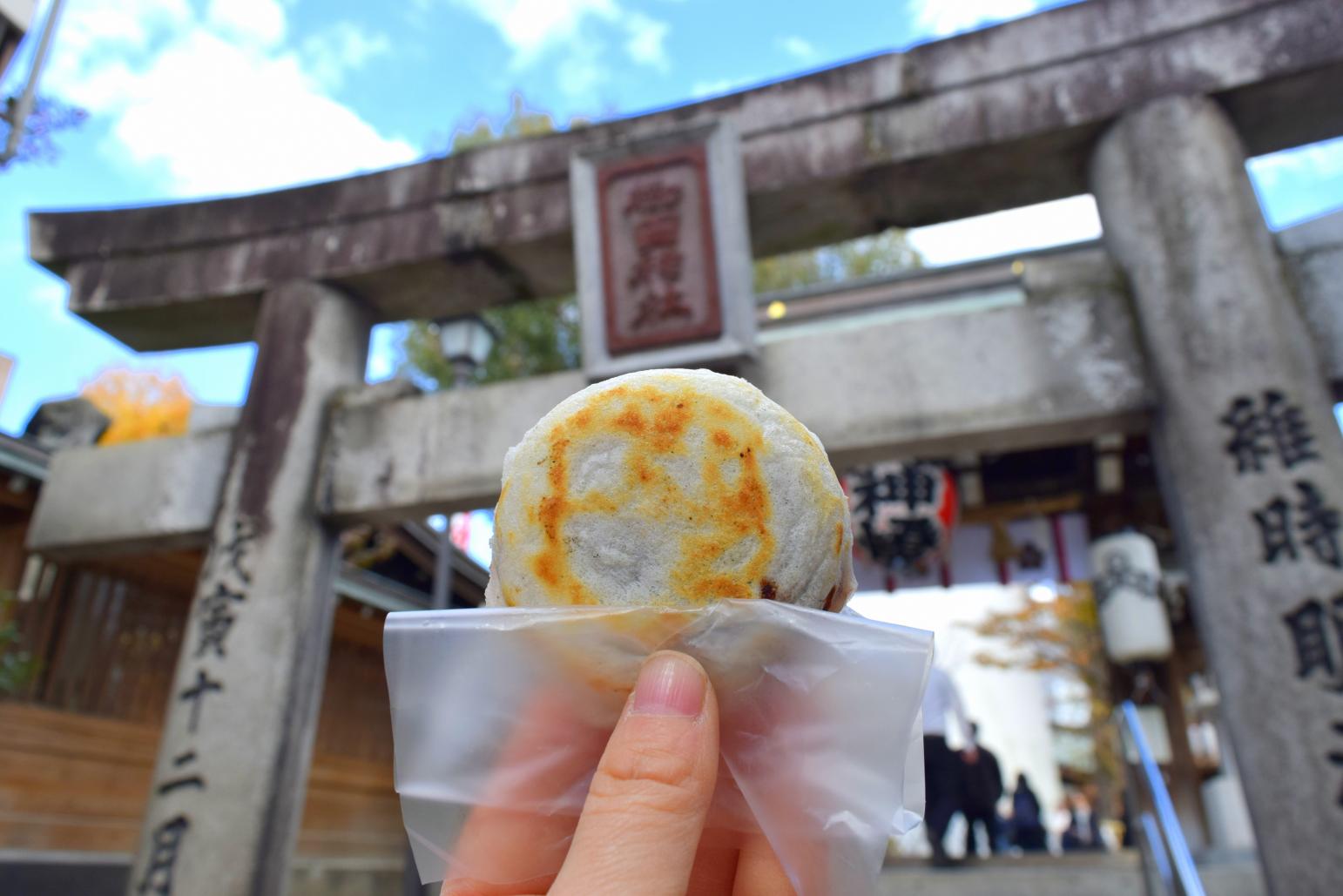
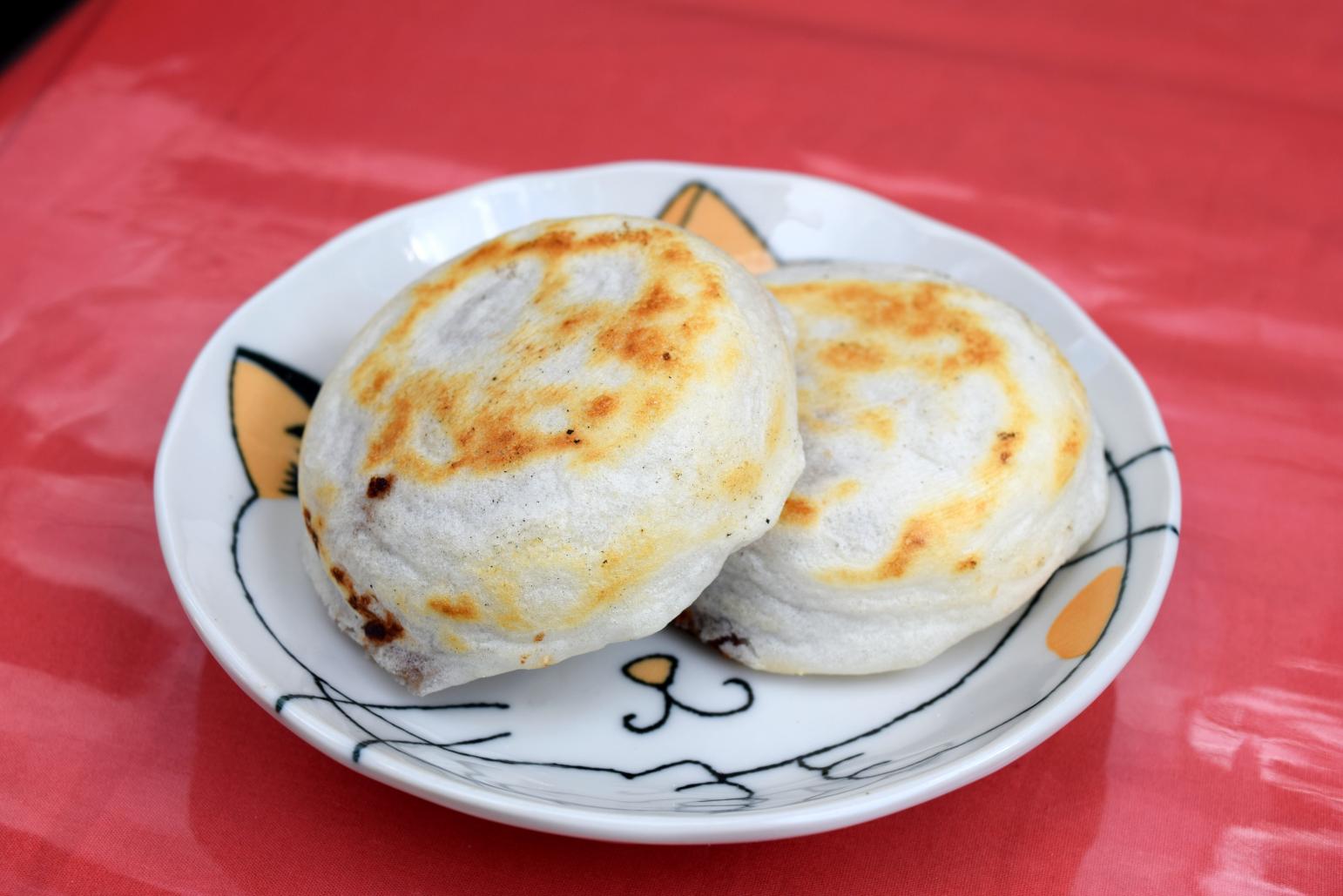
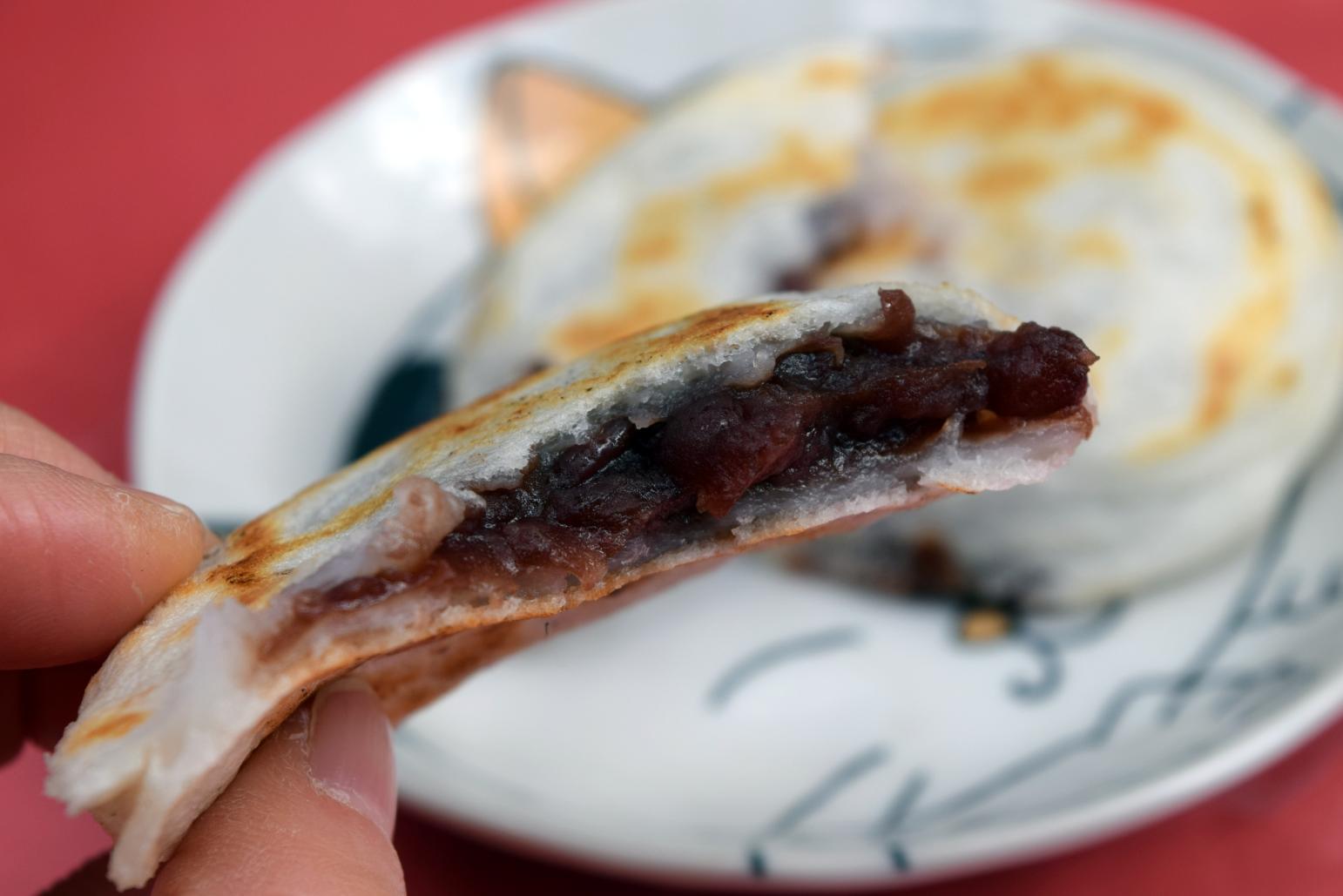
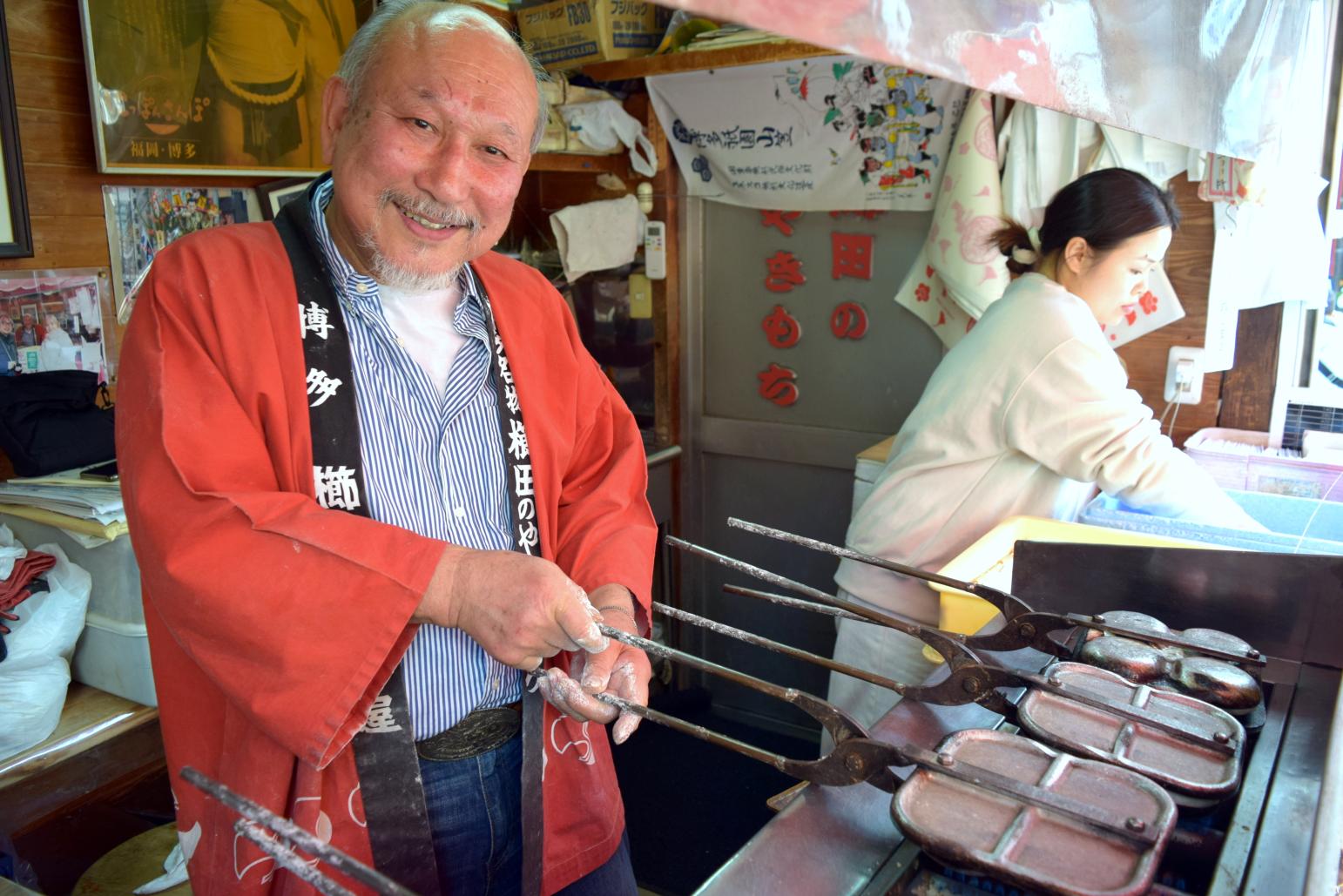
After your shrine visit, take a break at Kushida Chaya, located right next to the south gate. You can try the famous "yakimochi" of Kushida here. The highlight of this grilled mochi is that each handmade mochi is served freshly grilled and piping hot. Inside the crisp, fragrant thin crust is a generous filling of sweet red bean paste with a delicate sweetness, providing a simple, comforting taste. You can buy them individually, making them perfect for eating on the go!
Basic information and access
[Address]
1-41, Kamikawabatamachi, Hakata-ku, Fukuoka City, Fukuoka
[Open]
Opening hours 4:00am-10:00pm, company service 9:00am-5:00pm.
[Access]
Approx. 2 minutes on foot from Kushida Jinja-mae Station on the Fukuoka City Subway Nanakuma Line
Nishitetsu Bus: 5 mins walk from Canal City Hakata-mae.
Fukuoka Urban Expressway: 5 mins from Gofukumachi ramp.
Column
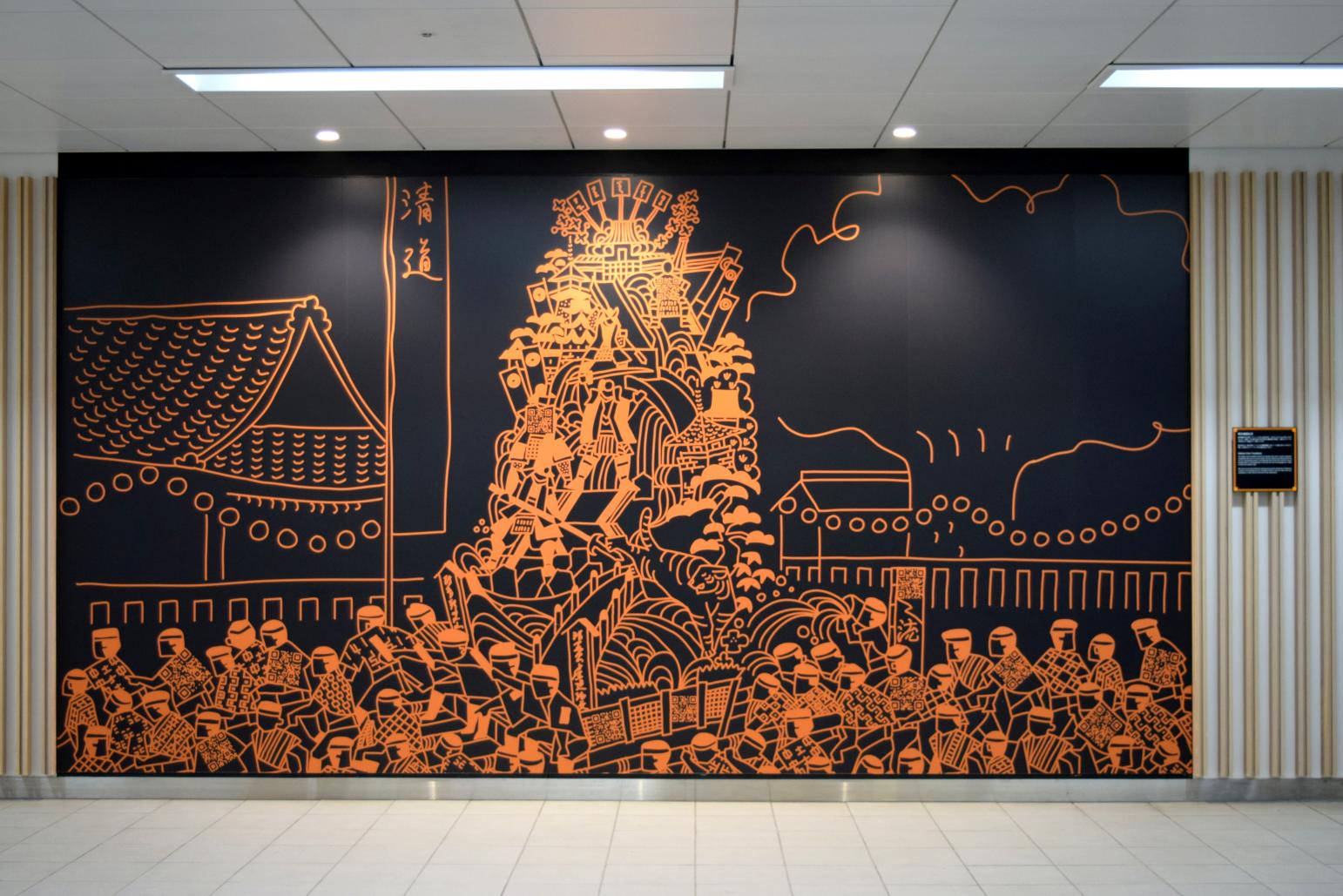
Kushida Jinja-mae Station on the Fukuoka City Subway Nanakuma Line
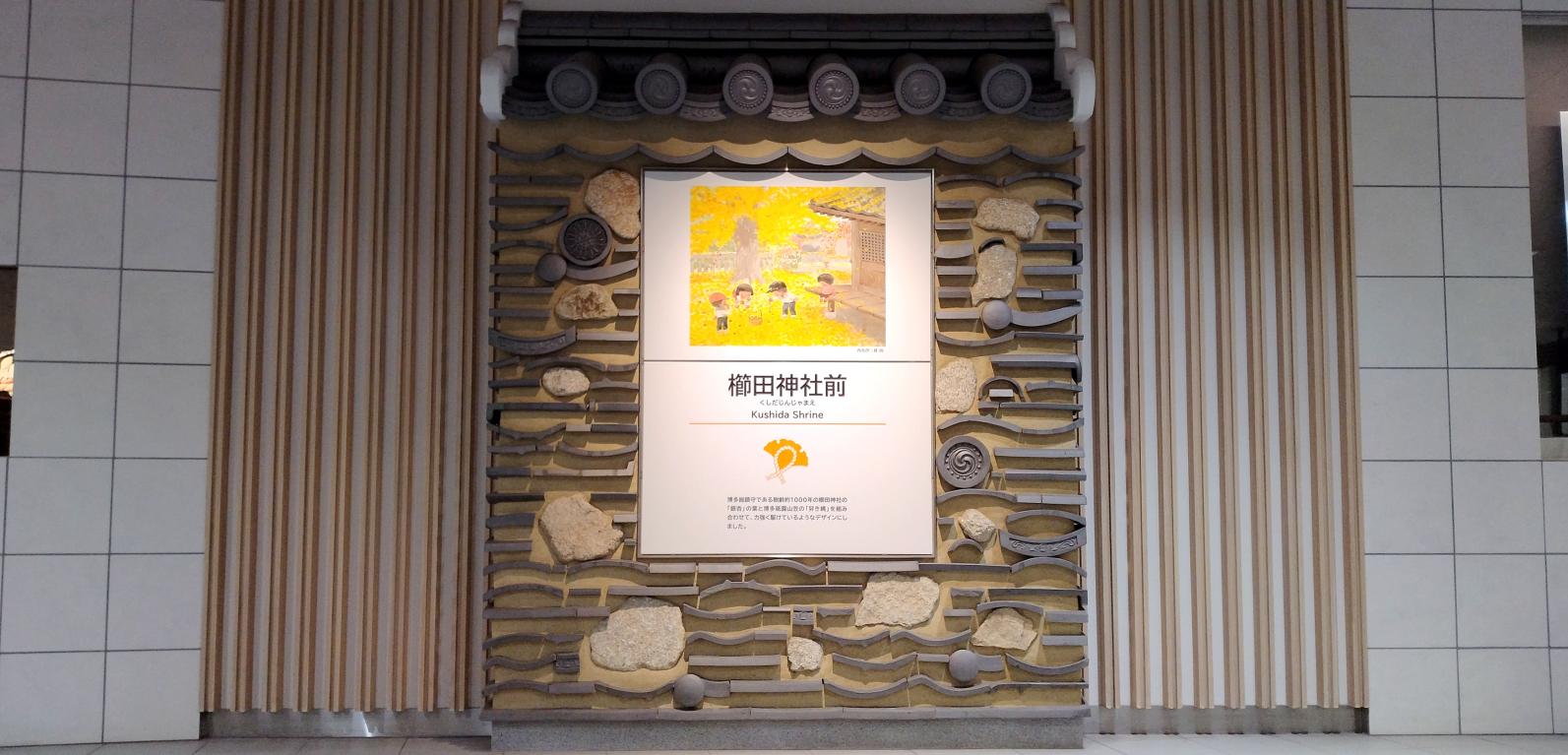
Kushida Jinja-mae Station on the Fukuoka City Subway Nanakuma Line, which opened in March 2023, is about a two-minute walk from Kushida Shrine. The design of the station's symbol mark combines a ginkgo leaf (symbolizing the shrine) with the carrying rope of the yamakasa floats. The floor tiles inside the station are reminiscent of the stone-paved approach to the shrine. Alongside a mural depicting the Hakata Gion Yamakasa festival, traditional crafts such as Hakata-ori textiles and Hakata dolls are displayed, making the station itself a hub for promoting Hakata culture.
Recommended spots nearby
There are many places in the area around Kushida Shrine where you can experience Hakata's history and culture. Enjoy them alongside your visit to the shrine.
-
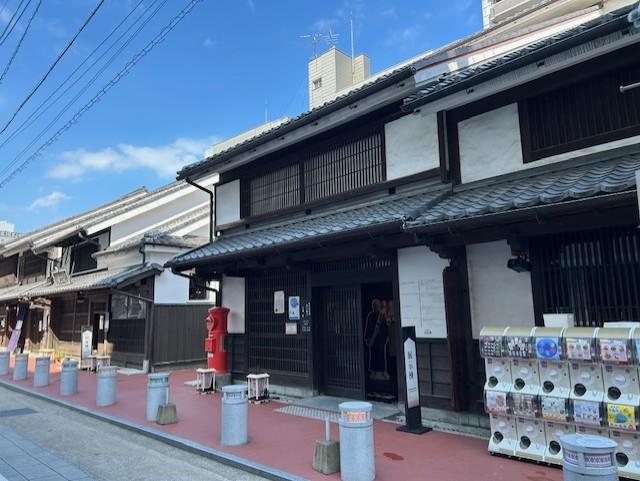
Hakatamachiya Furusatokan Museum
View moreThis facility brings visitors up-close and personal to the lifestyles and culture of the Meiji and Taisho eras. The Machiya Building, relocated and restored from a Hakata-ori weaver's residence and workshop, is quaint and charming. Be sure to watch the live demonstrations of Hakata-ori weaving presented by artisans. In the Exhibition Building, you can enjoy videos of the Hakata Gion Yamakasa festival and even try your hand at painting traditional crafts.
-
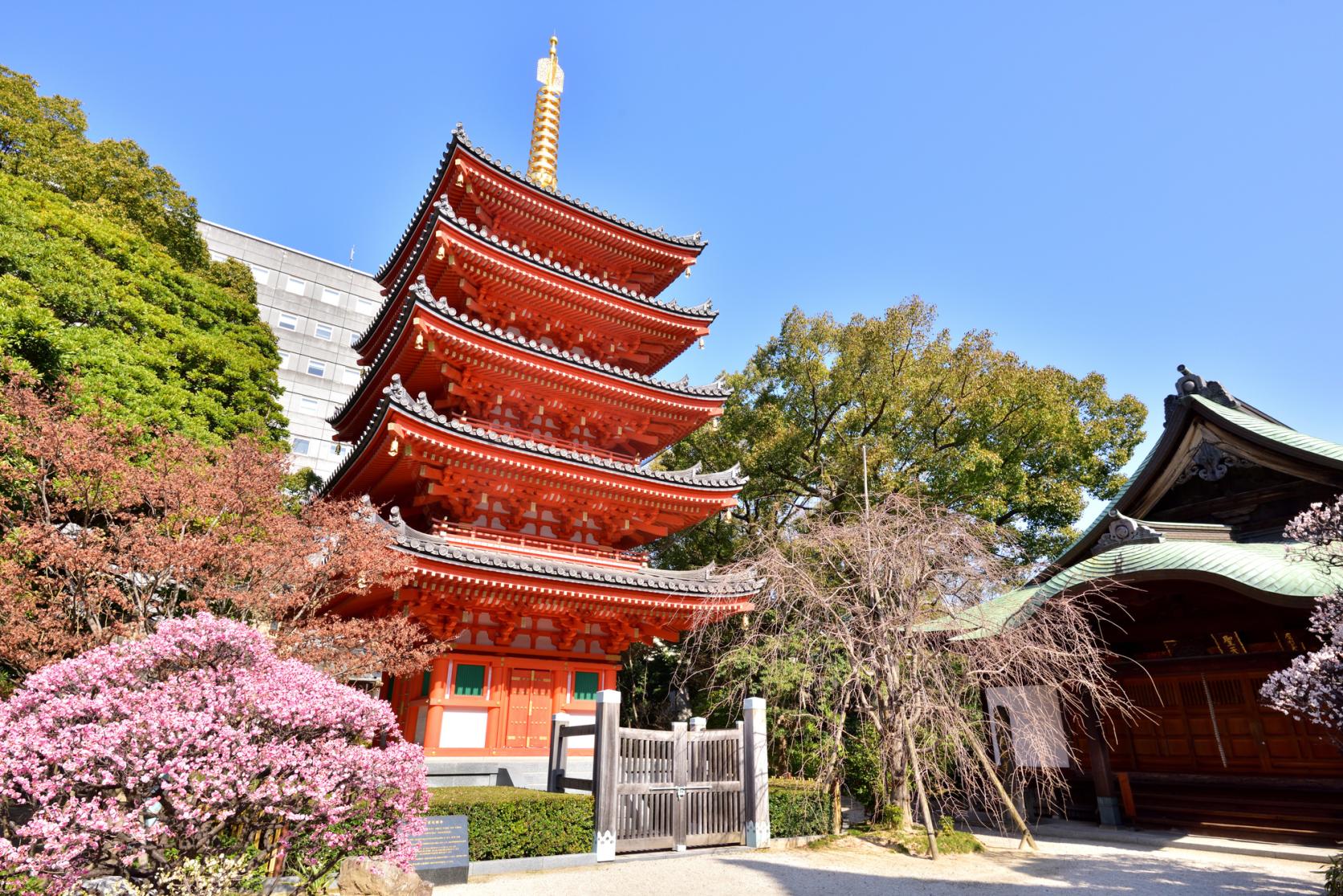
Tochoji Temple
View moreThis was the first Buddhist temple in Japan founded by Kobo Daishi (Kukai). It is characterized by its beautiful vermilion-lacquered five-story pagoda. The Fukuoka Daibutsu, the largest wooden seated Buddha statue in Japan, makes a truly impressive sight! Beneath the Buddha's seat lies the entrance to "Jigoku / Gokuraku Meguri" ("Journey Through Hell and Paradise") is a thrilling experience that visitors explore by feeling their way through the darkness.
-
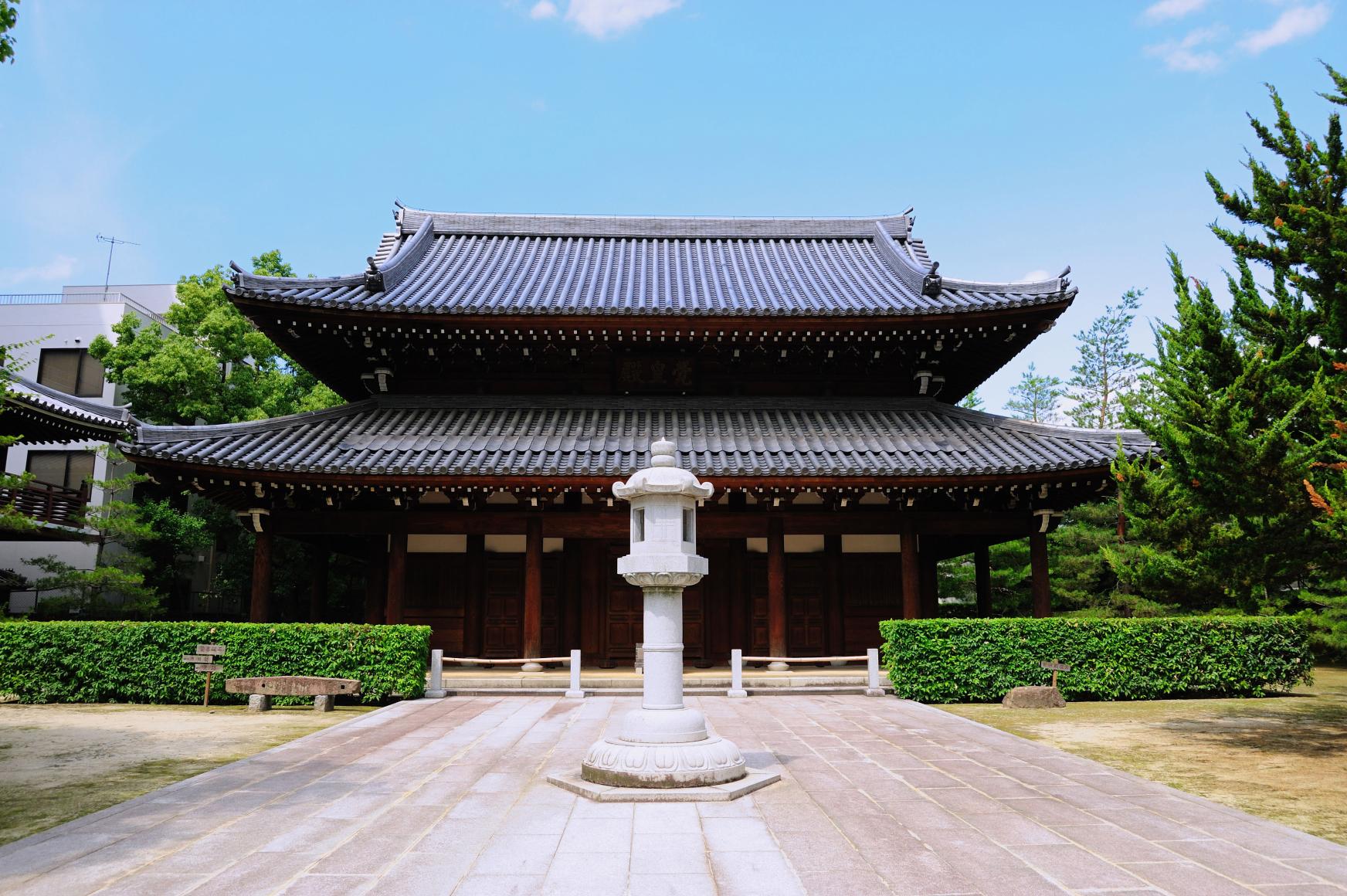
Jotenji Temple
View moreThis famous temple is deeply connected to the origins of the Hakata Gion Yamakasa festival. It is said that when an epidemic struck Hakata, the founding priest, Shoichi Kokushi, performed prayer rituals to ward off the disease, marking the temple's beginnings. It is also known as the birthplace of udon, soba, manju, as well as Hakata-ori textiles, and a commemorative monument has been erected within the temple grounds.
-
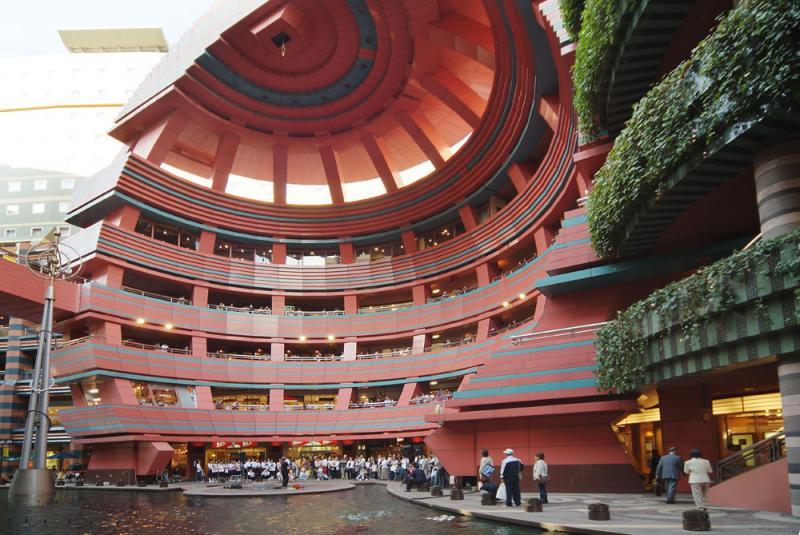
Canal City Hakata
View moreThis is one of the largest commercial complexes in Kyushu, featuring hotels, theaters, cinemas, shops, and restaurants clustered around the canal. Historic shrines standing next to modern buildings is a sight unique to Hakata, a melting pot of old and new cultures. It is the perfect spot for shopping, dining, or having a rest after your shrine visit.
-
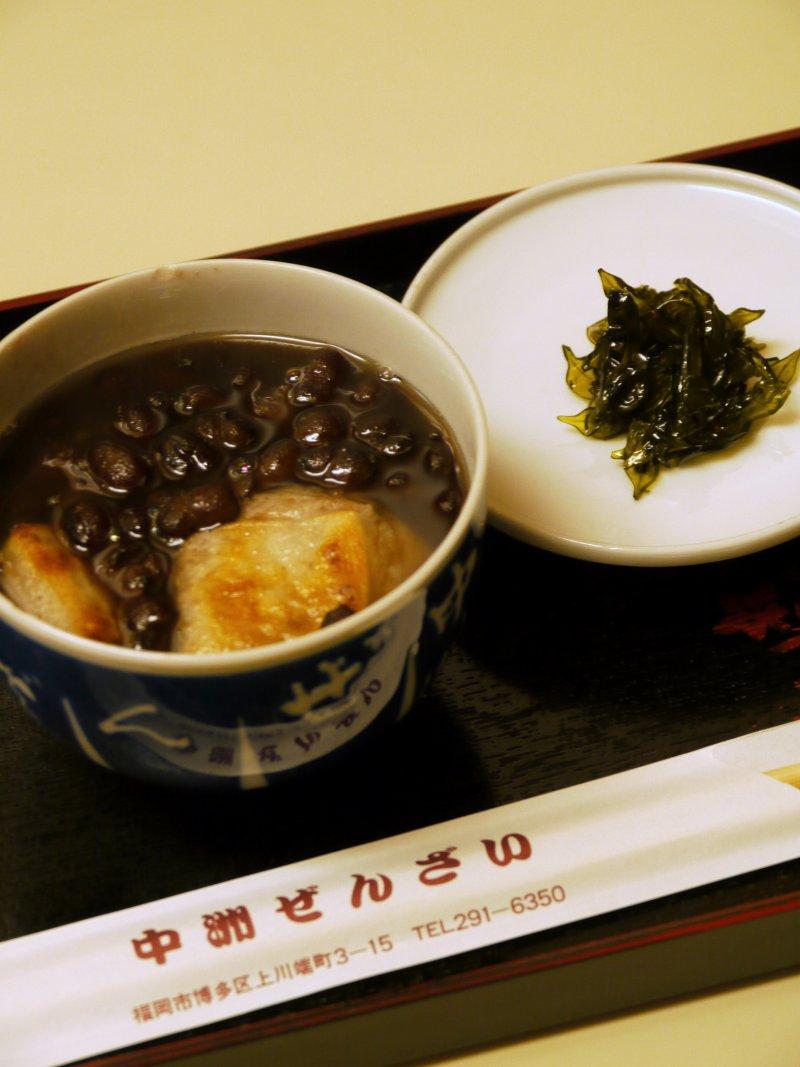
Nakasu Zenzai
A dessert shop located just a short walk from Kushida Shrine. Its signature “zenzai," a traditional sweet red bean soup, features moderately sweet red beans simmered to plump perfection and topped with irresistibly fragrant grilled mochi. In summer, you can also savor the delicate kakigori (shaved ice) made with finely crushed ice and handmade syrup!
-
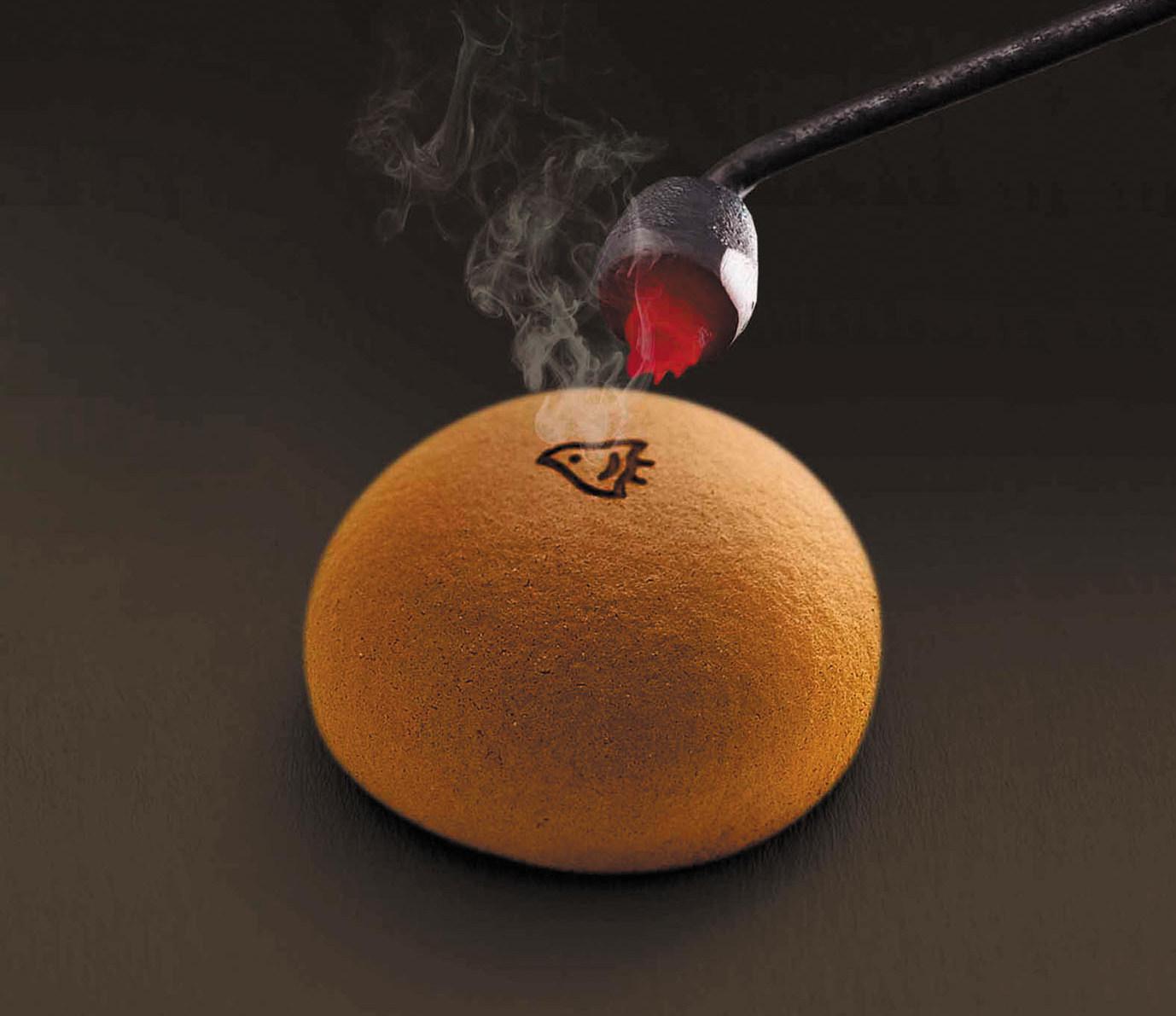
Chidori Manju Sohonpo (Chidoriya Main Store)
View moreThis is a long-established confectionery shop, renowned for its Chidori Manju sweets. The richly flavored castella sponge harmonizes exquisitely with the soft texture of the white bean paste. The "Tirolian," a crisp, light rolled cookie filled generously with melt-in-the-mouth cream, is also a popular item. Both come highly recommended as gifts.
Summary
Kushida Shrine is a spiritual anchor deeply rooted in Hakata's history, culture, and the lives of its people. After your visit to the shrine, take a stroll through the grounds and surrounding area, which are filled with many highlights and attractions.
Shrines are sacred places that have been cherished since ancient times. Please observe proper etiquette when visiting.
Share


 Next article for you
-
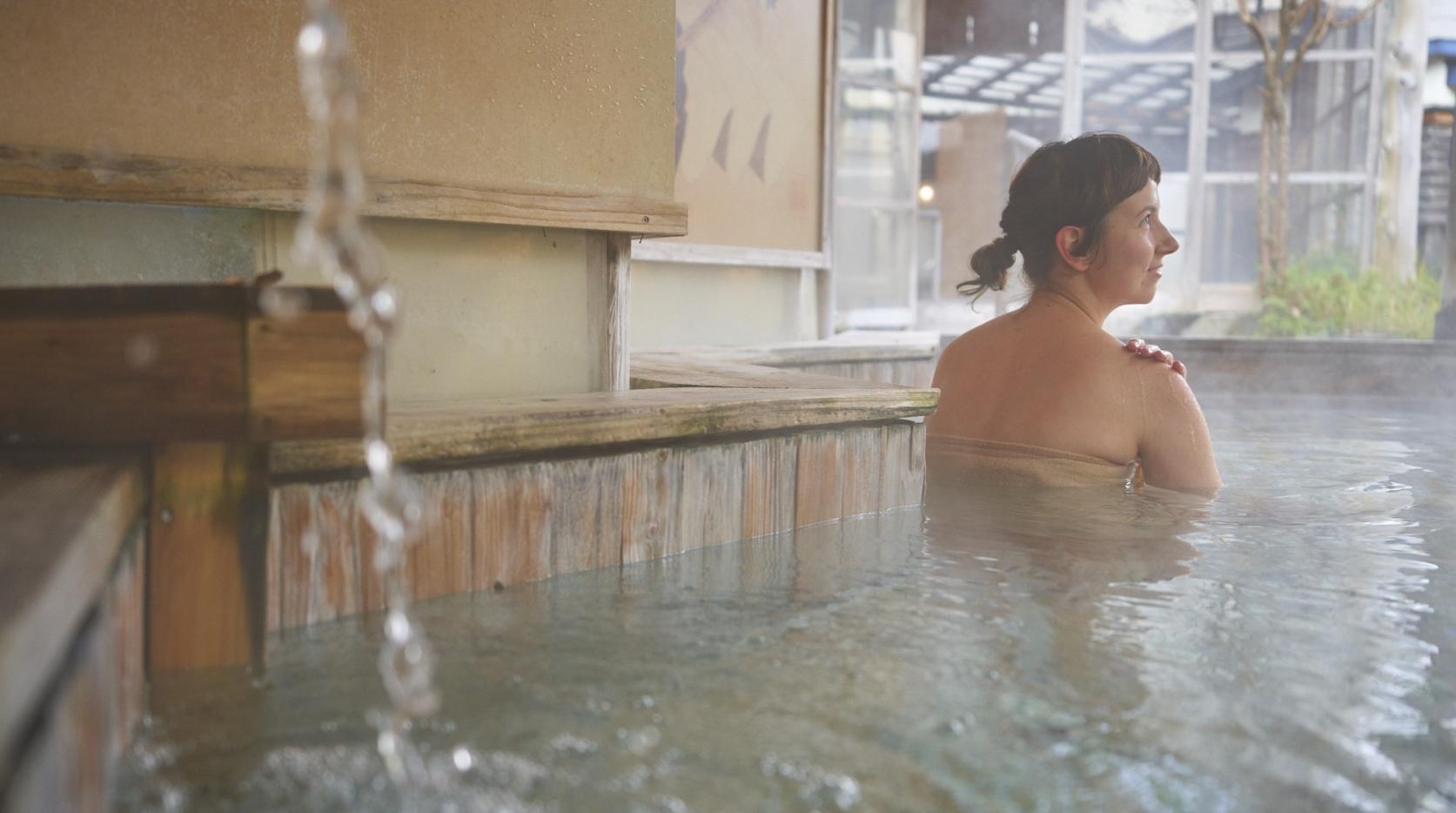
Fukuoka Has Onsen Too! A Complete Guide—from Day Trips to Famous Hot Springs
-

10 Recommended Dishes in Fukuoka! Discovering the Region’s Finest Foods
-
【2025】Your Guide to Fukuoka Prefecture's Best Fall Foliage Destinations
-
【2026】October Events and Festivals in Fukuoka Prefecture
-

TIPS FOR TRAVELING IN FUKUOKA PREFECTURE
-

【2026】Enjoy Autumn Nights in Hakata Old Town! The Ultimate Guide to the Hakata River Boardwalk & Light-Up Walk
-
A Guide to Major Tourist Events and Festivals in Fukuoka Prefecture in February
-
【2025-2026】Illumination and Light-up Spots in Fukuoka
-
10 Recommended Shrines and Temples in Fukuoka!
-
![[2026] Strawberry Picking Spots in Fukuoka-1](https://www.crossroadfukuoka.jp/storage/special_features/49/responsive_images/9ZHgrqvQdpH8tM4IRF54DXu0aPBF3YGGkj5WOTGc__1673_1115.jpg)
[2026] Strawberry Picking Spots in Fukuoka
-
Here are the most popular souvenirs of Fukuoka that you won’t want to miss!
-
A guide to enjoying fruit picking in Fukuoka all year round! Featuring farms with all-you-can-eat options and attached cafes
-
CYCLE FUKUOKA
-

Fukuoka Prefecture is the place for enjoying the best mentaiko! Featuring lunch spots, hands-on experiences, and gifts
-
TRADITIONAL JAPANESE CRAFTS OF FUKUOKA ~Present Day Breath-taking Craftsmanship~
-
Raizan Sennyoji Daihioin Temple:
-
Discover the secrets of Yame tea! A tea picking experience that takes you on a journey through Japanese culture
-

How to experience Mojiko Retro in Kitakyushu
-
A deep look into Tonkotsu Ramen from Hakata, Nagahama, and Kurume!
-
【2026】The Best Places to See Cherry Blossoms in Fukuoka
