

 Highlights
 Sample Itineraries
 See & Do
 Experience
 Events
 Plan a Trip
 Transport
 Local Life in Fukuoka City



![[Mountain of the Gods] Trace the history of Shugendo at Hikosan, a powerful spiritual spot where mountain worship continues to live and breathe-1](https://www.crossroadfukuoka.jp/storage/special_features/779/responsive_images/67MkqiD07XIccrQEW0rdf9lcvT2MMcLA4fwuiV9f__1673_1115.jpg)
[Mountain of the Gods] Trace the history of Shugendo at Hikosan, a powerful spiritual spot where mountain worship continues to live and breathe
Hikosan, standing at 1,199 m above sea level on the border between Soeda Town in Fukuoka Prefecture and Nakatsu City in Oita Prefecture, is renowned as one of Japan's three leading Shugendo (mountain ascetics) training grounds, alongside Dewa Sanzan in Yamagata Prefecture and Mt. Omine in Nara Prefecture.
Since ancient times, Shugendo practitioners have been training on Hikosan with the aim of attaining the supernatural powers of the Shinto and Buddhist faiths, and using these powers to bring happiness and worldly benefits to people.
Today, many traces of the rigorous training of the Hikosan Yamabushi (a name for mountain ascetics) and historical sites related to Shugendo still remain on Hikosan, teaching us the importance of learning while engaging with nature.
"Hikosan worship," nurtured by the rich natural environment steeped in mystique
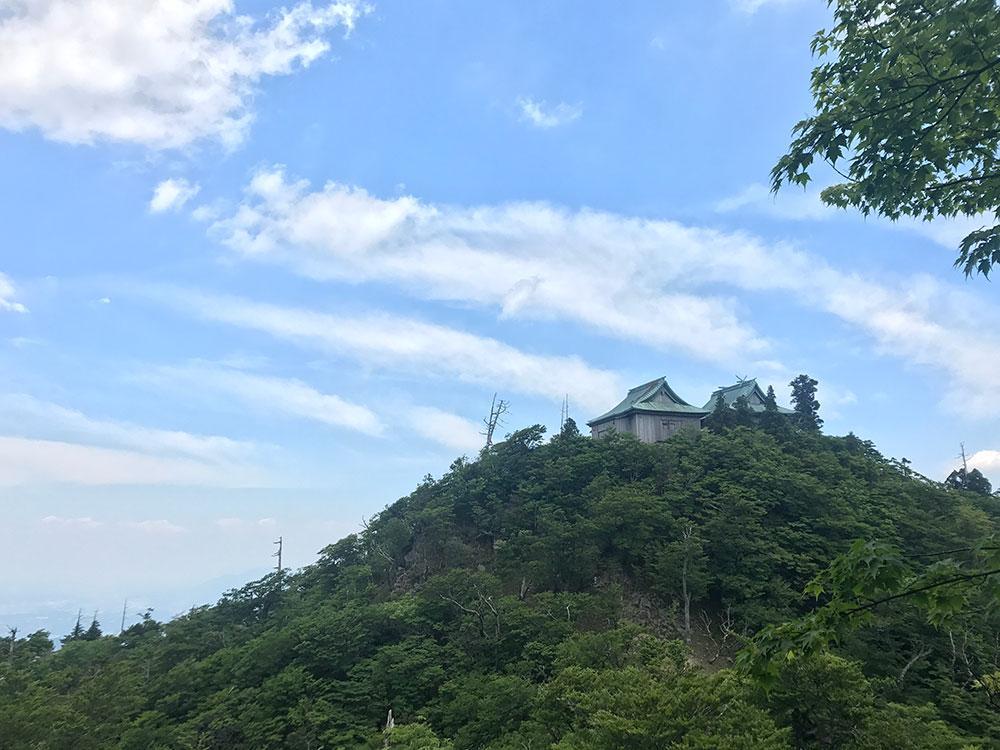
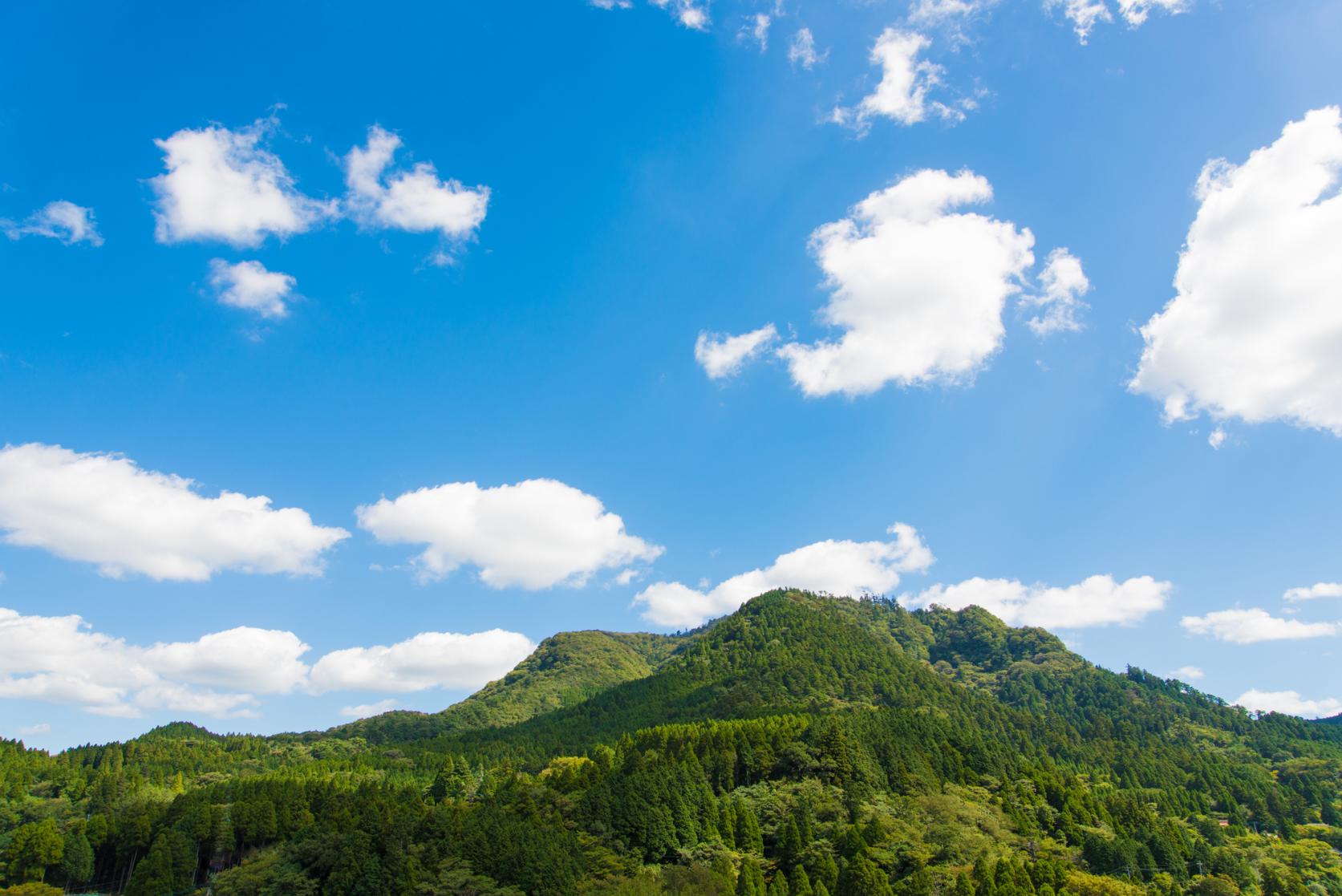
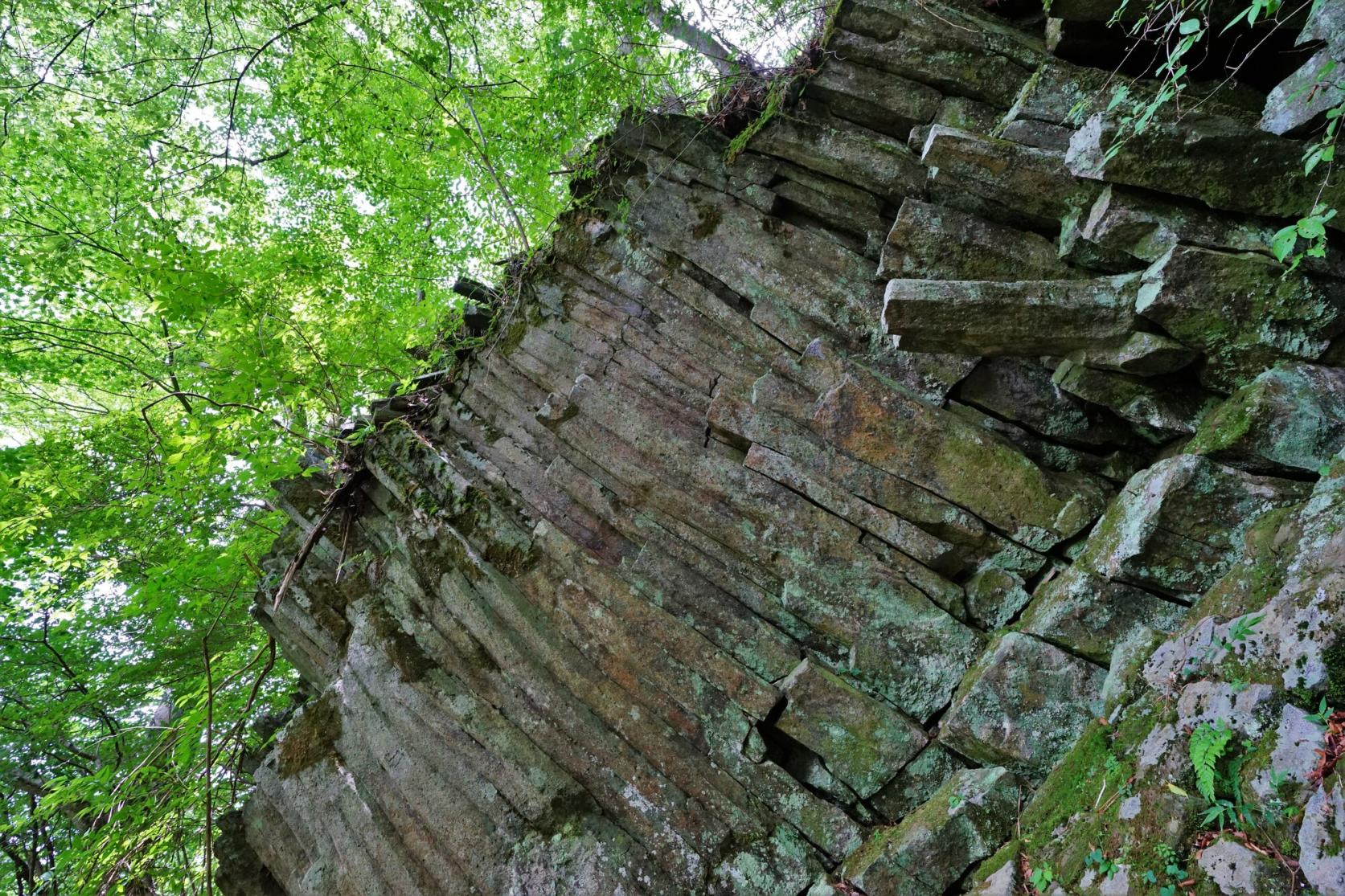
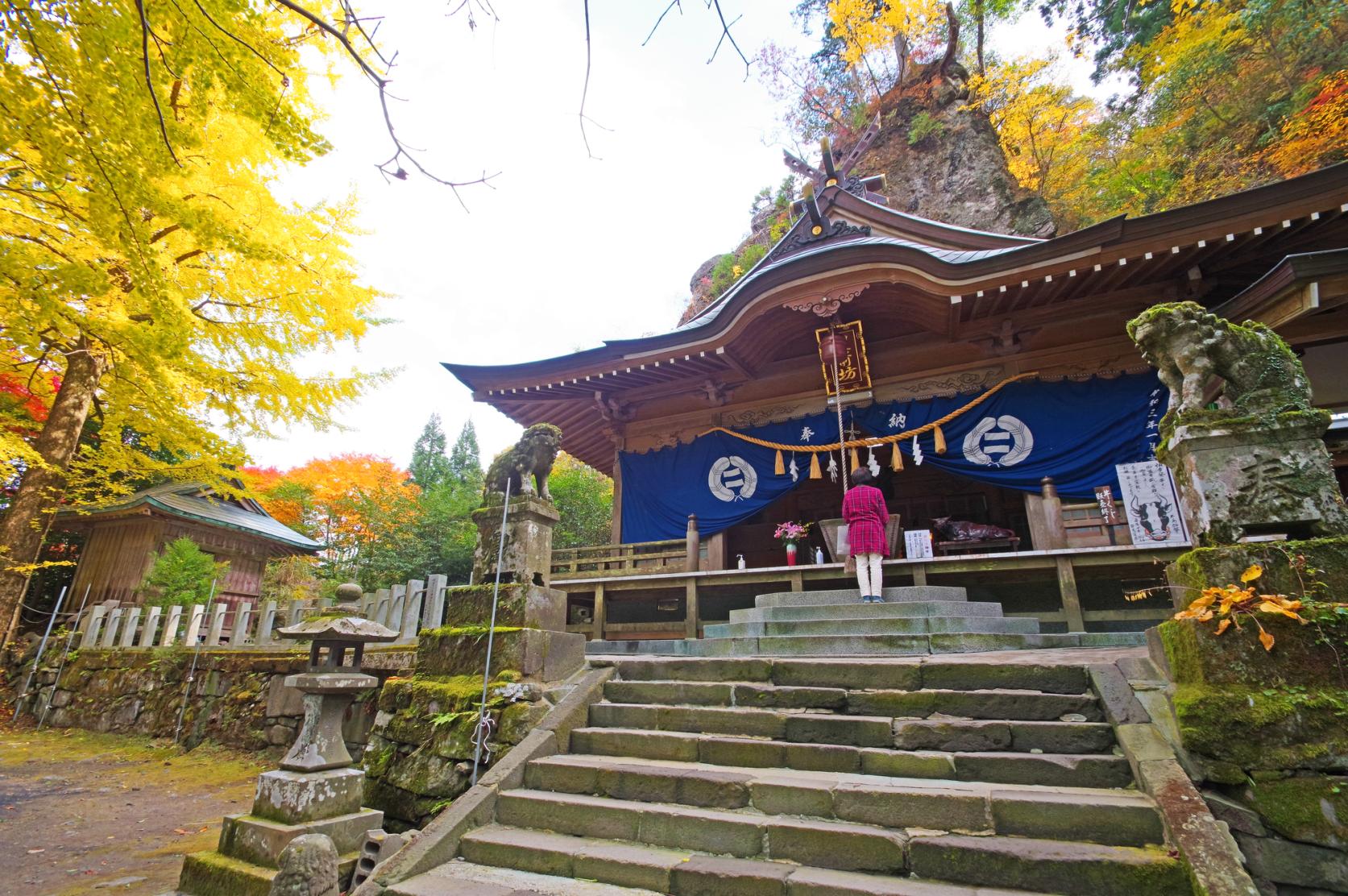
Hikosan, composed of three peaks named Naka-dake, Kita-dake, and Minami-dake, is the third highest mountain in Fukuoka Prefecture. It forms a part of the Hita-Yaba-Hikosan Quasi-National Park, and welcomes visitors with mystical views including the legendary Onisugi cedar tree, said to be 1,200 years old, and strangely shaped rocks. It is also a famous spot for autumn foliage, attracting many tourists for hiking and other activities in autumn.
Historical sites related to mountain worship are also dotted around the area, including Hikosan Jingu Hohei-den, a nationally-designated Important Cultural Property that has continued to pass down the history of Shugendo. The entire mountain has also been designated as a national historic site, regarded as the sacred body (sacred mountain) of Hikosan Jingu. Walking along the mountain trails and seeing the places where Shugendo practitioners used to train offers visitors a glimpse into what they were seeking through their ascetic training on this mountain.
Hikosan, a sacred site for Shugendo
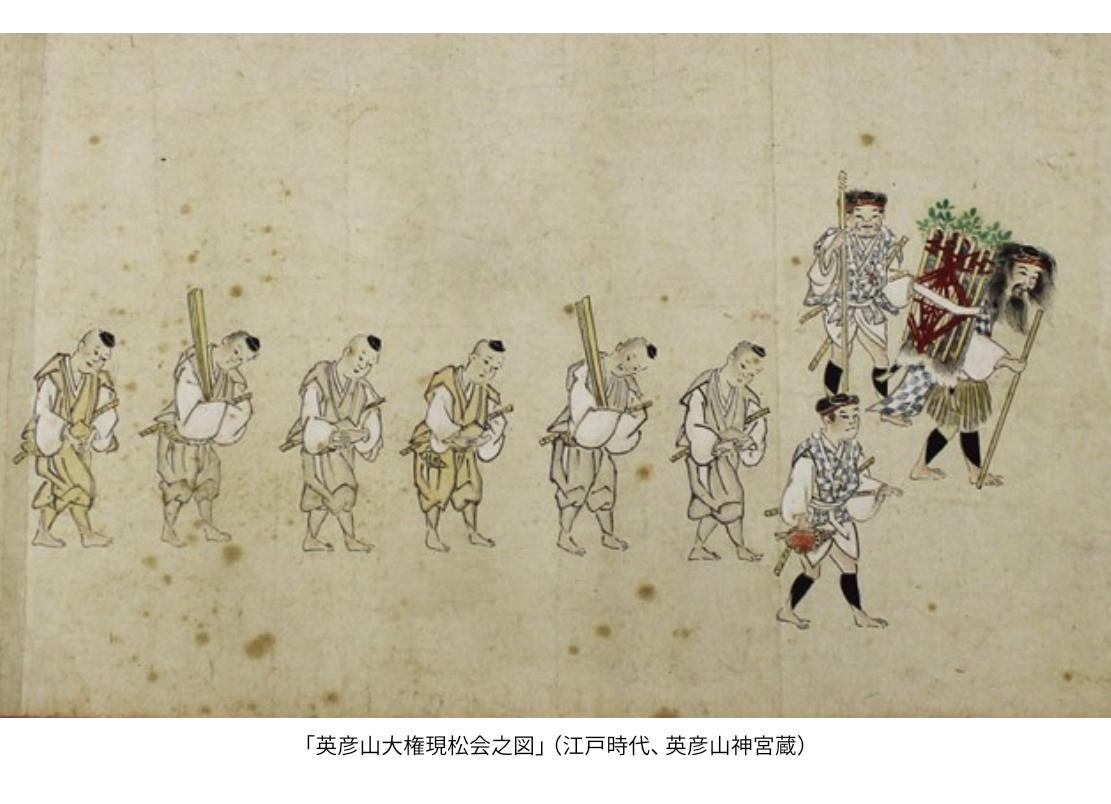
Shugendo is a uniquely Japanese belief system that syncretizes mountain worship with Shinto, Buddhism, astronomy, pharmacology, and other fields of study. Based on the concept that nature itself is an object of worship, Shugendo practitioners acquired power by becoming one with nature. They then imparted this power to people in the form of wisdom, offering salvation while teaching the importance of coexistence between humans and nature.
During the Kamakura period (1180–1336), Shugendo practitioners (known as Yamabushi) gathered at Hikosan and established settlements. At its peak, there were apparently as many as 3,000 Hikosan Yamabushi, and the number of monks' quarters they lived in reached as many as 800.
During the Meiji period (1868–1912), its name was changed to Hikosan Jinja due to the separation of Shinto and Buddhism. After the war, with the permission of Emperor Showa, it was renamed as Japan's third “Jingu” (a shrine with connections to the imperial family) to become the present-day Hikosan Jingu.
"Hikosan Daigongen Matsu-e no Zu" (from Hikosan Jingu's collection)
Column
The Shido Kekkai (Four Lands Boundaries) of Hikosan
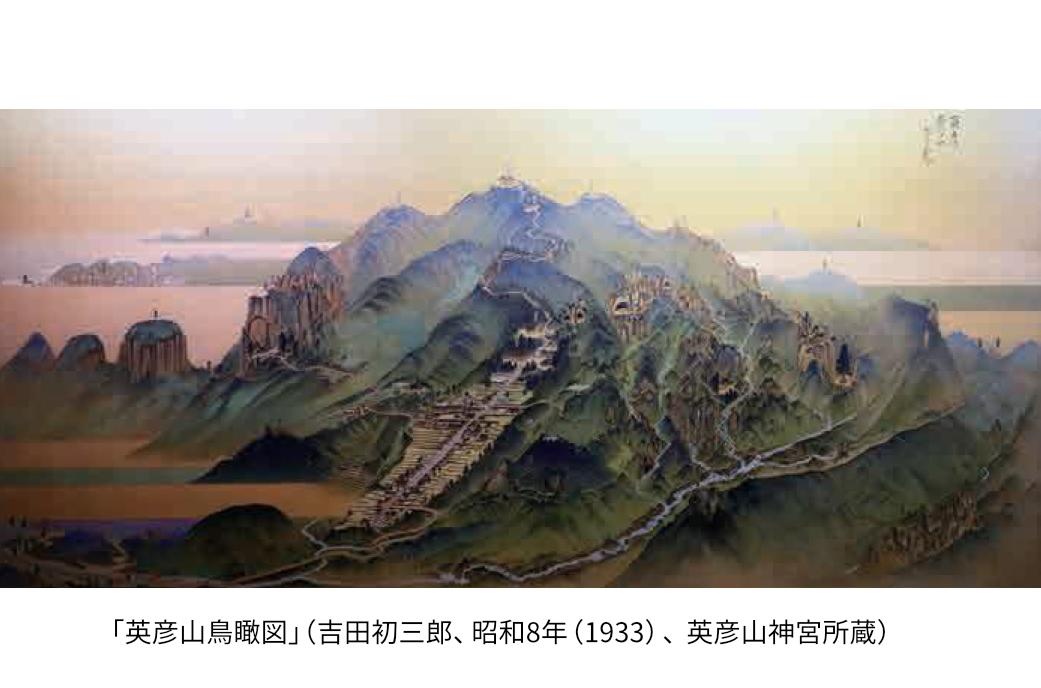
The concept of shido kekkai (the “Four Lands Boundaries”) applies to Hikosan, dividing it into four "realms" separated by three torii gates. Each realm had rules that determined the rituals to be followed, who could reside there, and what crops could be cultivated.
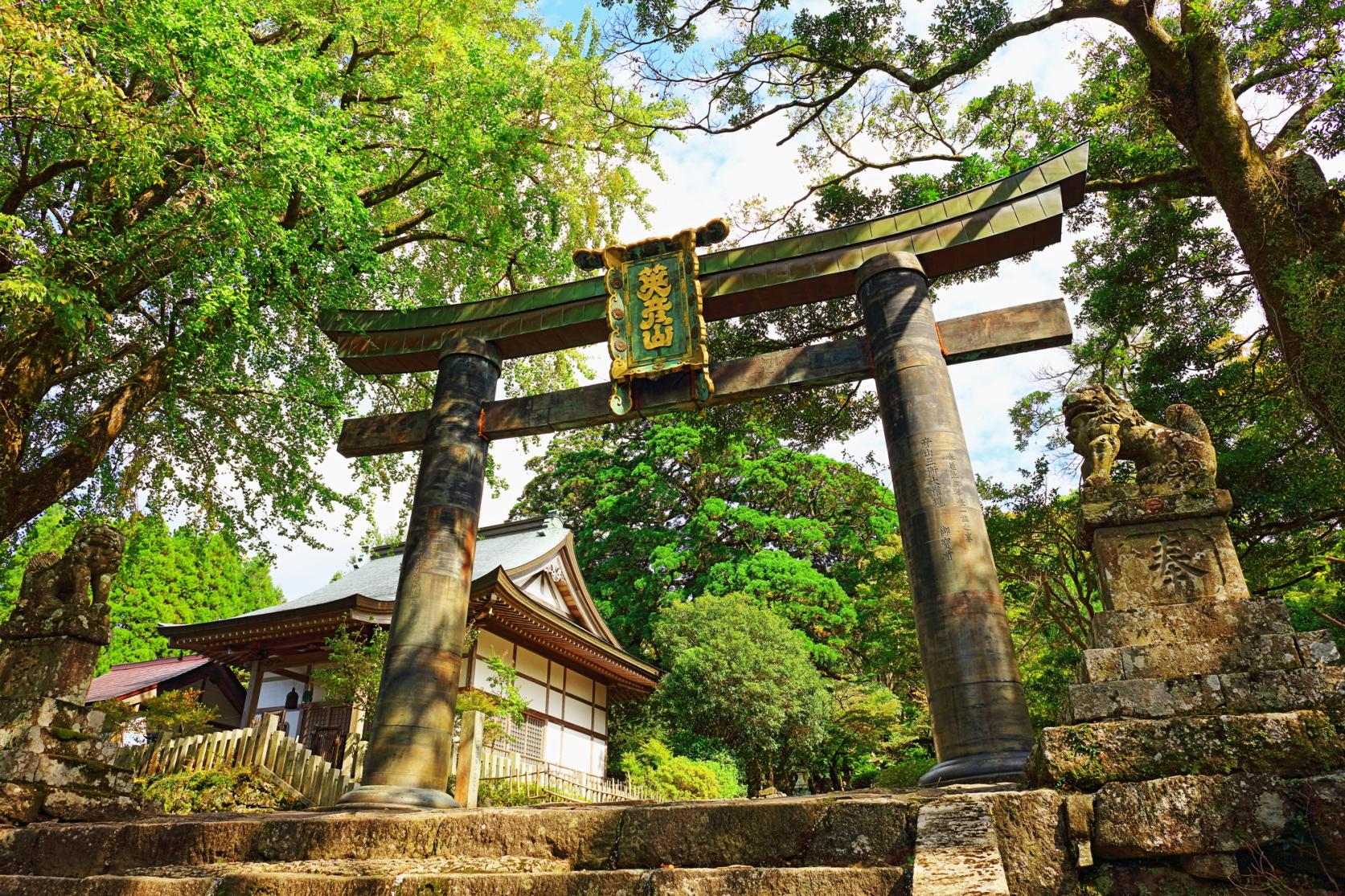
Positioned lower down the mountain than the first Kane-no-Torii (bronze gate), lies Bonsei Dokyodo where ordinary mortals and saints dwell together. From this area to the second Ishi-no-Torii (stone gate) is the Hoben Jyodo, a provisional land of purity inhabited by ascetics. Beyond Ishi-no-Torii is the sacred domain known as Jippo Shogondo, where Shugendo practitioners undergo rigorous training. The third gate is Ki-no-Torii (wooden gate), beyond which lies Jojaku Kodo, the realm of gods and Buddhas, where the Jogu (upper shrine) Hikosan Jingu is enshrined.
"Hikosan Chokan Zu" (Bird's-Eye View of Hikosan) (from Hikosan Jingu's collection)
Hikosan Mineiri, a tradition revived for the first time in 150 years
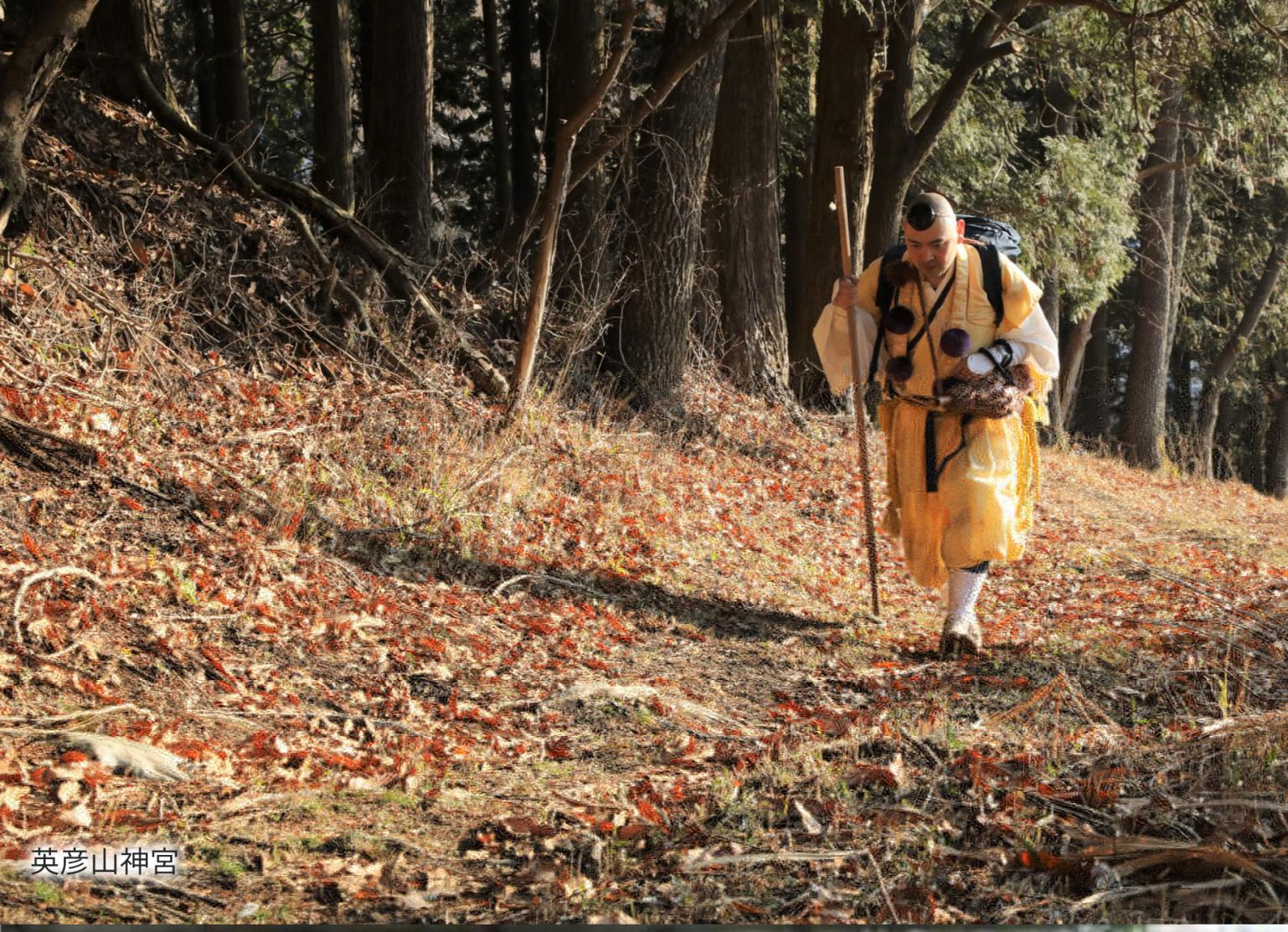
The path from Mt. Homan to Hikosan is known as the route for Mineiri, where Hikosan Yamabushi once performed practices such as fasting, and nozokigyo (a ritual of looking down over a cliff's edge) at a sheer precipice. Although Mineiri has long been aborted due to decrees issued during the Meiji period ordering the separation of Shinto and Buddhism and the abolition of Shugendo, the practice was revived in 2013 after approximately 150 years. Thirteen ascetics, including Ariaki Takachiho, a Shinto priest of Hikosan Jingu, participated in the ascetic training during this revival, traversing the route that spanned about 60 km each way. This was a significant event brought the history and spirit of Shugendo back into the modern era. Mr. Takachiho is also actively involved in efforts at Hikosan Jingu to revive the Gomataki-gyo (Goma fire ritual) and traditional events, playing a major role in preserving Shugendo traditions and the historical culture of the region.
Column
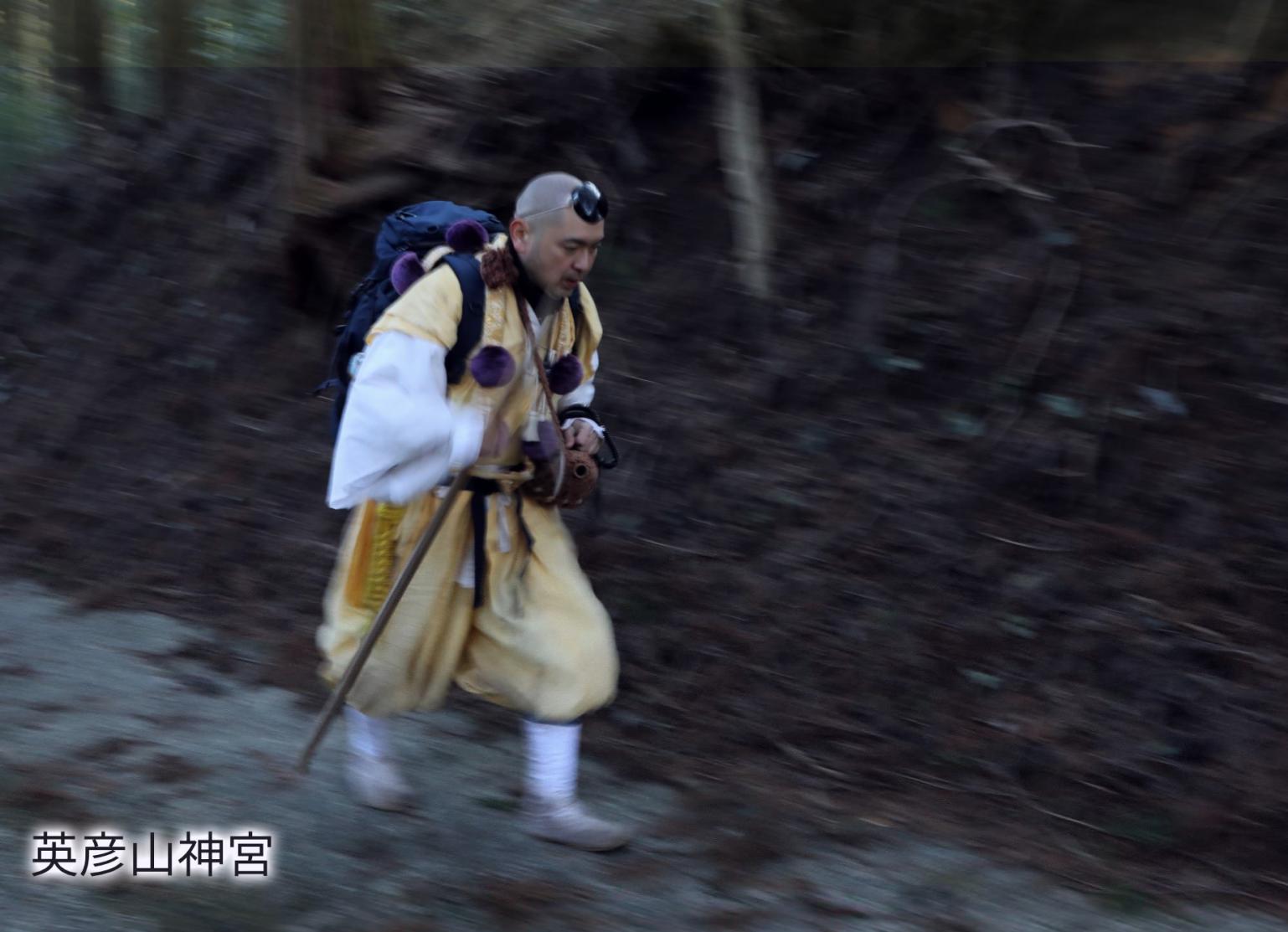
What is Mineiri?
Mineiri is one of the most important practices in Shugendo, and it refers to mountain ascetic practices that include performing extremely demanding tasks on sheer cliffs and fasting. The purpose of walking along rugged mountain paths is to deepen spiritual training and attain enlightenment. It is a practice that aims to unite the spiritual world of Buddhism with the real world, and undertaking Mineiri is said to signify symbolic death and rebirth, or in other words, a regeneration.
Stroll along the approach to Hikosan Jingu
If you wish to experience the majestic nature and profound history of Hikosan, we recommend starting with a stroll along the Hikosan Jingu approach. The approach is a slope of continuous cobblestone paths and stairways, so be sure to wear comfortable walking shoes.
-
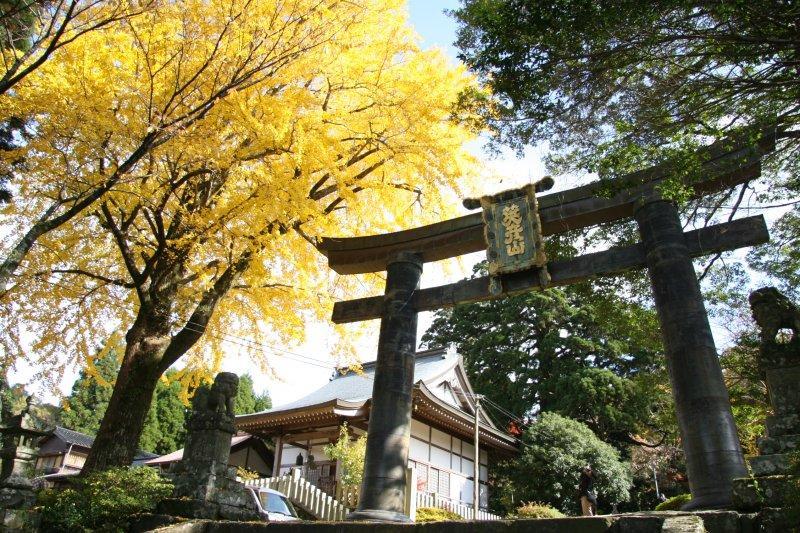
Kane-no-Torii
Kane-no-Torii is a large bronze gate donated by Nabeshima Katsushige, lord of the Saga domain, who revered Hikosan. During the Edo period (1603-1868), Hikosan worship was popular in the rural areas of Saga and Nagasaki Prefectures, and Hikosan Mairi (pilgrimage) was undertaken every year during the agricultural off-season around March to April. The plaque inscribed with the characters for “Hikosan" was bestowed by the Cloistered Emperor Reigen in 1734.
-
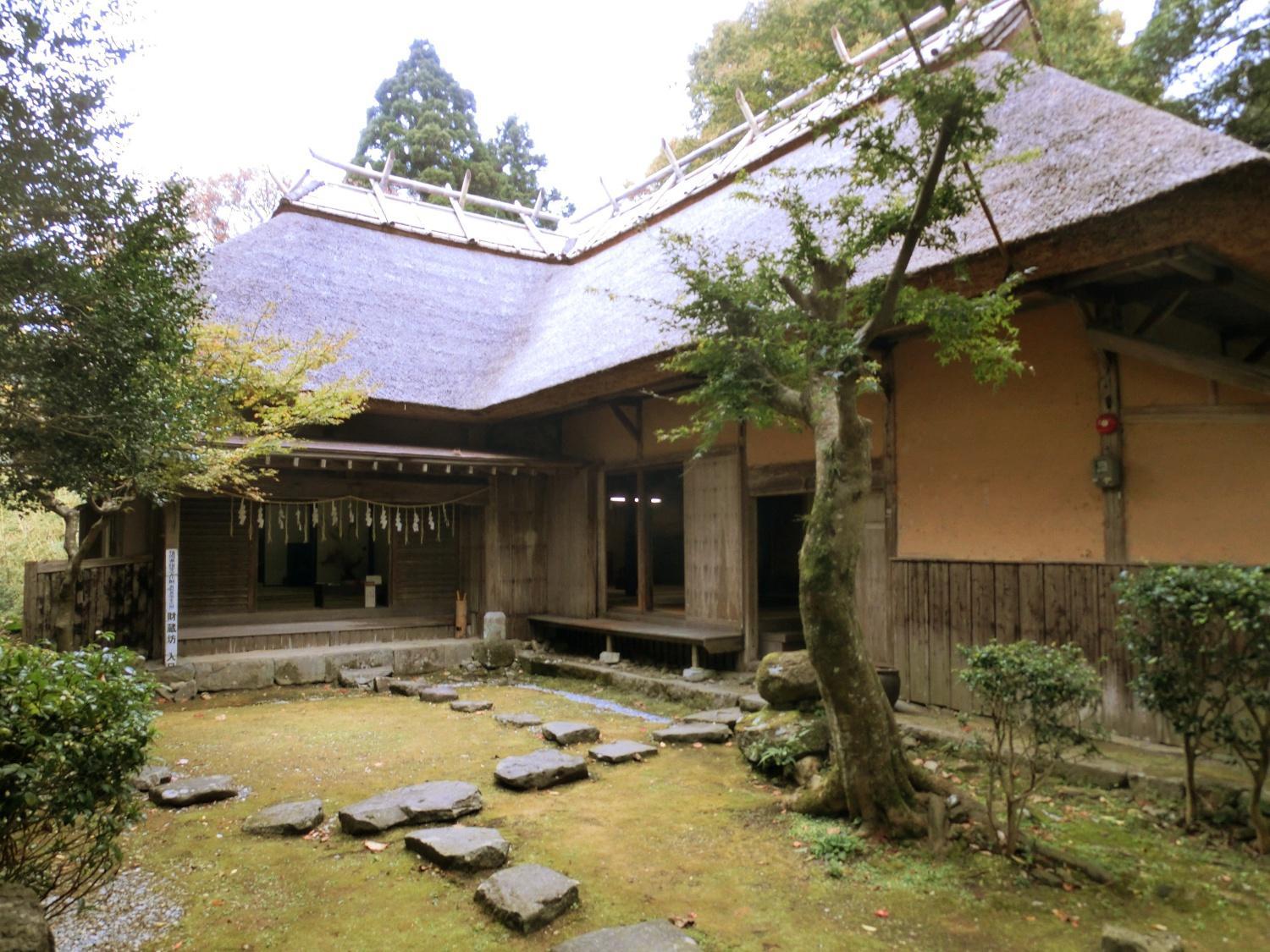
Zaizobo
Zaizobo is one of the monks' quarters lining the approach, where ascetic practitioners once lived. These dwellings come with altars, cooking areas, and other features, and are built in a unique architectural style known as kagiya-zukuri. It is currently used a history and folklore museum for Soeda Town, displaying materials that offer an insight into the lifestyle of Yamabushi.
-
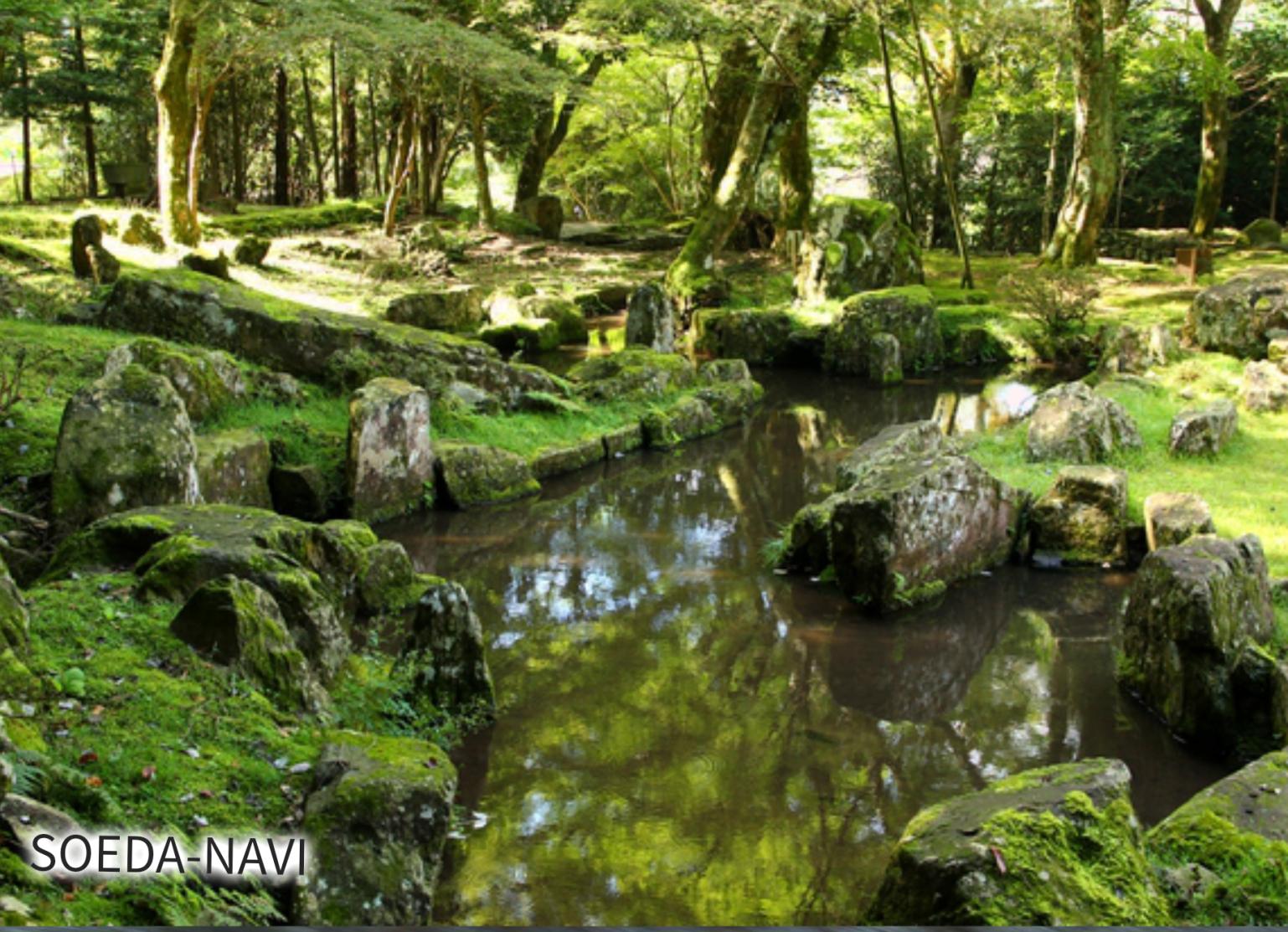
Kyu-Kameishi-bo Garden (Sesshu Garden)
This garden, designed in the chisen kansho style (literally meaning "pond-viewing" style), is said to have been built around 1475 by the monk and painter Sesshu. The ink paintings he left behind have been designated as National Treasures of Japan, such as "Landscape of the Four Seasons.” This is one of the four greatest gardens created by Sesshu, and has also been designated as a national site of scenic beauty.
-
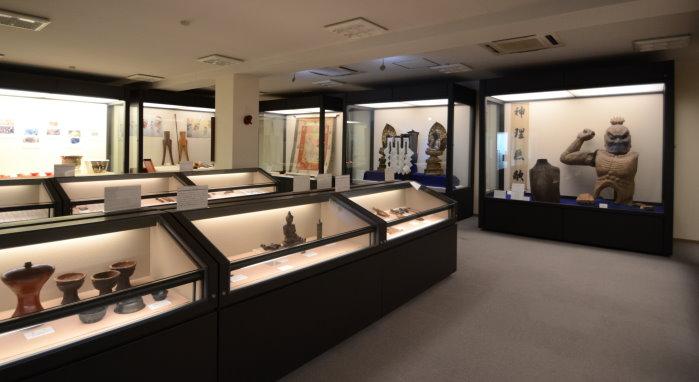
Yamabushi Cultural Heritage Room
View moreThe Yamabushi Cultural Heritage Room is located on the second floor of the Hana Station Main Building (Hikosan Slope Car). It displays numerous valuable materials related to Hikosan Shugendo. Visitors can view items such as conch shells actually used by Yamabushi, letters from Toyotomi Hideyoshi, and Nio-zo statues destroyed during the Haibutsu Kishaku movement (a radical movement to "abolish Buddhism and destroy Shakyamuni").
-
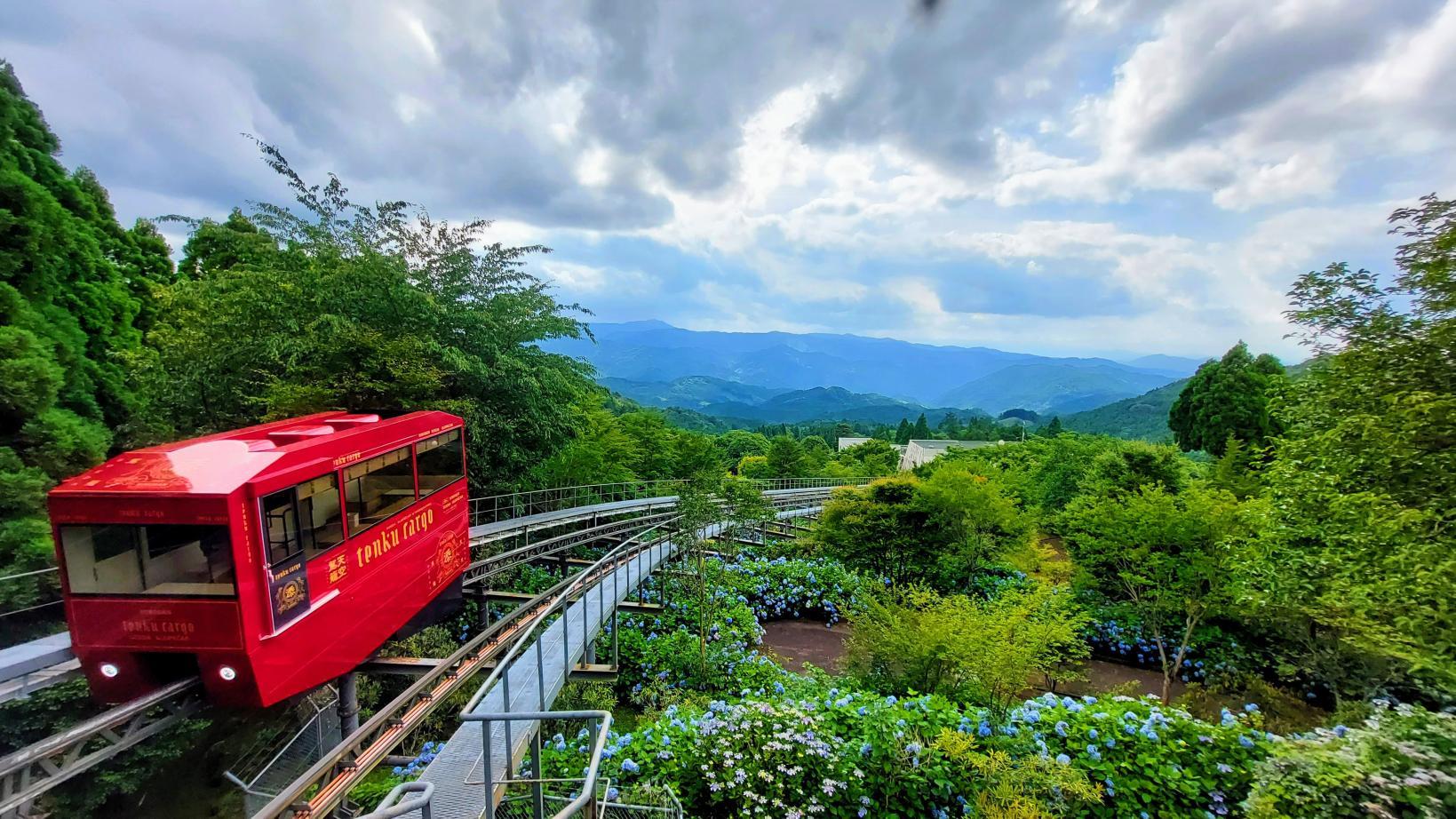
Hikosan Slope Car / Hikosan Flower Garden
View moreHikosan Slope Car service was launched to provide barrier-free access to worship at Hikosan Jingu Hohei-den. It connects Hana Station, located near the shrine approach, with Kami Station, which is the closest to Hikosan Jingu Hohei-den, in about 7 minutes. Visitors can look down to admire Hikosan Flower Garden, planted with over 70 species of alpine plants, including many rhododendrons, along with hydrangeas and lavender.
-
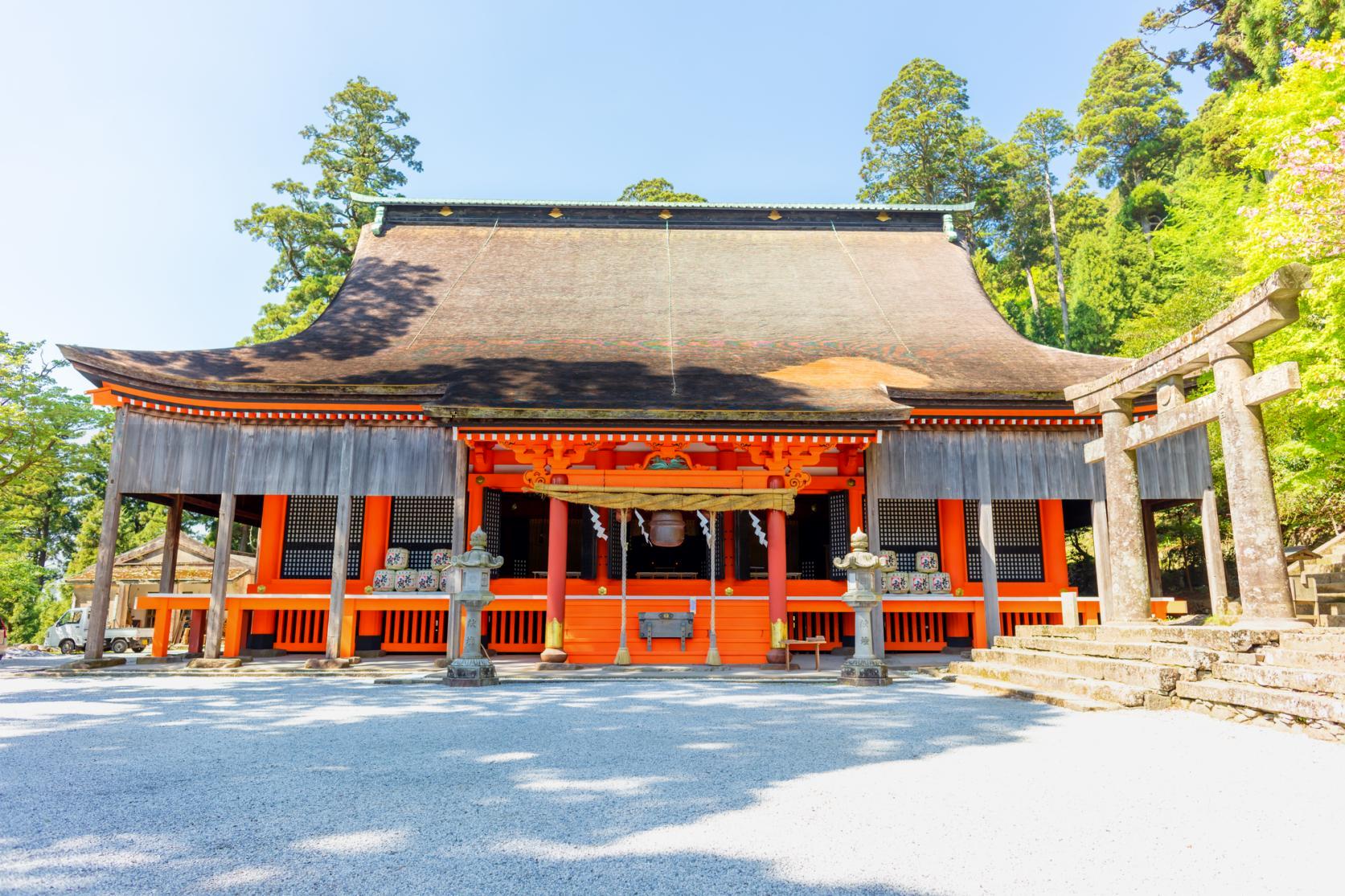
Hikosan Jingu Hohei-den
View moreThe vermilion-colored sanctuary and large bell are symbolic and beloved as the central attraction of Hikosan tourism. Before the Edo period, Hohei-den was known and used as a large lecture hall of Hikosan Reisenji Temple. The current building was reconstructed in the early Edo period by the lord of the Kokura domain. Subsequent lords of the Kokura domain maintained and managed it, and it is now designated as an Important Cultural Property of Japan.
Walking enthusiasts should aim to reach Jogu!
Beyond Ishi-no-Torii, next to Hikosan Jingu Hohei-den, lies the world of bodhisattvas, where ascetic practitioners underwent rigorous training. The erection of residences here is prohibited, and a thousand cedar trees have been planted by the Hikosan Yamabushi.
Further beyond, from Ki-no-Torii up to the summit where Hikosan Jingu Jogu is located, lies the realm of Buddha. It was once a sacred realm accessible only to Yamabushi who had completed the Mineiri ascetic practice fifteen times. Acts that may desecrate the sanctity of the sacred area, such as sweating or shedding tears, were strictly forbidden.
Although the area is marked by long, steep mountain trails, it is enjoyable to hike while admiring flowers such as rhododendrons and listening to the songs of wild birds. Those who are confident in their walking ability should definitely visit.
-
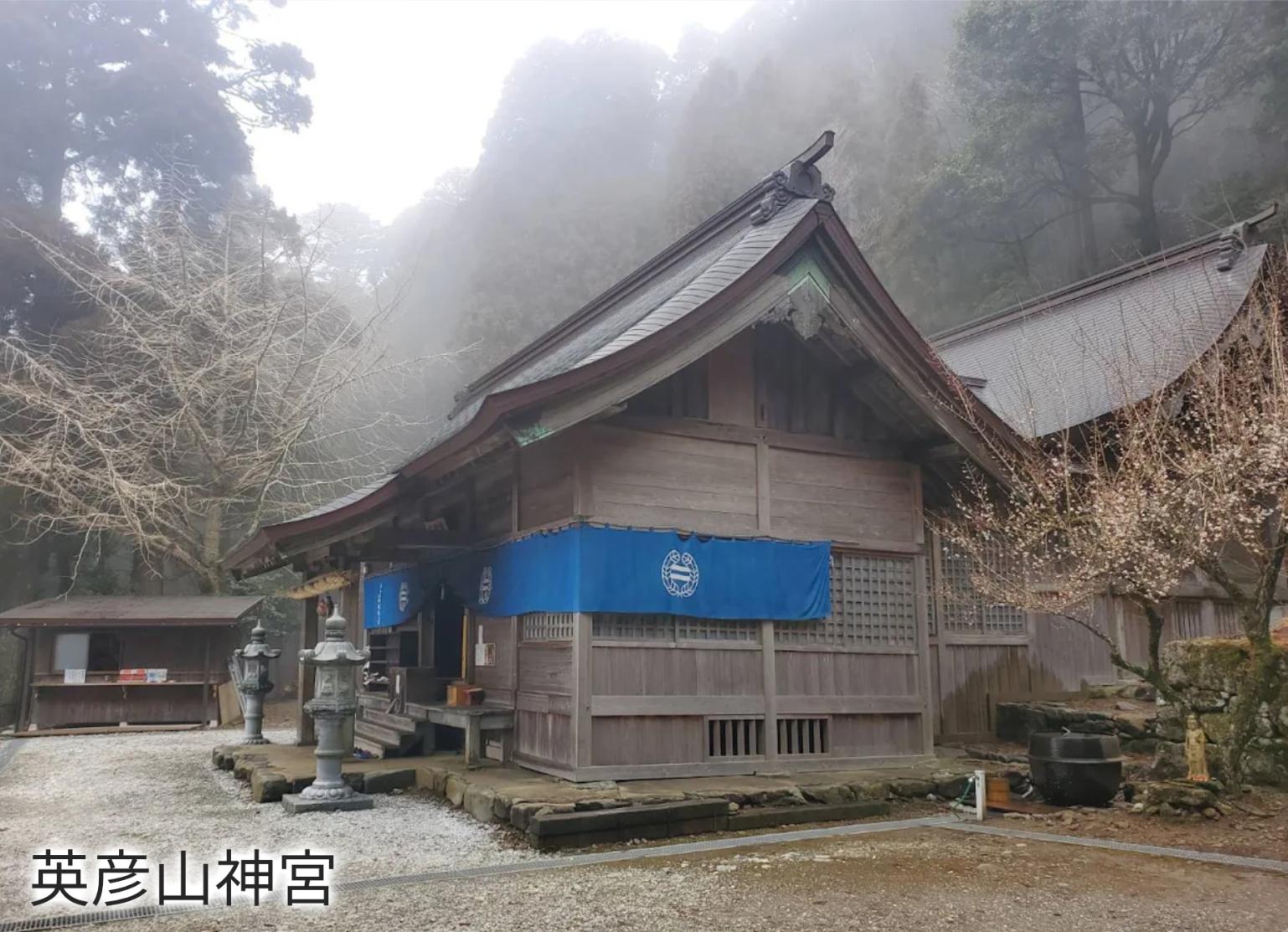
Hikosan Jingu Shimotsu-gu
Morning services are held daily at Shimotsu-gu. Breathe in the fresh, crisp air as you sit upright in the seiza position before Shinto and Buddhist deities such as Hikosan Gongen and Fudo Myo-o, reciting prayers and reading sutras as you experience the sacred atmosphere. Goma-taki rituals are held on the first Sunday and sutra recitation sessions are held on the fourth Sunday of each month.
-
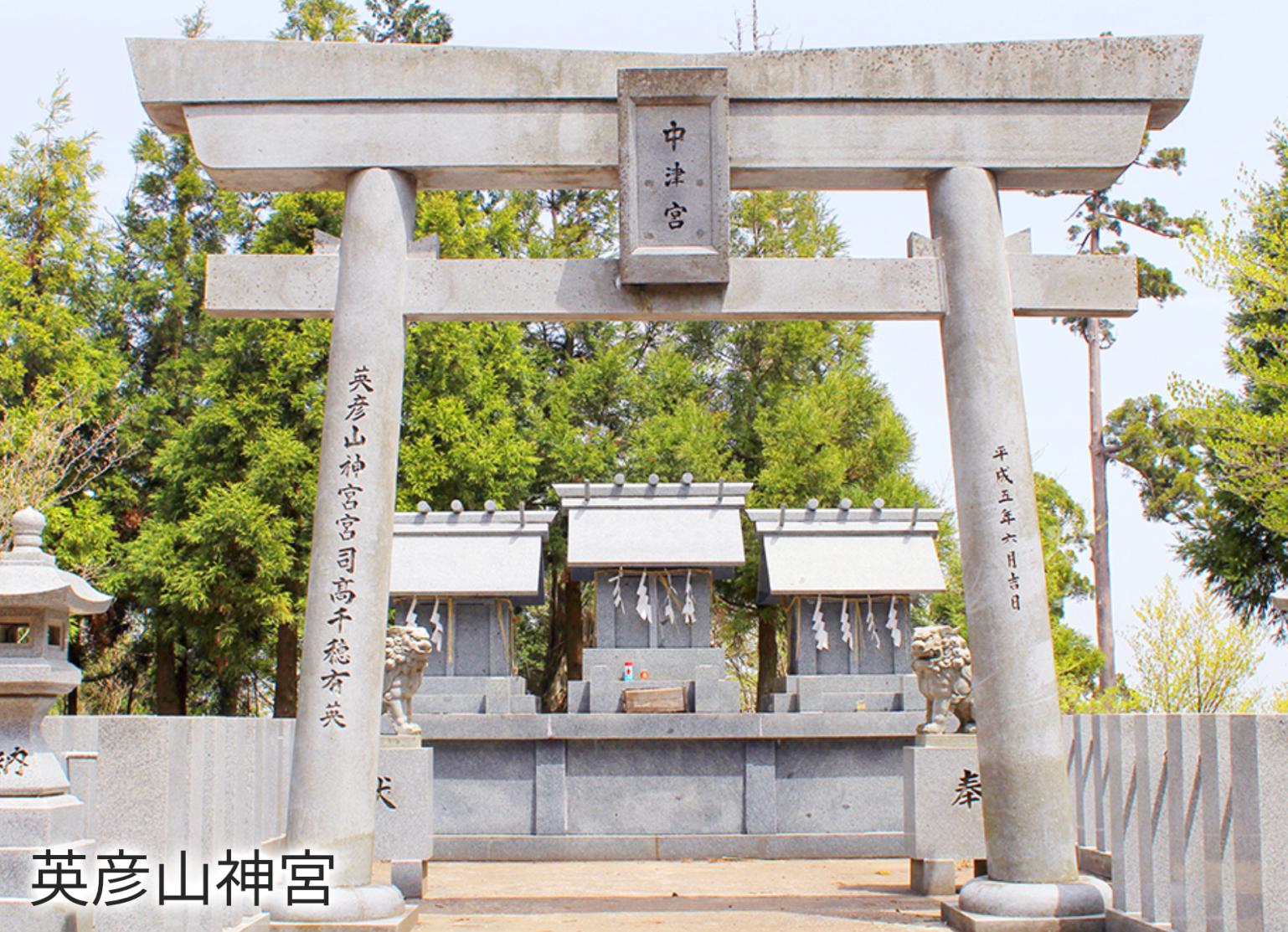
Hikosan Jingu Nakatsu-gu
Nakatsu-gu was donated by Lord Nabeshima Narimasa of Saga Domain in 1857. It is one of the important shrines enshrining Ichikishimahime-Mikoto, one of Hikosan Junisho Gongen, the twelve deities protecting Hikosan.
-
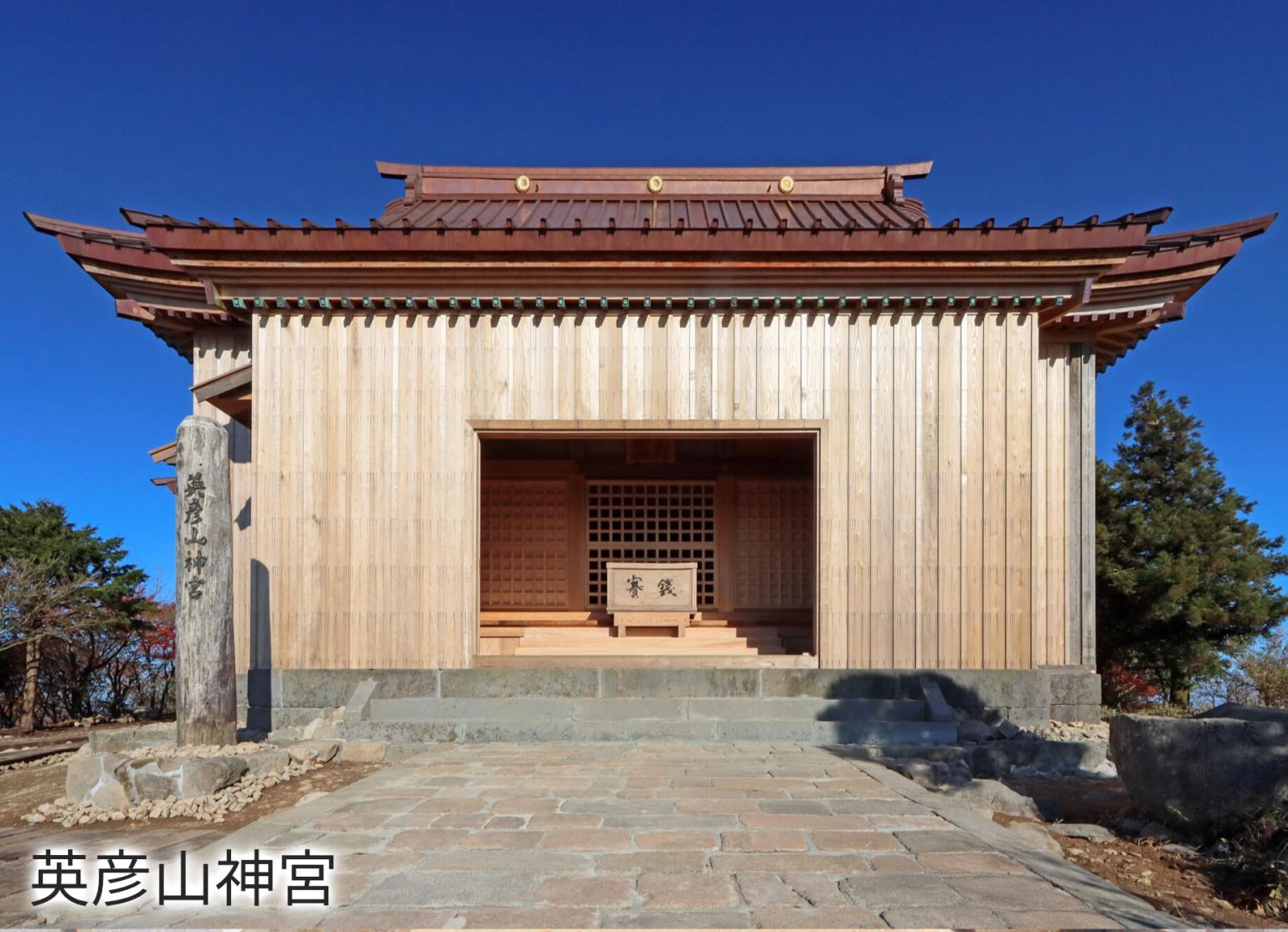
Hikosan Jingu Jogu
Jogu (upper shrine) stands at the summit of Naka-dake. It enshrines the Izanami deity and is said to have been built during the reign of Emperor Sujin following a divine revelation. In the past, it was rebuilt every sixty years.
Festivals and events at Hikosan Jingu
The Shugendo practices that flourished on Hikosan suffered devastating blows during the Meiji period, including a prohibition order against Shugendo and the Haibutsu Kishaku movement, which destroyed many cultural assets and forced Yamabushi to descend from the mountain. However, Shinto rituals have been preserved to the present day, centered around Hikosan Jingu.
The events introduced here are open to both observation and participation.
-
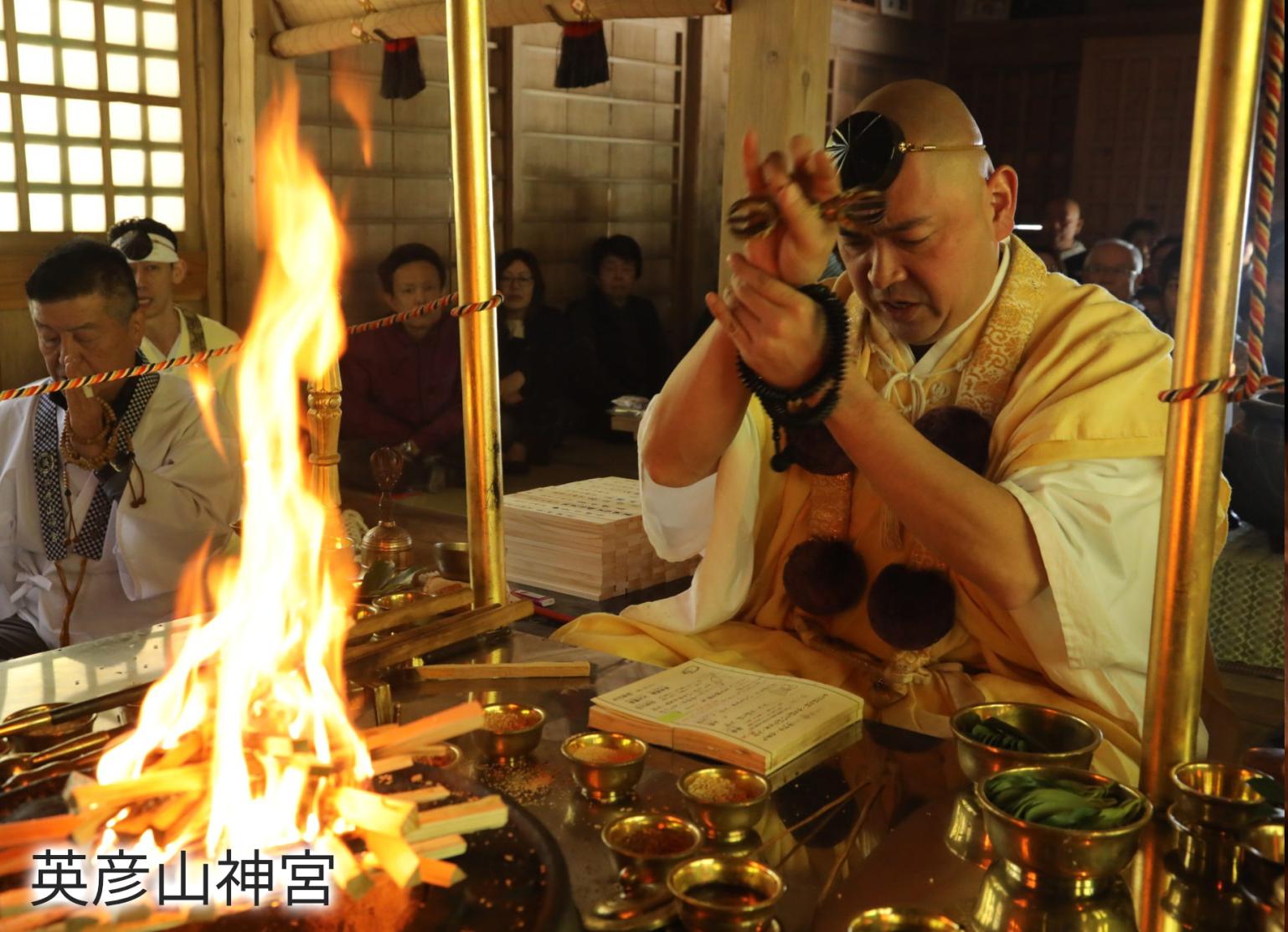
Goma-taki (First Sunday of every month, from 11:00 a.m.)
The Goma-taki (fire ritual) is held at Hikosan Jingu Shimotsu-gu on the first Sunday of every month. Offerings such as gomagi (sacred prayer sticks) are cast into the flames to pray for protection from misfortunes and the fulfillment of wishes. Viewing is free. Participants can pray with offerings of gomagi inscribed with their wishes.
-
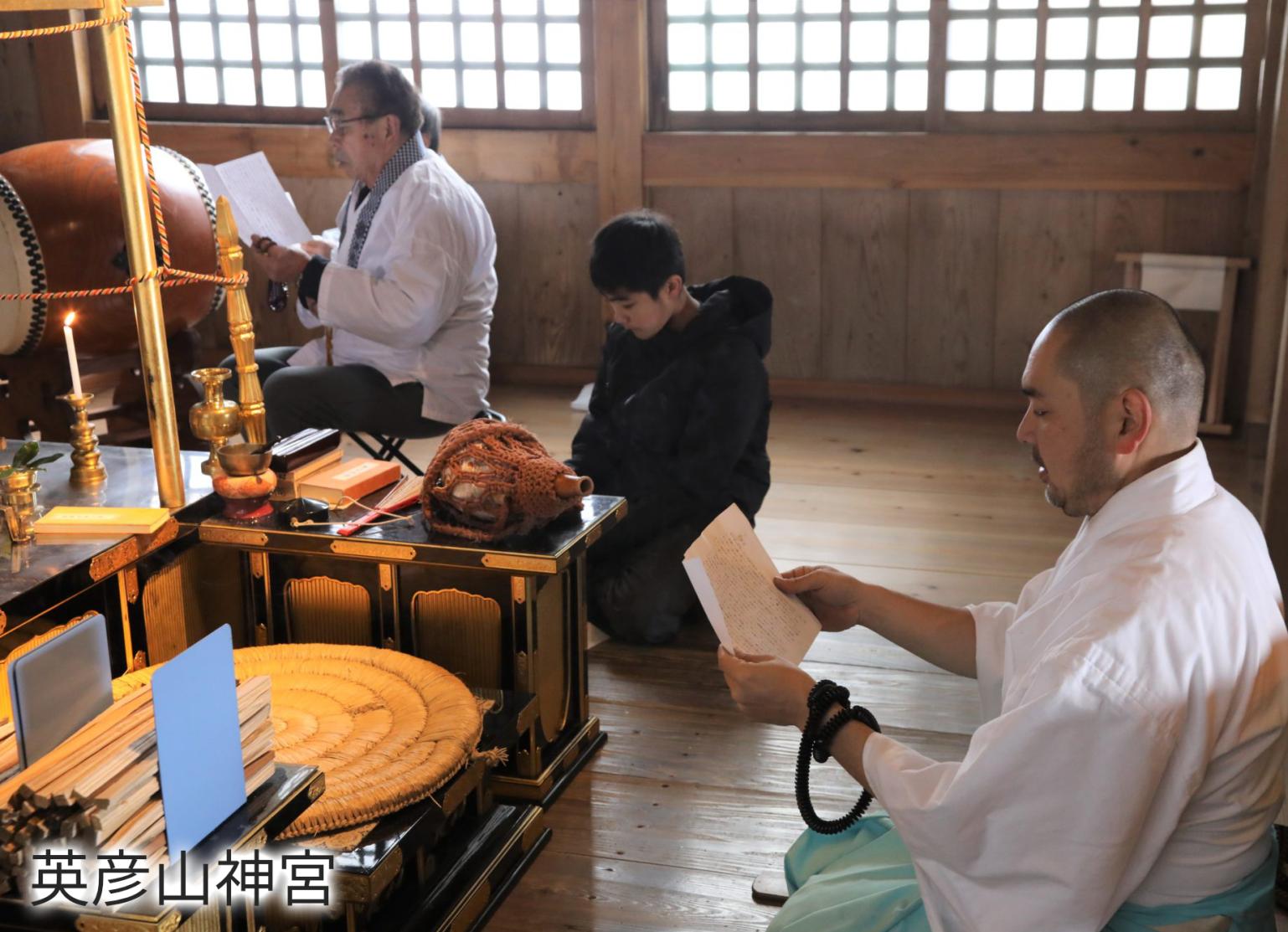
Sutra recitation sessions (Fourth Sunday of every month, from 11:00 a.m.)
Sutra recitation sessions are held Hikosan Jingu Hohei-den every fourth Sunday of the month, starting at 11:00 a.m. Visitors are welcome to observe and participate. Many worshippers gather here each month to recite sutras in a serene atmosphere as they pray for inner peace.
-
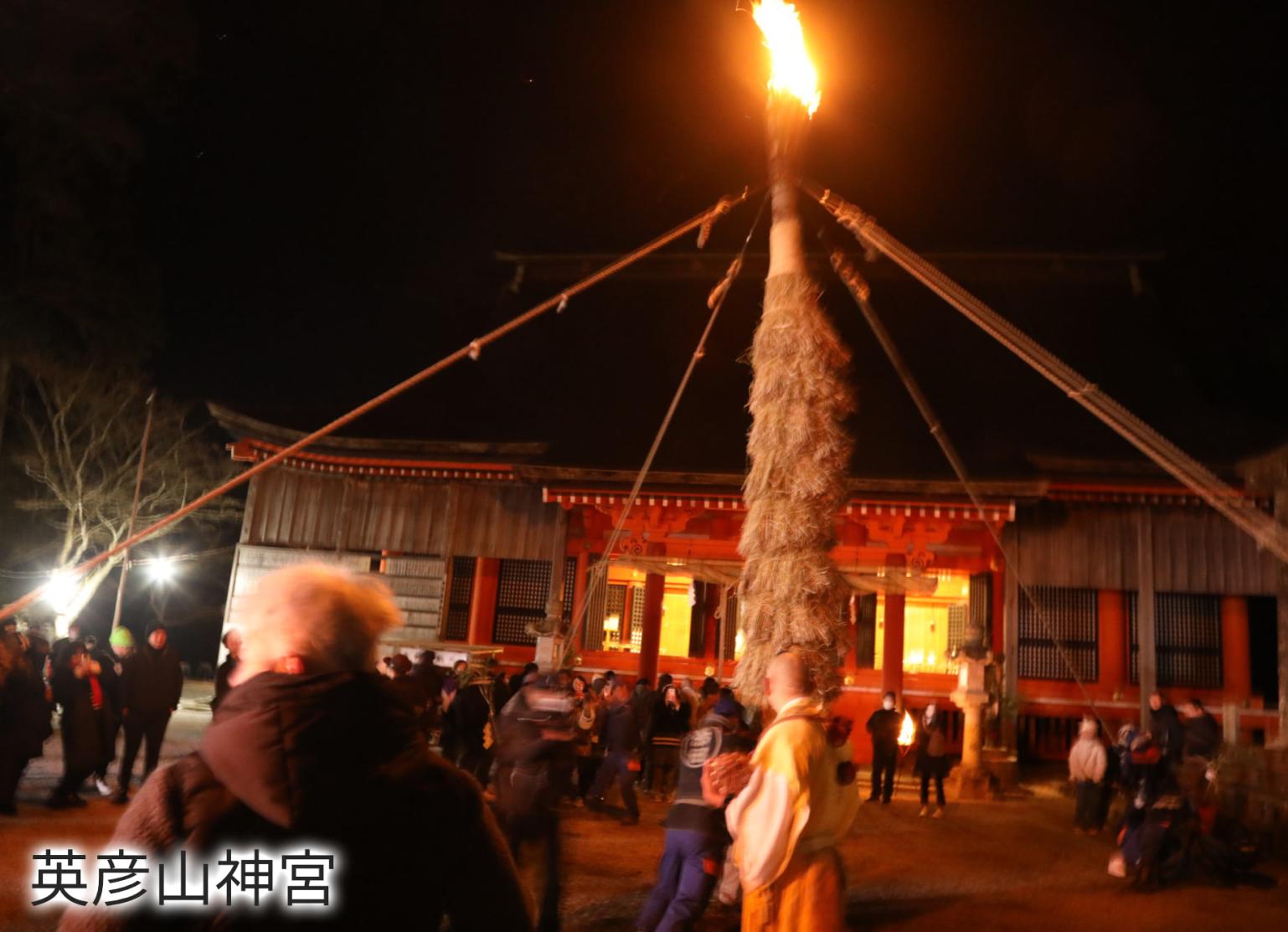
The Shinto ritual of Hashira-matsu (January 1 every year)
This is a ritual to welcome the New Year. When the bell rings, a pillar of pine brushwood prepared at Hikosan Jingu Hohei-den is set on fire. At midnight, worshippers pull the pillar upright in a swift motion, praying for bountiful harvests and peace throughout the year. The pine pillar remains within the precincts of the shrine until January 3 so that visitors making their New Year's pilgrimage can pay their respects.
-
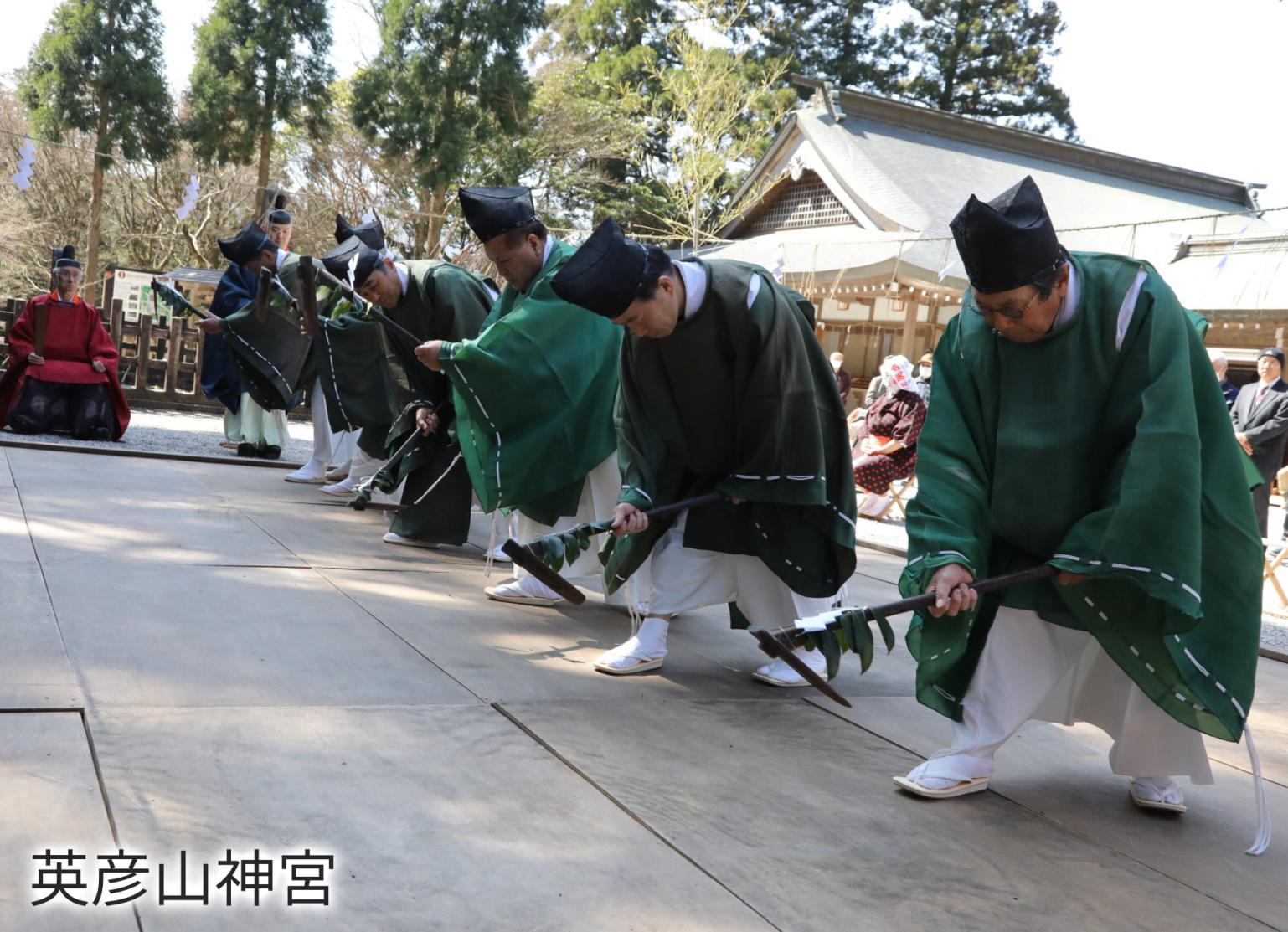
Onta-sai (March 15 every year)
This is an event held before rice planting to pray for a bountiful harvest. An area representing a rice field is set up within the precincts of Hikosan Jingu Hohei-den, and priests perform rituals that mimic the act of rice planting. Many worshippers visit to receive talismans and other items, which they then place in their household shrines to pray for a good harvest.
-
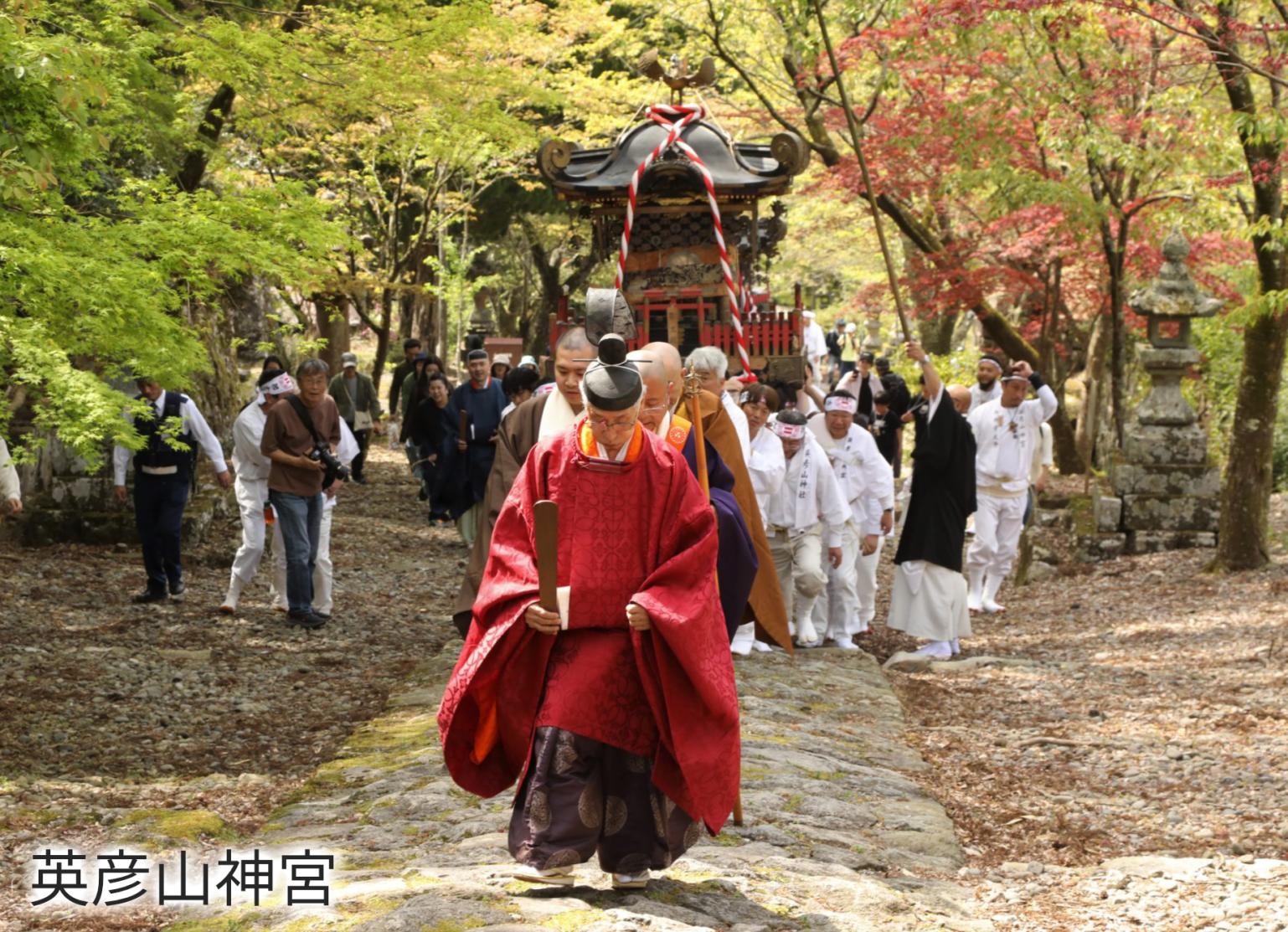
Jinko-sai (Second Saturday and Sunday of April every year)
This is a Shinto ritual in which the deities enshrined at the shrine visit people's homes, listen to their wishes, then return to the shrine. Three mikoshi (portable shrines) carrying the deities of Hikosan boldly traverse the approach path over the two-day period of this ritual. When the mikoshi stop to rest along the way, worshippers pay their respects, and traditional dances are also performed as offerings.
-
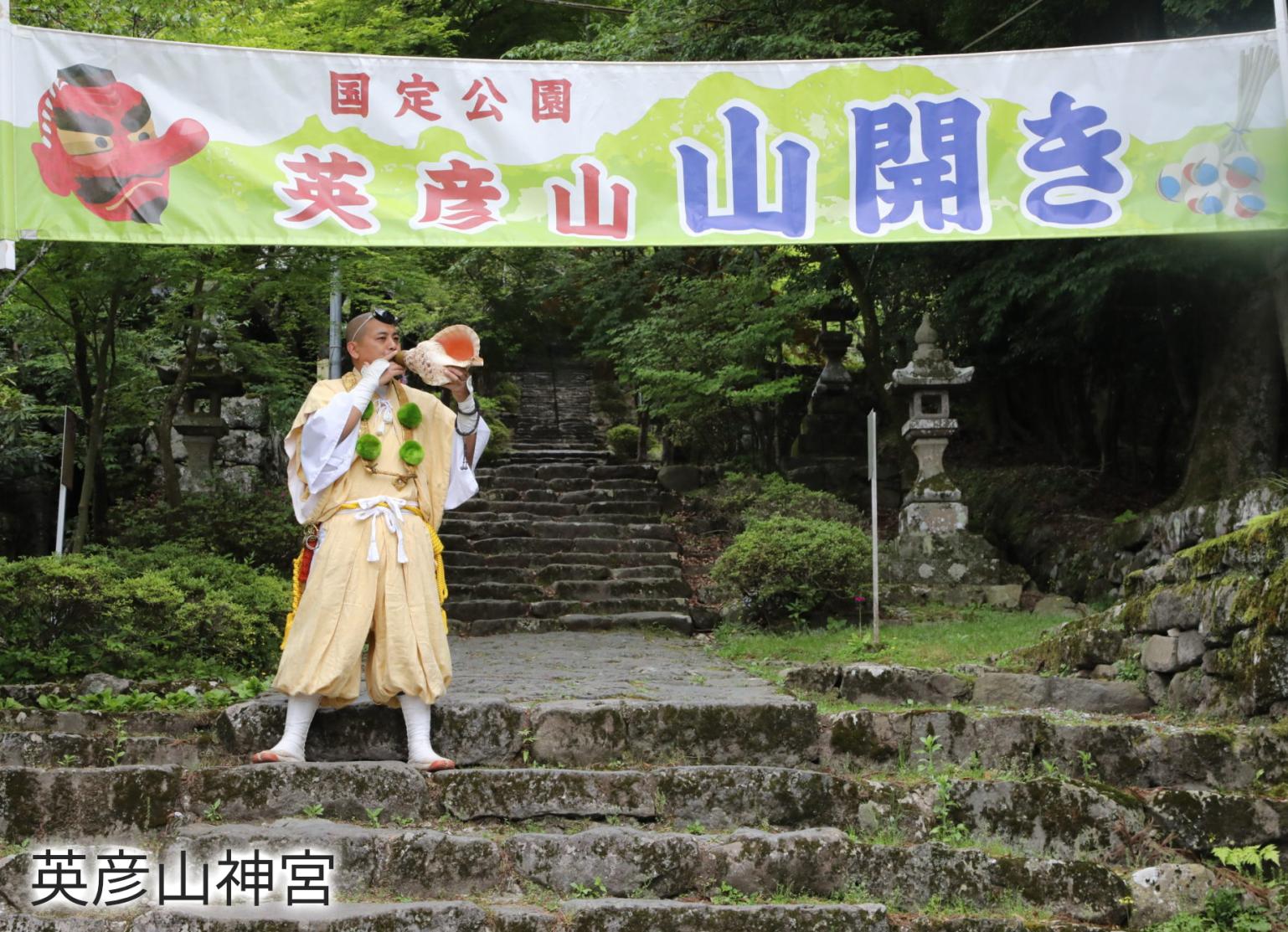
Hikosan Yama-biraki (A Sunday in late May every year)
The emergence of shimmering, fresh green leaves on Hikosan signals the arrival of the summer mountaineering season. At Hikosan Jingu Hohei-den, the Shinto ritual of Yama-biraki (ritualistic "opening" of Hikosan) is held to pray for the safe ascent of the mountain. The hiking trails that start from this point from are well-maintained, making them a highly recommended option even for less experienced hikers.
Boost your blessings with the spiritual power of Tengu!
Takasumi Shrine, the gateway in the East to Hikosan worship, has drawn many worshippers since ancient times. Revered by rural communities as a deity who alleviates people's suffering and illness, and ensures the safety of agriculture, livestock, and households, it now welcomes numerous hikers due to its location at the trailhead to Hikosan's Kita-dake.
-
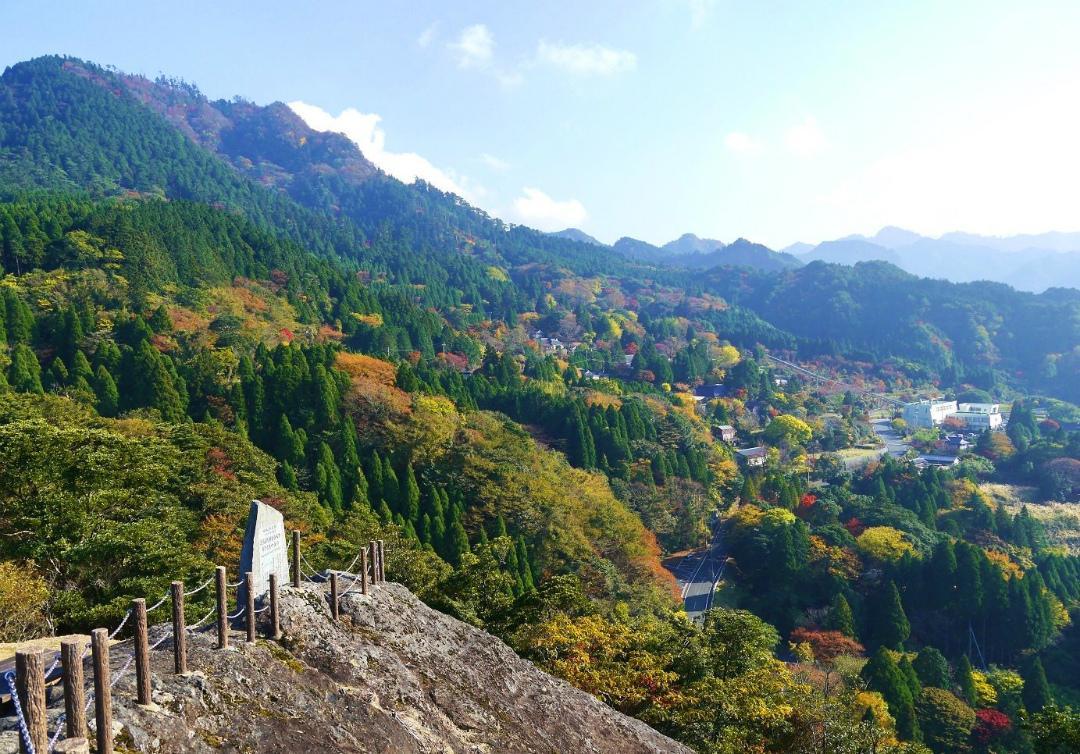
Hanamigaiwa Park
View moreThis park is approximately 5 minutes on foot from the parking lot closest to Hikosan Jingu Hohei-den. Enjoy panoramic views of the whole of Hikosan, including the townscape of the once-prosperous pilgrims' town extending along the shrine approach. Take in the sights of Hikosan, awash in the colors of cherry blossoms in spring and vibrant foliage in autumn?
-
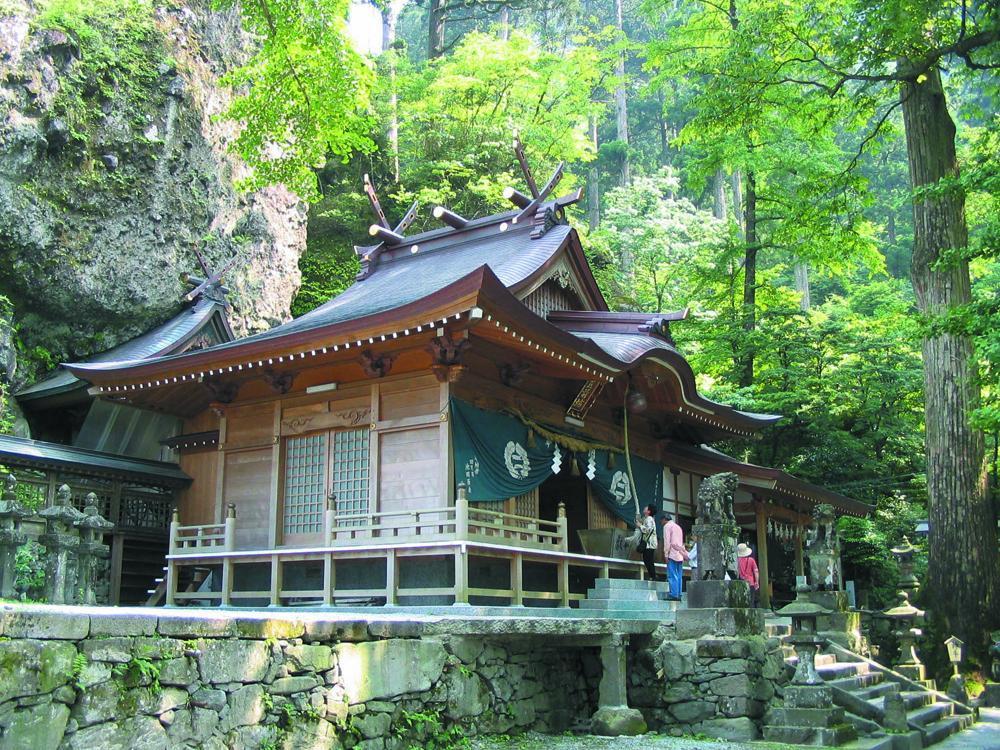
Takasumi Shrine (Buzenbo)
Takasumi Shrine is on par with Hikosan Jingu as an icon of HIkosan worship. Formerly known as Buzenbo, it is also famous for enshrining Buzenbo Tengu, one of Japan's eight great Tengu (Tengu is a mythical creature from Japanese folklore). The Buzenbo Tengu is said to be the leader of all the Tengu of Kyushu, and possesses numerous supernatural powers. It is also said that Buzenbo taught Ushiwakamaru (the childhood name of military commander, Minamoto no Yoshitsune) the art of swordsmanship.
-
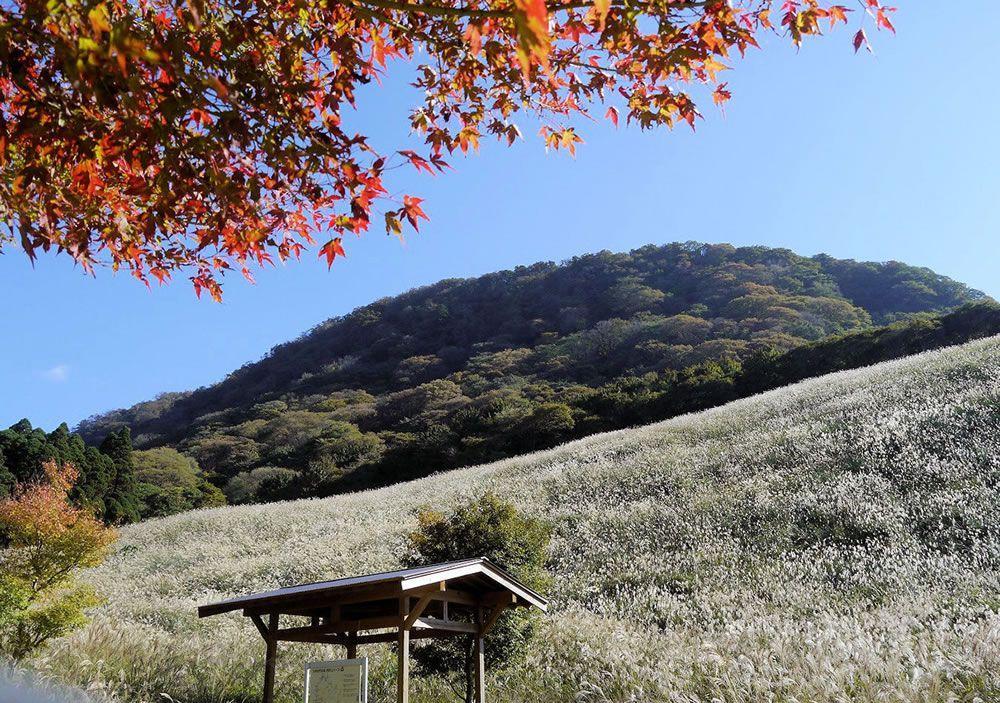
Silver grass on Takasubaru-kogen Highland
Located about a 7-minute walk along the Kyushu Nature Trail from Hikosan Seinen-no-ie, the expanse of Takanosubaru-kogen Highland is located midway up HIkosan at an elevation of approximately 800 m. Vast slopes are covered with clusters of silver grass, which shimmer with a silvery color in the autumn sunlight.
-
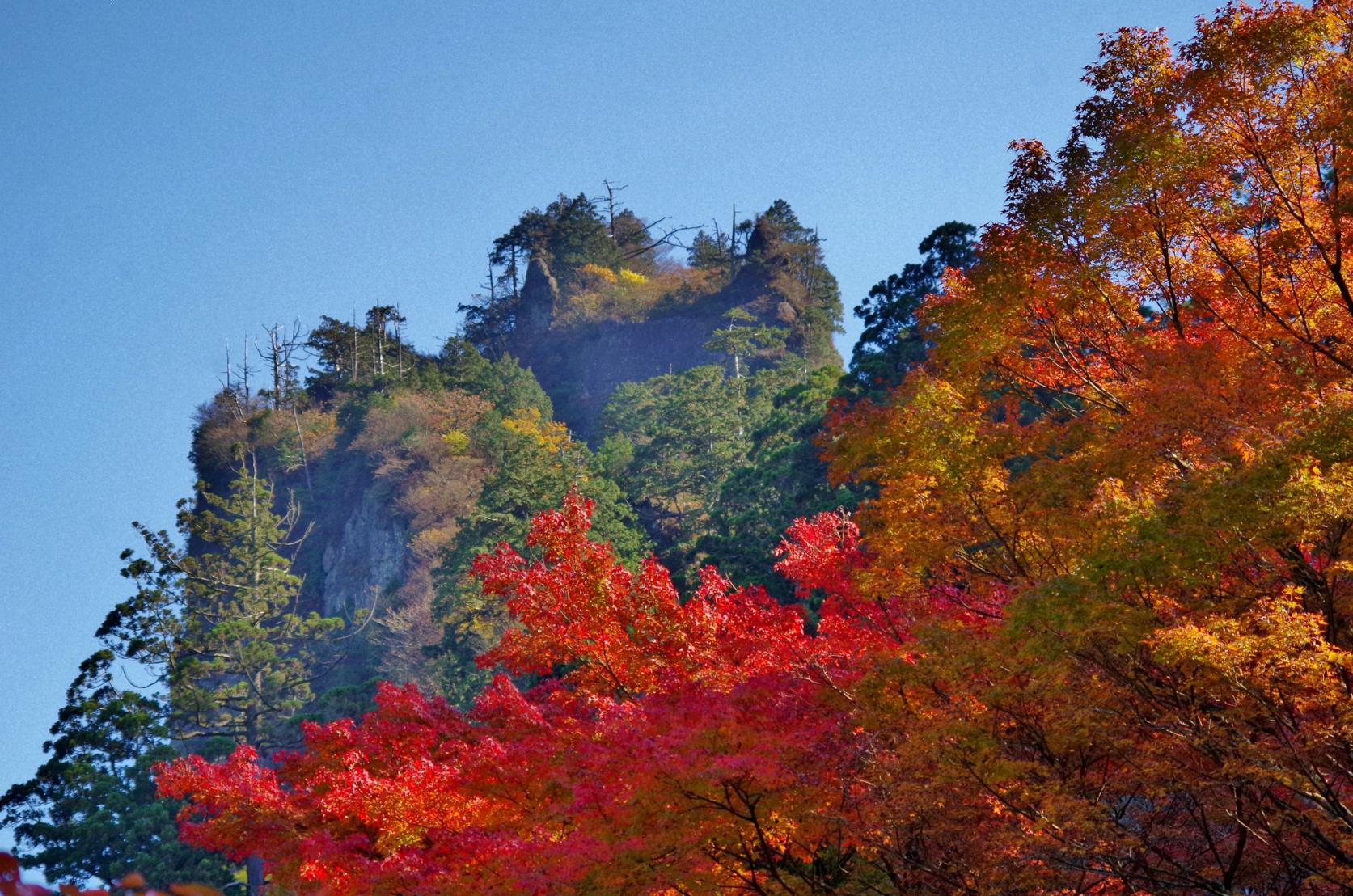
Bo-un-dai
This vertically sheer cliff is known as one of the training grounds for Yamabushi. It is about 400 m from Takasumi Shrine via the hiking trail of the Kyushu Nature Trail. The path is steep and challenging, including certain sections with chains, but offers spectacular views to reward for those who are confident in their physical stamina.
Explore grottos where Yamabushi trained!
The ascetic training of Yamabushi on Hikosan is thought to have been centered on the practice of rozan, which involved isolating themselves in grottos. These grottos were cave-like depressions beneath megaliths, regarded as dwelling places for divine spirits and where spiritual power gathered. While there had apparently been 49 such training grottos on Hikosan, only 12 have been identified today.
-
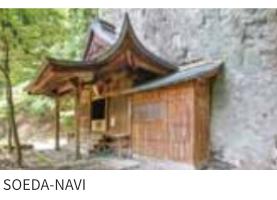
Tamaya Shrine (Hannya Grotto)
This is the birthplace of Hikosan worship. According to legend, during the Nara period (710–794), a high priest secluded himself in this grotto for ascetic practice and a dragon god appeared before him, spewing forth a precious stone. The sacred pond where the precious stone emerged from is said to portend natural disasters if its waters become murky, so the Shinto ritual of Oike Sarai (pond purification) is performed here in early summer.
-
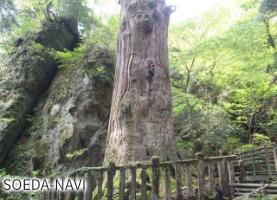
Onisugi
Onisugi is estimated to be over 1,200 years old. Standing approximately 38 m tall with a trunk circumference of about 12.4 m, it is the largest giant tree in Fukuoka Prefecture. Cedars have historically been revered as sacred trees where deities dwell, and its timber valued as a material for constructing shrines to house deities.
-
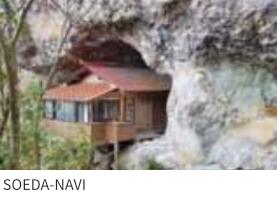
Ominami Shrine (Dainan Grotto)
Under the influence of Shinto-Buddhist syncretism until the Edo period, Fudo Myo-o was enshrined here as one of Hikosan Junisho Gongen. Today, it is a subsidiary shrine of Hikosan Jingu, and its sanctuary, built in the kengai-zukuri style within a grotto on the cliffside, accentuates its air of mystique.
-
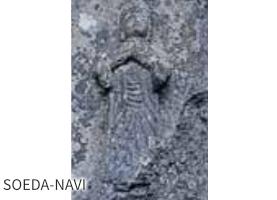
Magai-butsu
Magai-butsu are Buddha statues carved into the rock face. On the wall of a massive rock formation about 30 m high, known as Imakumano-kutsu, a Bodhisattva statue about 130 centimeters high remains. According to an inscription, it is known to be a work from the Kamakura period, carved by a monk practicing esoteric Buddhism.
-
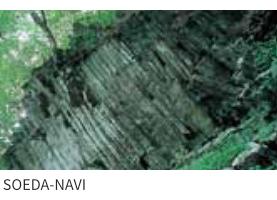
Zaimoku-ishi
Zaimoku-ishi (literally meaning "timber-shaped rock") is a columnar joint in andesite, formed when magma erupted from a volcano cooled and solidified. It is thus named because it resembles stacked timber.
Column
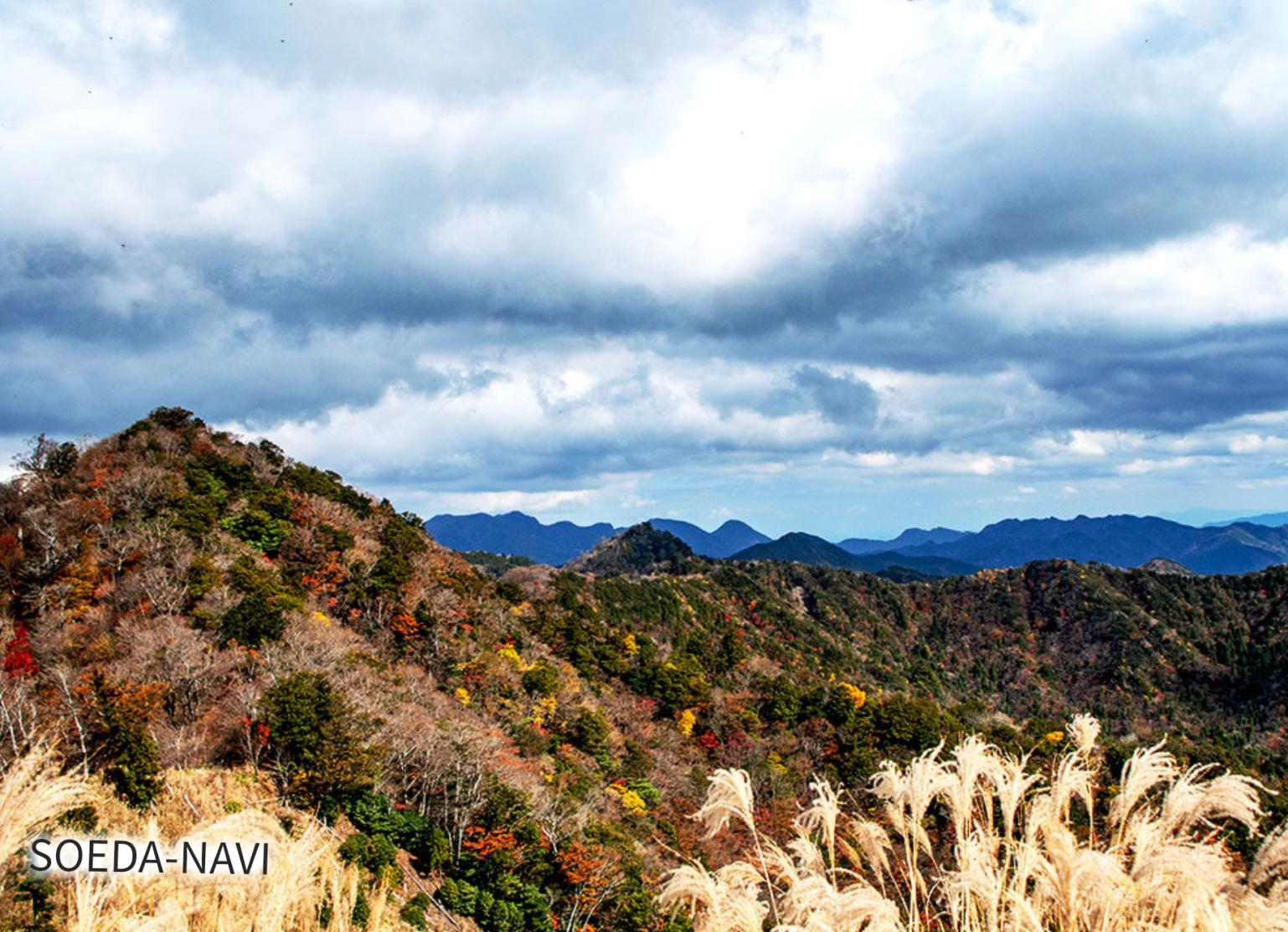
The legend of Hikosan Gongen's demon-slaying, a tale to rival the "Demon Slayer" anime
Located southwest of Hikosan, Gakumekisan is the demon-slaying mountain featured in the hit anime “Demon Slayer.”
The Gakumeki Pass at the foot of the mountain was once a pilgrimage route to Hikosan, but it was home to many demons. Troubled, the Hikosan Gongen told the demon that they could live there if they could build their houses in one night. The demons were delighted and began building their homes, but before dawn, Hikosan Gongen imitated the crowing of the first rooster and successfully drove them all away.
It is said that the timber left behind by the fleeing demons became the Zaimoku-ishi, the staff carried by the demon leader became Onisugi, and the mountain where the demons escaped and vanished to in the distance came to be called Gakumekisan.
Visit spiritually powerful spots in the deep mountains and dark valleys
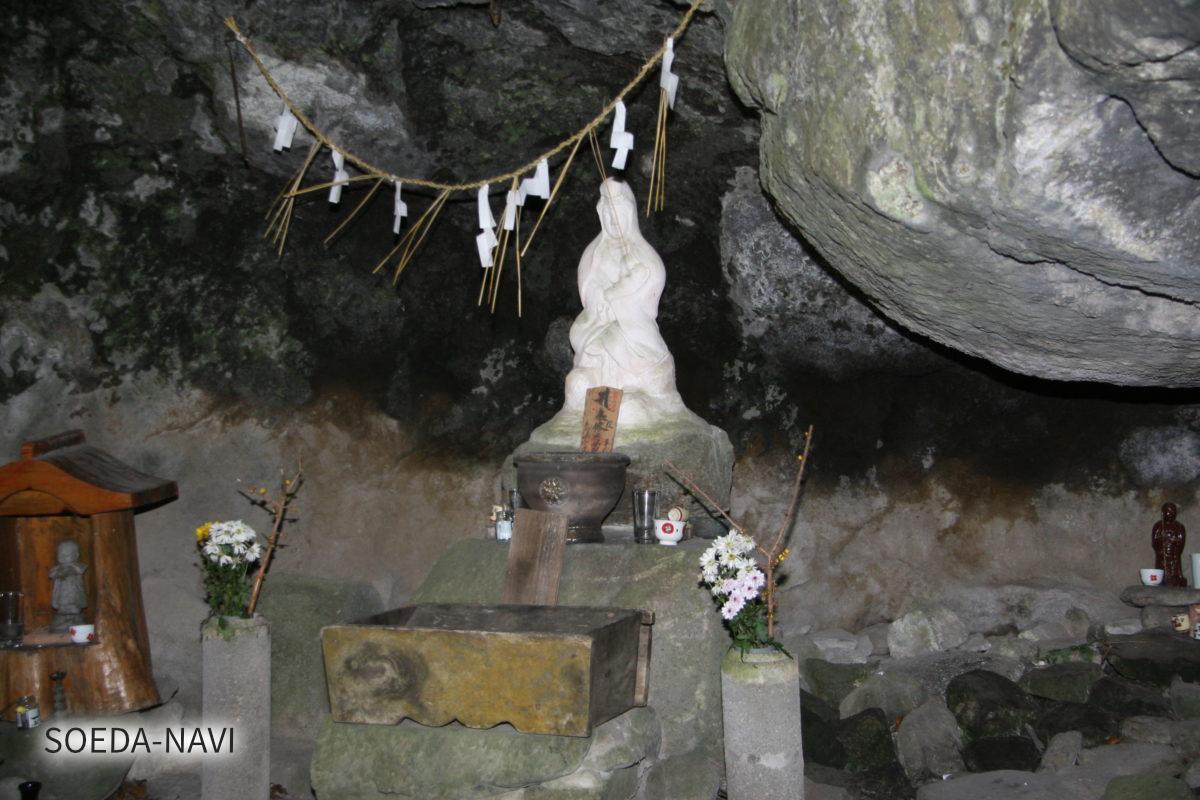
One route to Hikosan leads through Fukakura Gorge, often described as a hidden paradise. It offers views of a spiritual landscape where massive, unusual rock formations emerge abruptly from the natural surroundings. Ryumon Gorge, along the Hikosan River basin, is renowned as a prime spot in Fukuoka Prefecture for admiring autumn foliage.
Uba-ga-futokoro
This is a grotto in a large rock within Fukakura Natural Park. Legend holds that in this power spot, drinking the water dripping from the rock face can improve breast milk production.
Gifts from Hikosan
The area around Hikosan boasts many local specialties, created from the traditions of Shugendo, the mountain's natural environment, and the bounty of its abundant waters. do pick up these gifts and memorabilia that reflect the living history of the region.
-

Hikosan Garagara
Hikosan Garagara is said to be Japan's oldest earthen bell. Its origin lies in the offering of a bell from the Emperor of the time to Hikosan, which brought the blessing of rain during a period of prolonged drought. Hikosan Garagara is characterized by its charming form and rustic tone. It is commonly displayed at the entrance hall and is believed to ward off evil spirits. It can be purchased at Hikosan Jingu and roadside stations.
-
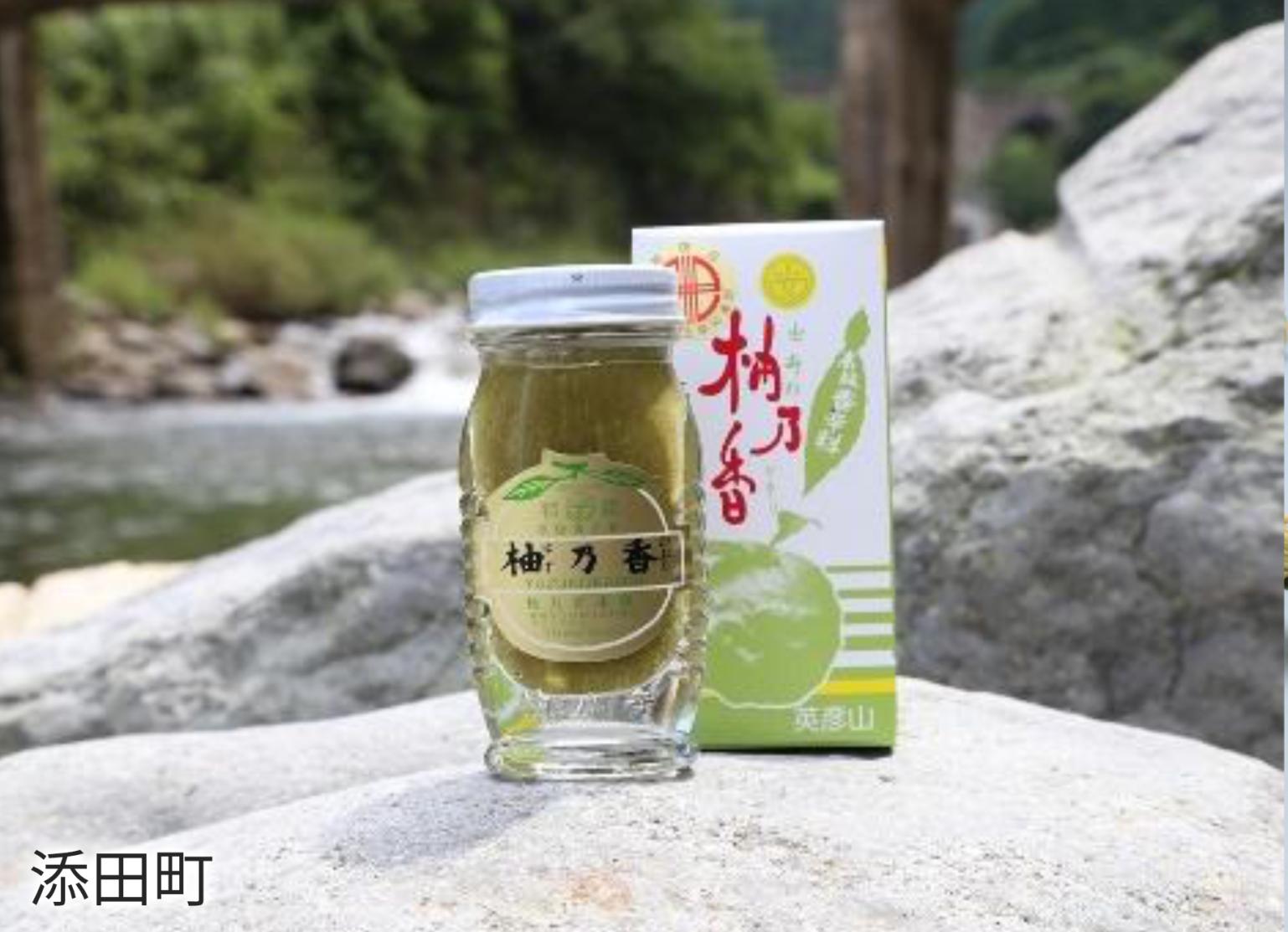
Yuzu Kosho
Hikosan is considered one of the birthplaces of yuzu kosho. Legend has it that Yamabushi first created it as a type of preserved food and seasoning. Made with yuzu citrus and chili peppers from Hikosan, its refreshing aroma and spicy kick enhance the flavors of hot pots, sashimi, and other dishes.
-

Konnyaku
Konnyaku (a jelly-like food made from the konjac plant), produced using traditional methods with meticulous care, boasts a satisfying texture and is popular among tourists. Enjoy the rich flavors of konnyaku blended with local ingredients such as sashimi konnyaku, yuzu-infused konnyaku, and konnyaku with Kintoki carrots.
Column
Places to stop by
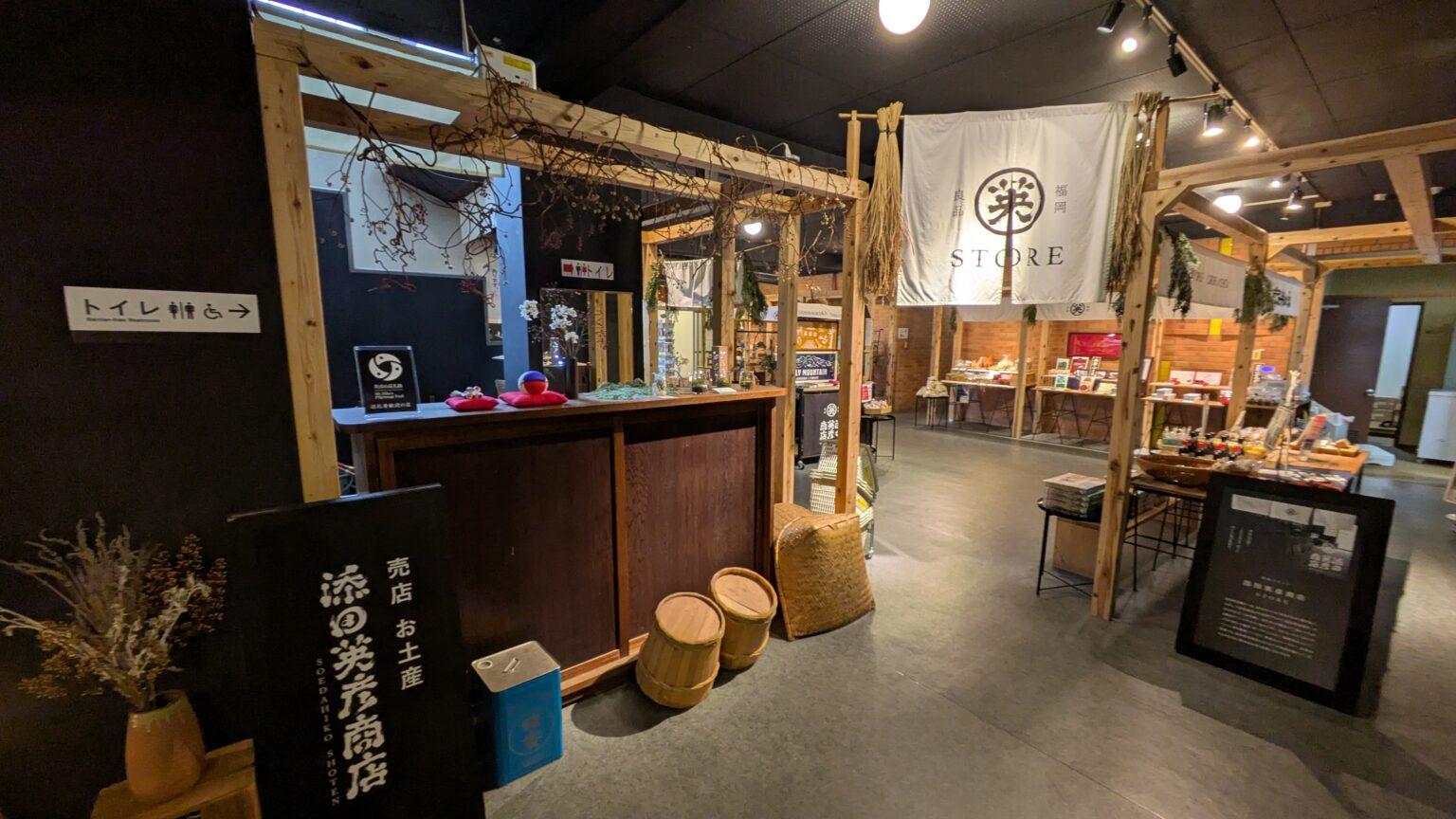
On the first floor of the Hana Station Main Building (Hikosan Slope Car) is the Soeda Hikosan Shoten. It offers an extensive selection of Hikosan souvenirs, from classic Soeda Town merchandise to limited-edition items that can only be found here, such as original Hikosan Slope Car merchandise and dried flowers made from plants grown in Hikosan Flower Garden.
View more<References>
"Soeda Town Historic Scenery Maintenance and Enhancement Plan, Phase 2," Soeda Town, Fukuoka Prefecture
・Chapter 1: Background to the Formation of Soeda Town's Historical Landscape
・Chapter 2: The Historical Landscape of Soeda Town, Worthy of Preservation and Enhancement
・Amagi Museum of History Newsletter “Onko (Issue 66)”
・“New Tagawa Travelogue” Tagawa Tourism, History, and Culture Reader
Share


 Next article for you
-
TIPS FOR TRAVELING IN FUKUOKA PREFECTURE
-
【2025】Your Guide to Fukuoka Prefecture's Best Fall Foliage Destinations
-
Fukuoka Has Onsen Too! A Complete Guide—from Day Trips to Famous Hot Springs
-
10 Recommended Dishes in Fukuoka! Discovering the Region’s Finest Foods
-
A Guide to Major Tourist Events and Festivals in Fukuoka Prefecture in February
-
【2026】Major September Events and Festivals in Fukuoka Prefecture
-
Admiring the Best Scenery that Nature Has to Offer in Itoshima
-
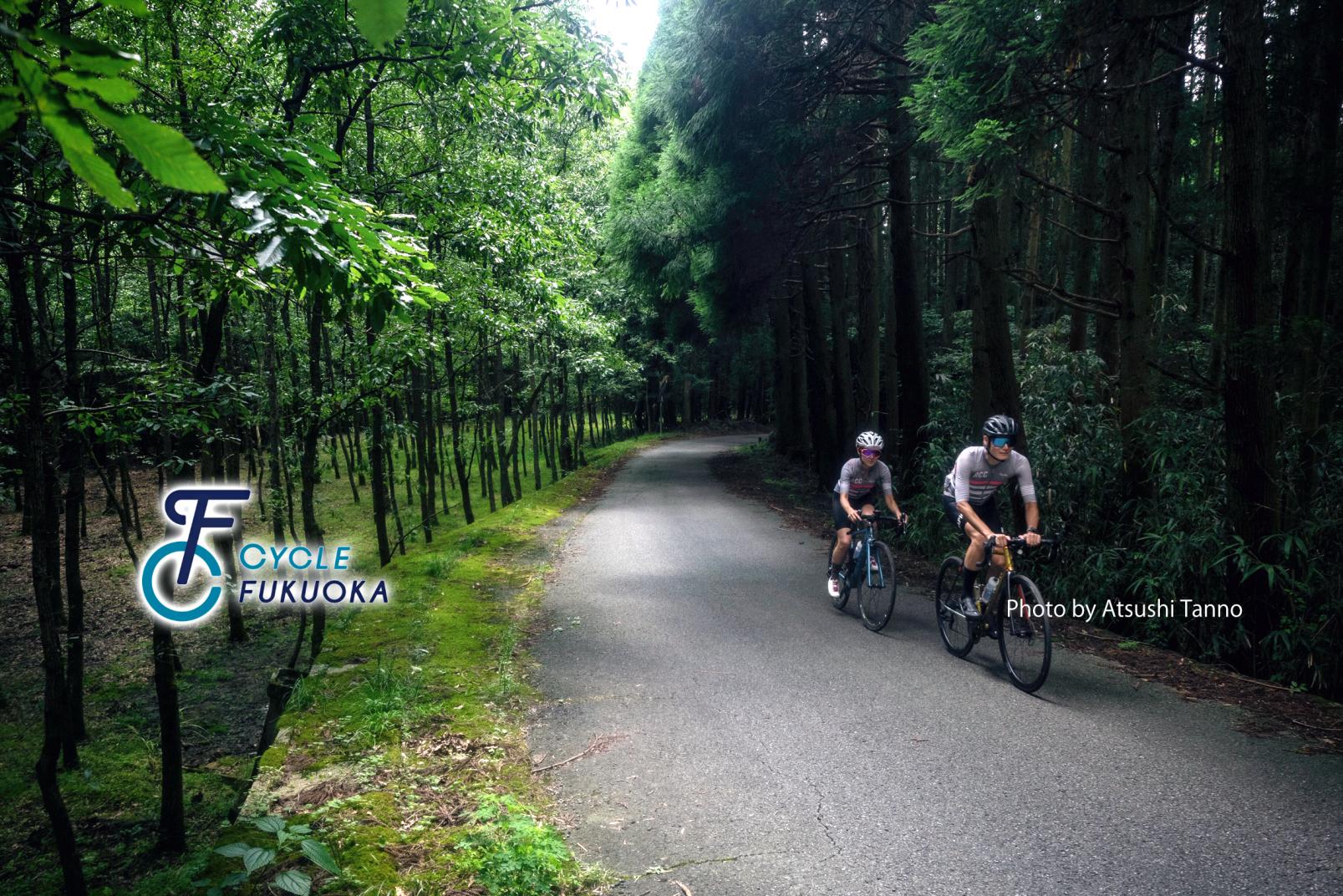
CYCLE FUKUOKA
-

How to experience Mojiko Retro in Kitakyushu
-
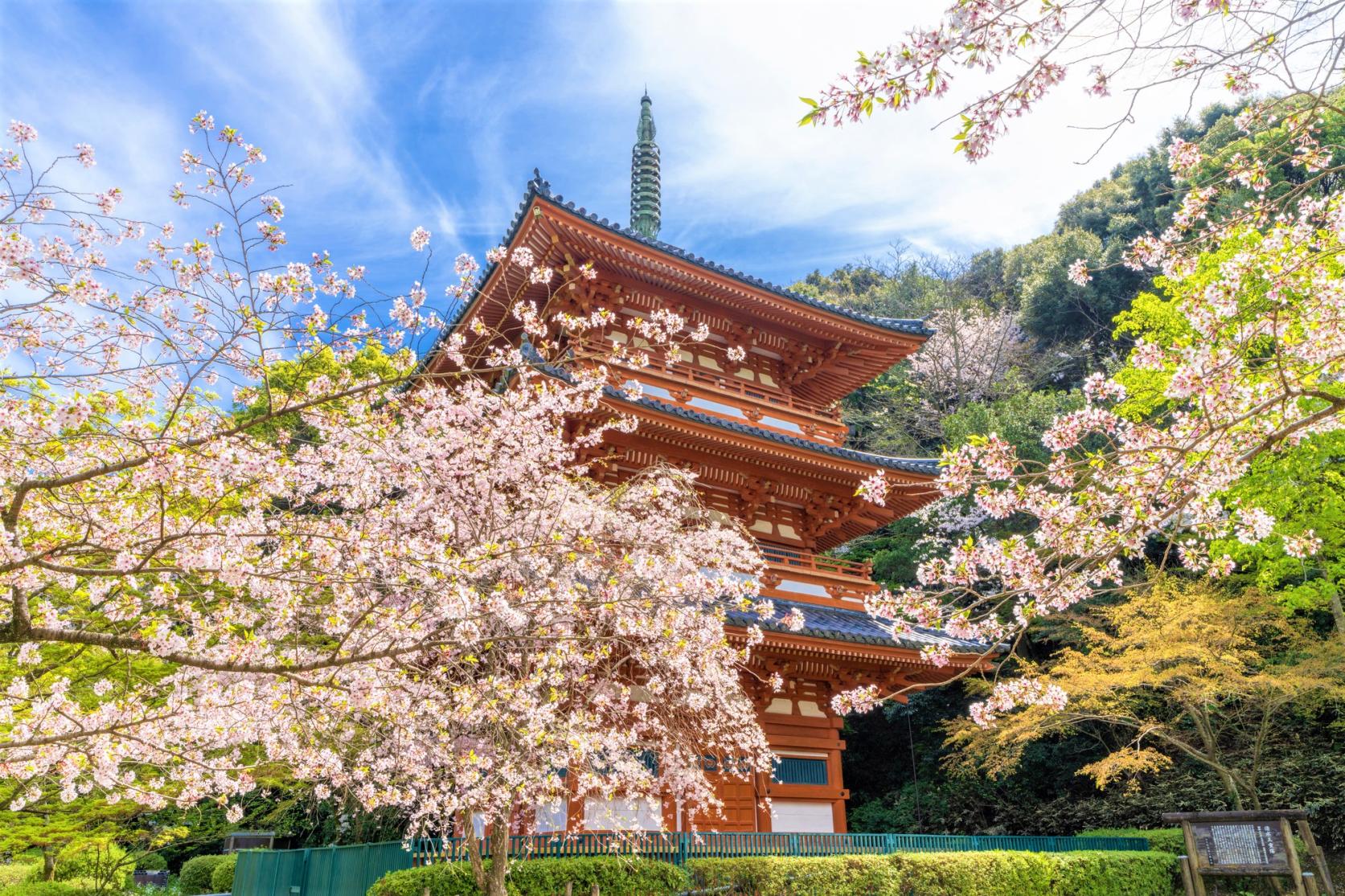
10 Recommended Shrines and Temples in Fukuoka!
-
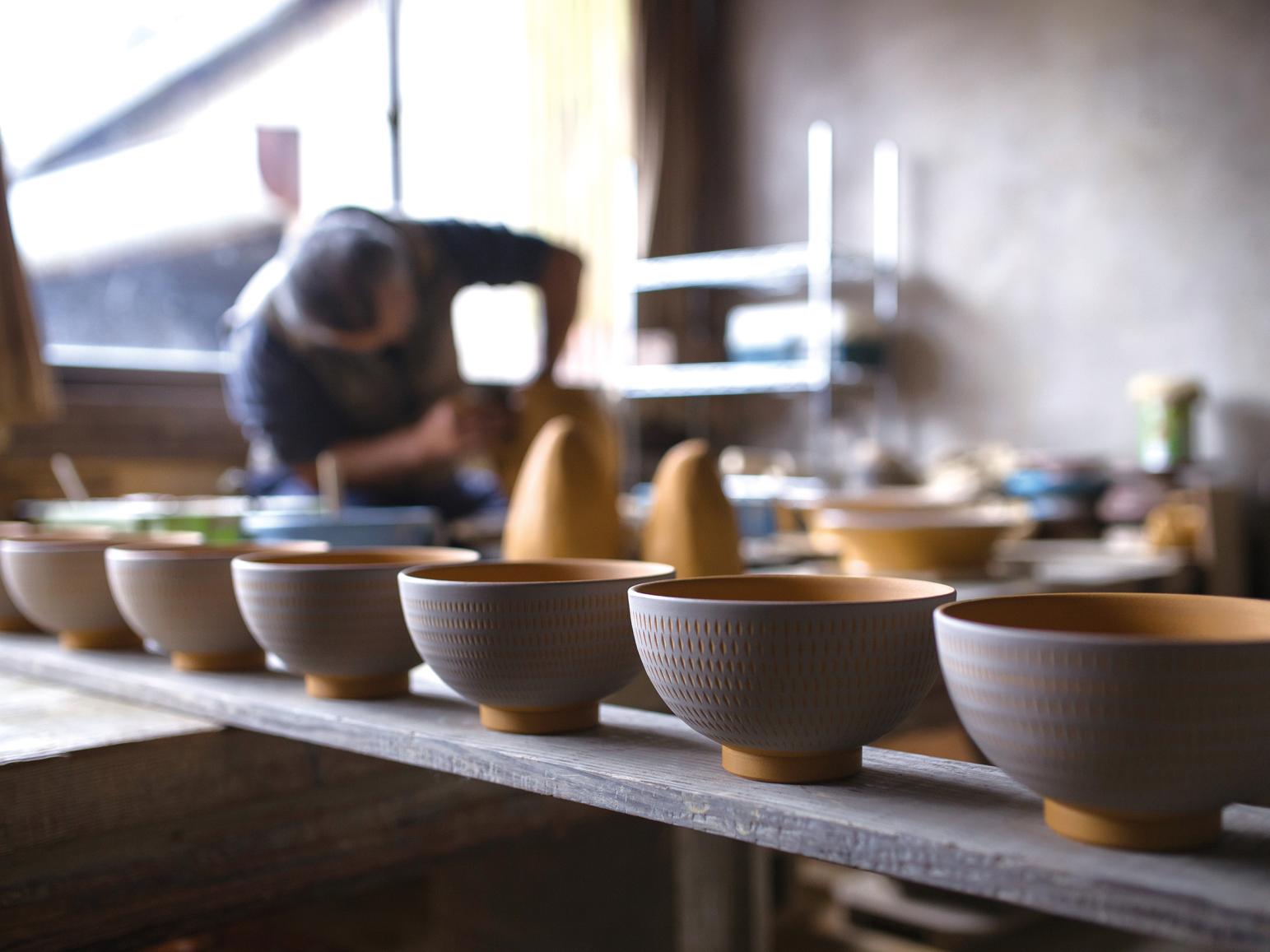
TRADITIONAL JAPANESE CRAFTS OF FUKUOKA ~Present Day Breath-taking Craftsmanship~
-
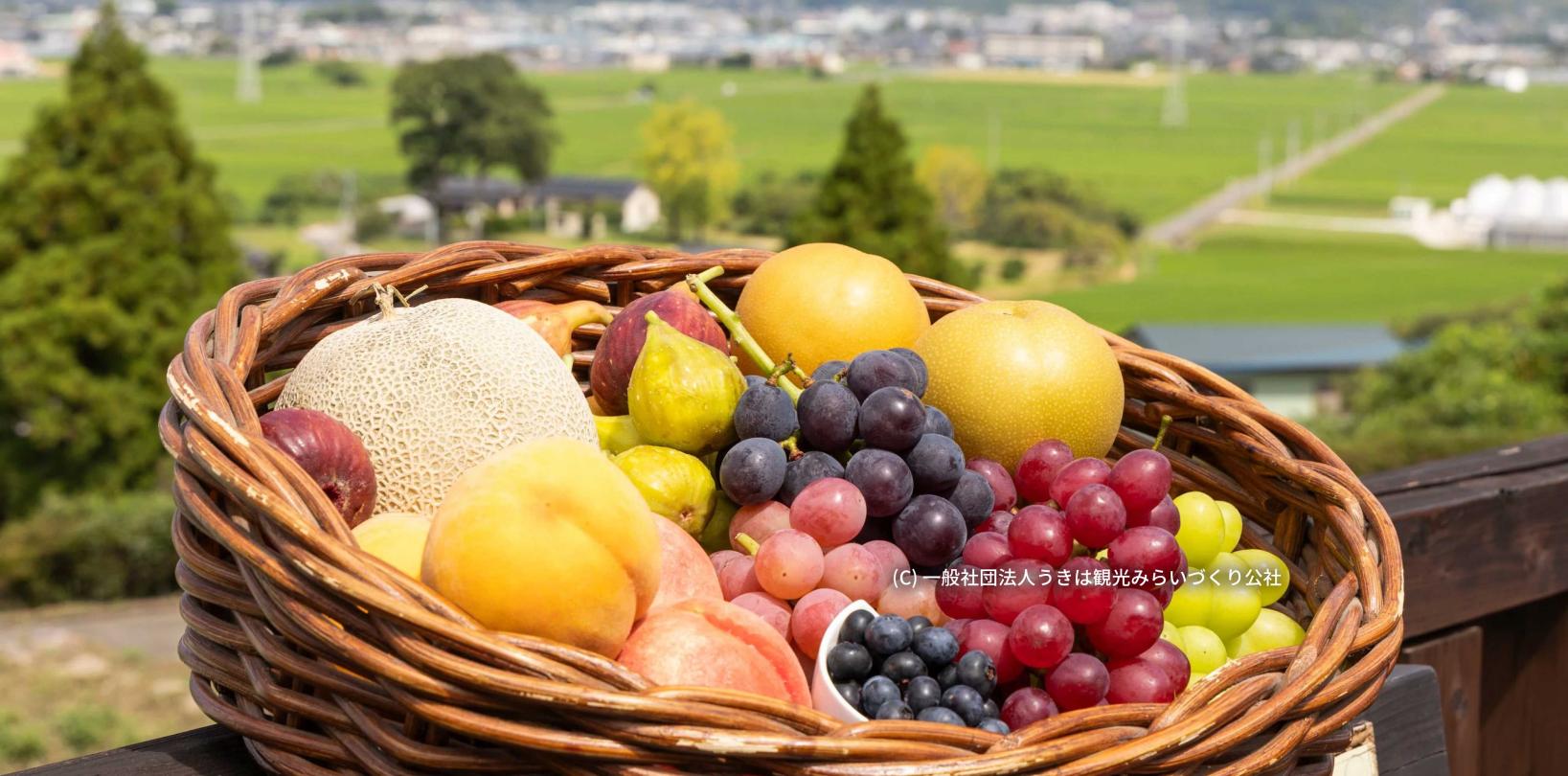
A guide to enjoying fruit picking in Fukuoka all year round! Featuring farms with all-you-can-eat options and attached cafes
-
![[2026] Strawberry Picking Spots in Fukuoka-1](https://www.crossroadfukuoka.jp/storage/special_features/49/responsive_images/9ZHgrqvQdpH8tM4IRF54DXu0aPBF3YGGkj5WOTGc__1673_1115.jpg)
[2026] Strawberry Picking Spots in Fukuoka
-

Kids will love it too! Recommended spots for family trips in Fukuoka Prefecture
-
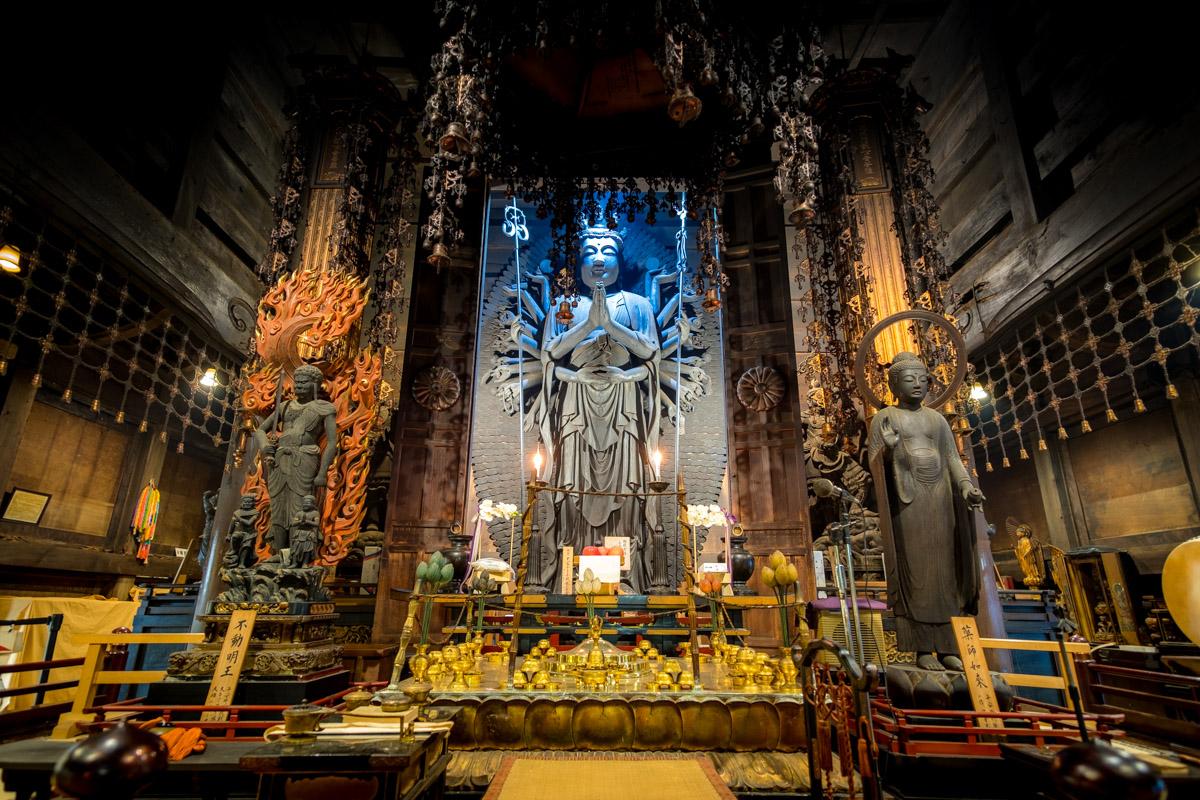
Raizan Sennyoji Daihioin Temple:
-
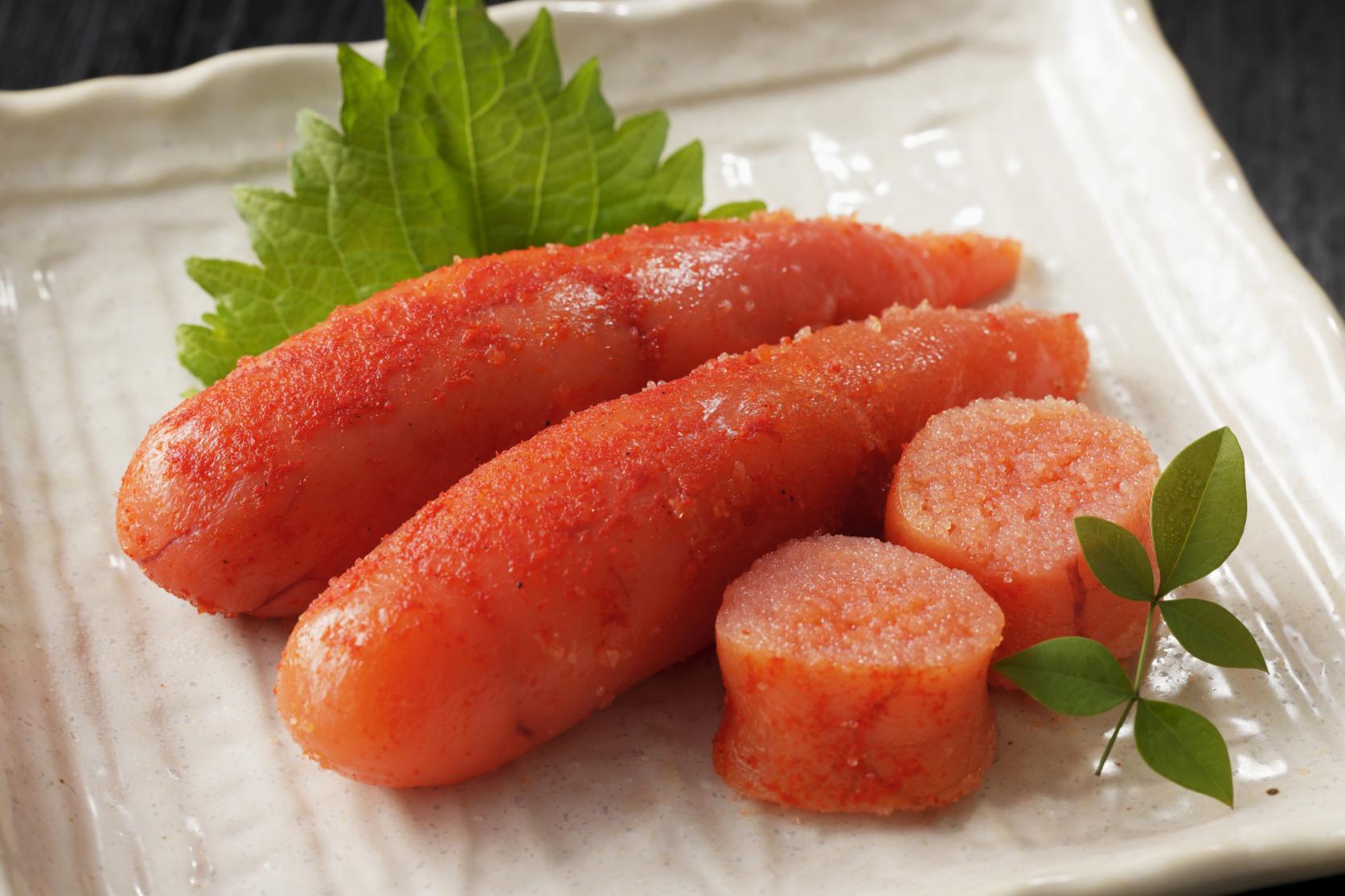
Fukuoka Prefecture is the place for enjoying the best mentaiko! Featuring lunch spots, hands-on experiences, and gifts
-
Here are the most popular souvenirs of Fukuoka that you won’t want to miss!
-
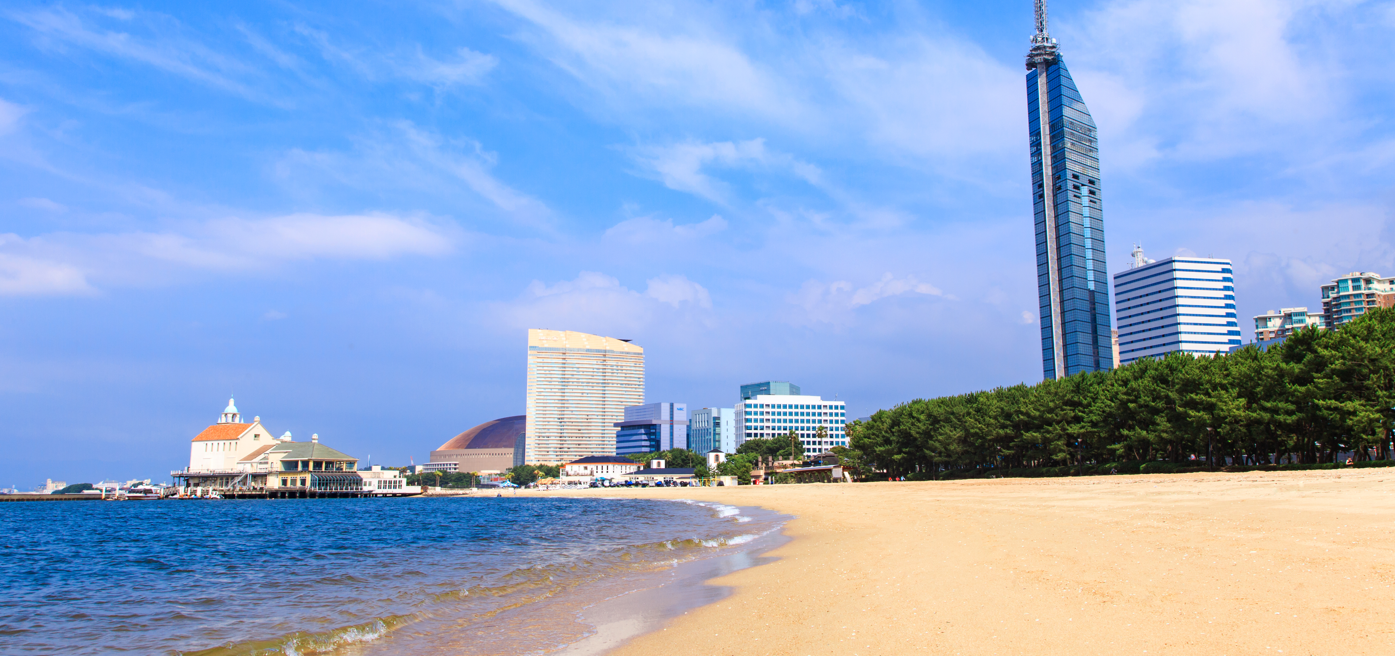
Local Life in Fukuoka City: Art, Beaches and Coffee
-
【2026】The Best Places to See Cherry Blossoms in Fukuoka
-
What is Kushida Shrine, the guardian shrine of Hakata? A comprehensive guide to highlights, goshuin, and access information
