

 Highlights
 Sample Itineraries
 See & Do
 Experience
 Events
 Plan a Trip
 Transport
 Local Life in Fukuoka City



Uminonakamichi Seaside Park
海の中道海浜公園
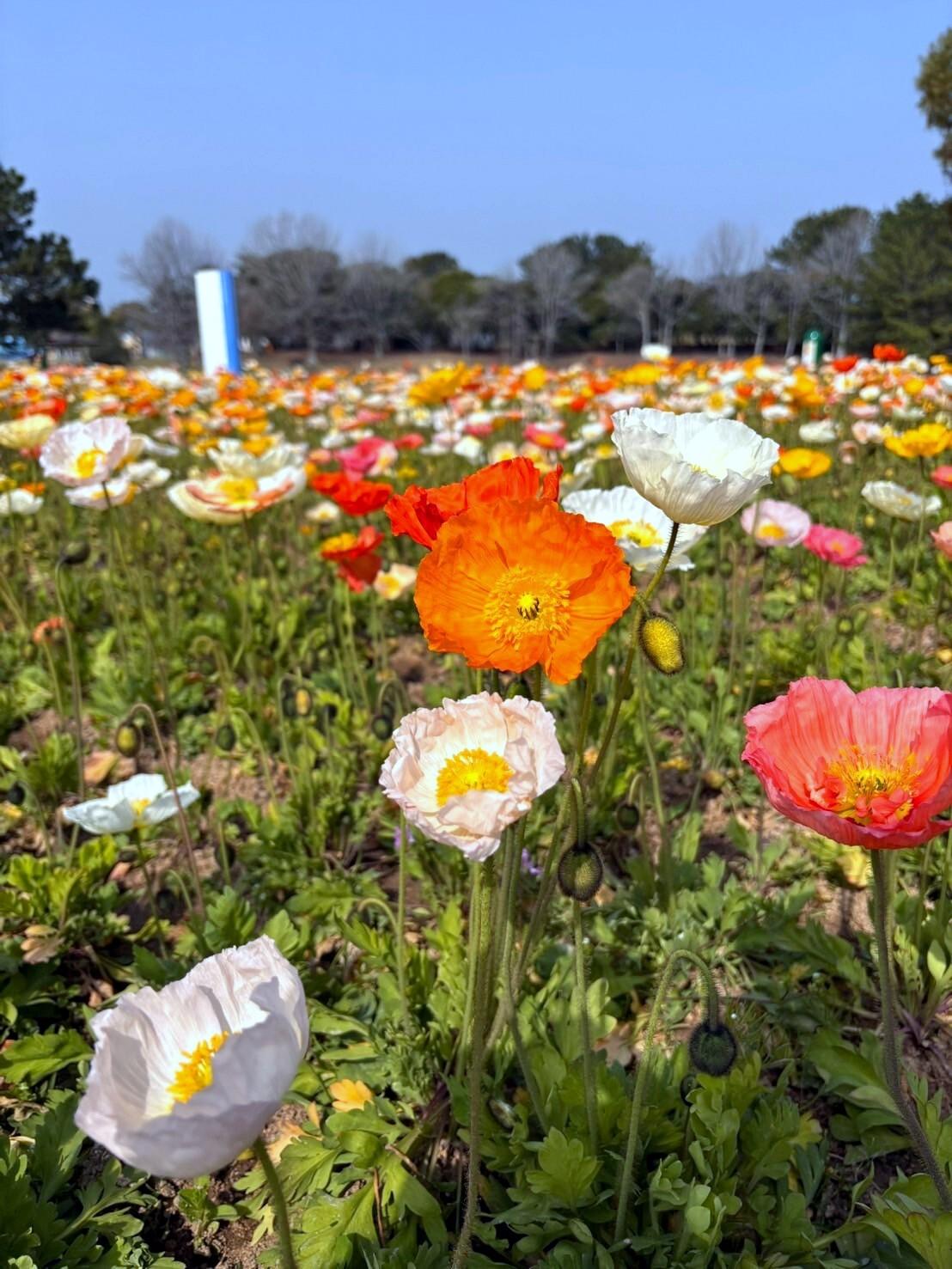
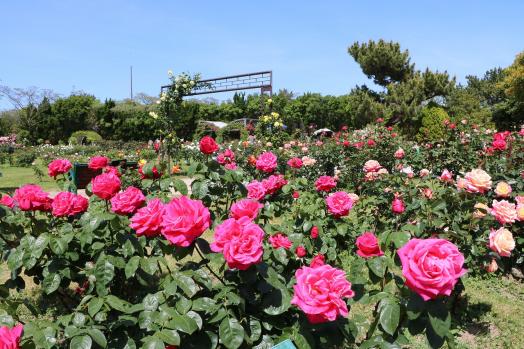
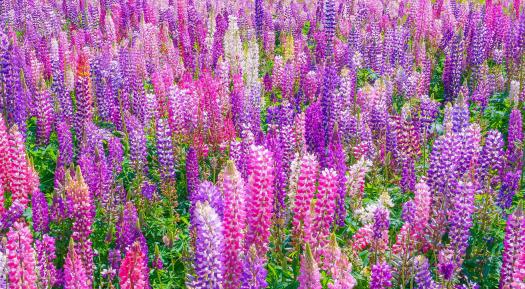
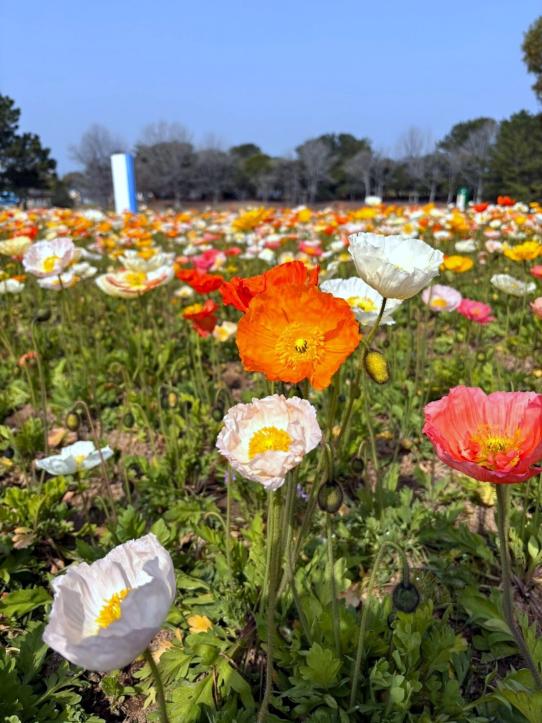
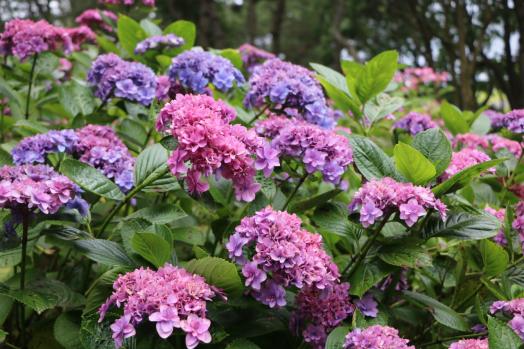

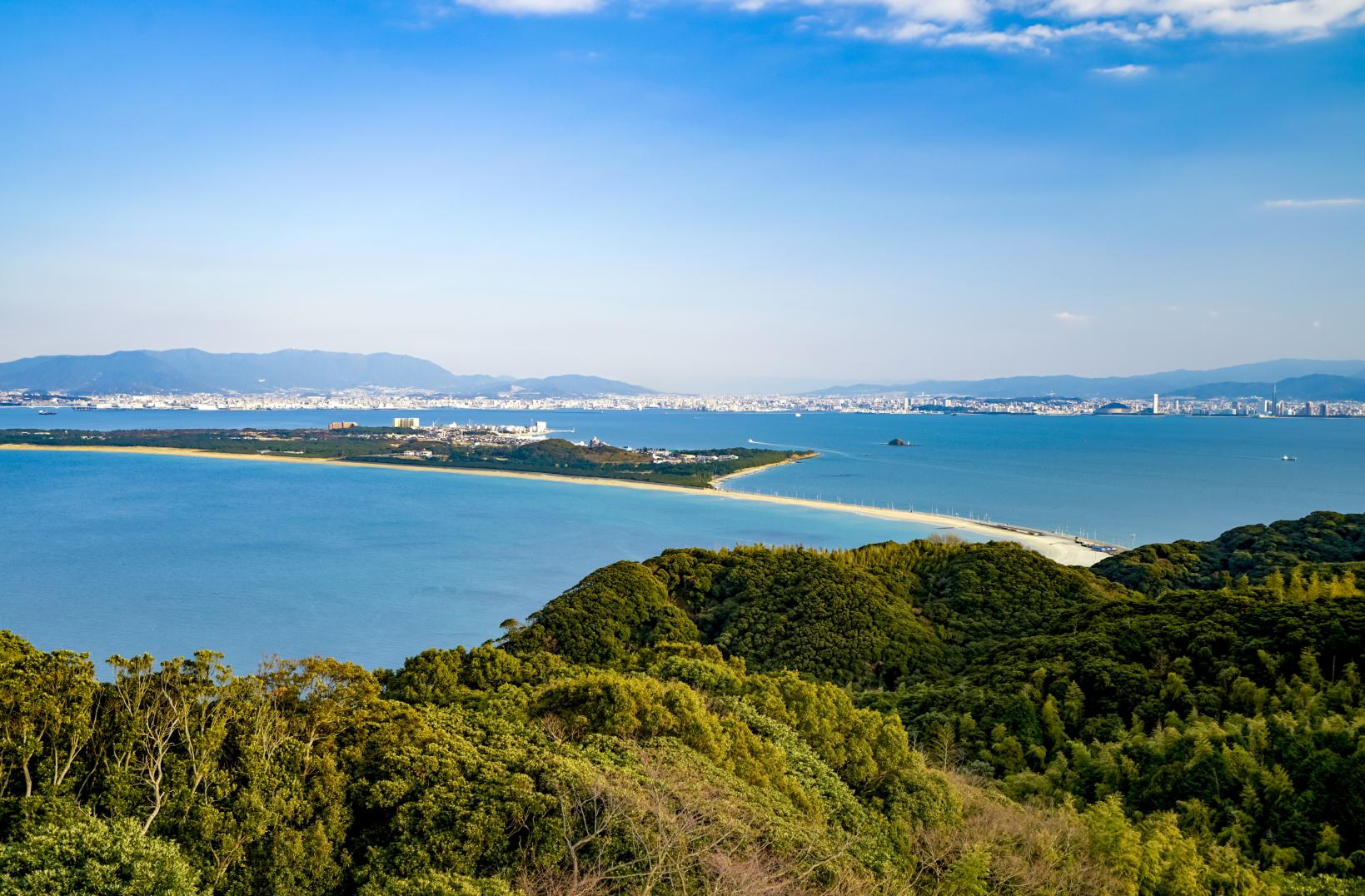
A vast national park located on the sandbar-shaped “Uminonakamichi,” surrounded by Hakata Bay and the Genkai Sea. Visitors can enjoy seasonal flowers throughout the year and interact with cute animals such as squirrel monkeys and capybaras.
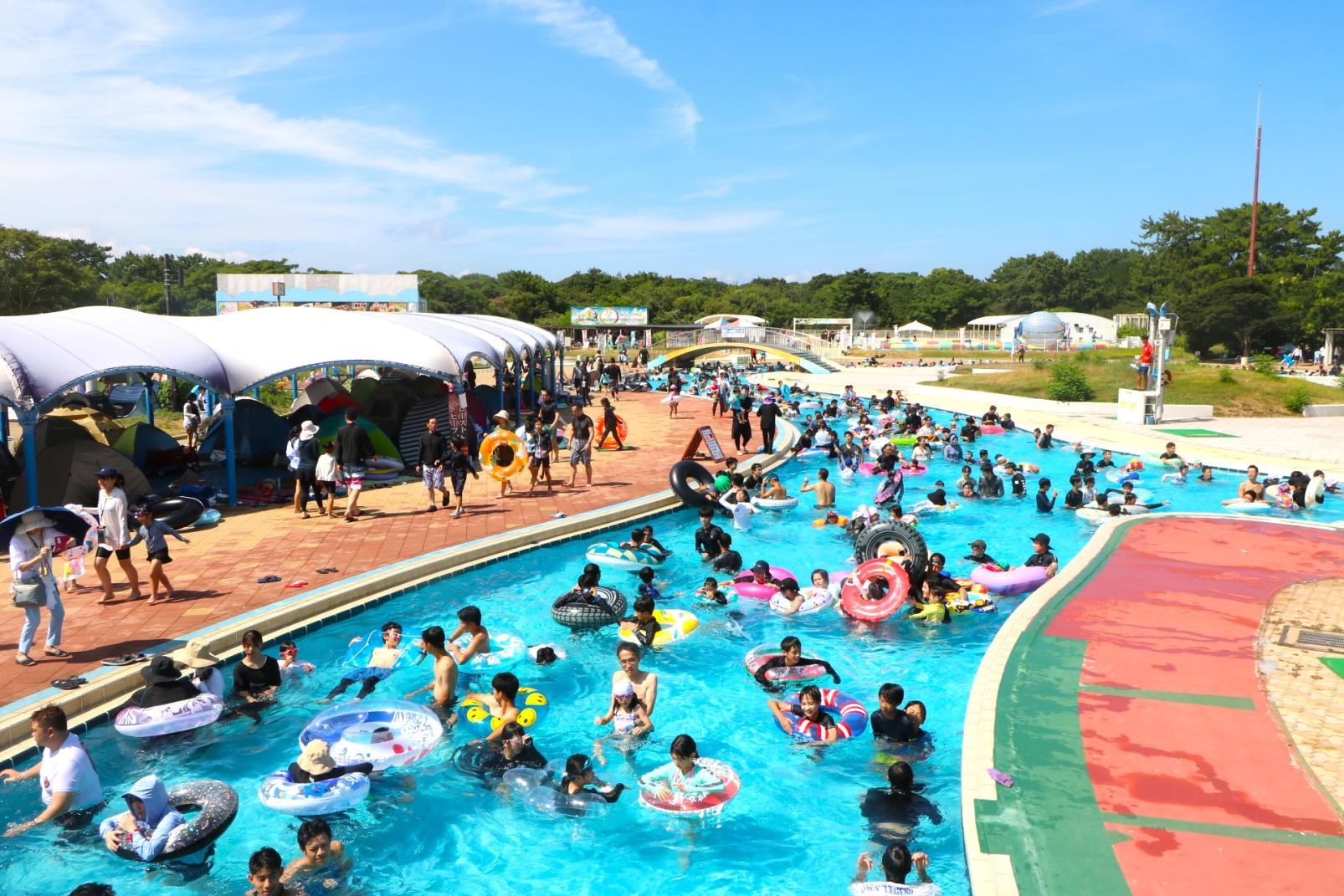
The park is full of family-friendly activities, including go-karts, mini steam locomotives, cycling, barbecues, and in summer, the “Uminonakamichi Sunshine Pool.” In March 2022, a new stay-and-play recreation area opened, featuring accommodations, restaurants, and athletic facilities where visitors can relax, learn, and play.
Basic Information
| Address (Japanese) | 811-0321 福岡県福岡市東区西戸崎18-25 |
|---|---|
| Address | 18-25 Saitozaki, Higashi Ward, Fukuoka City, Fukuoka |
| Telephone Number | 092-603-1111(海の中道管理センター) |
| Contact | Uminonakamichi Seaside Park Construction Office, Kyushu Area Development Bureau, Ministry of Land, Infrastructure, Transport and Tourism |
| Open | March 1st-October 31st : 9:30 - 17:30 November 1st-end of February : 9:30 - 17:00 |
| Closed | December 31 and January 1 The first Monday of February to the third Tuesday of March (excluding national holidays) Every Tuesday during the following period (if Tuesday is a national holiday, the following weekday) - June 1 to the third Tuesday of July - September 1 to September 30 - November 4 to December 30 - January 5 to January 31 *The park may be temporarily closed due to natural disasters (typhoons, heavy rain, earthquakes, tsunamis, etc.) when the safety of park visitors cannot be ensured. *Please check the website below for details. |
| Price | Adult (15 years old and over) : 450 yen (Group : 290 yen) Silver (65 years old and over) : 210 yen Junior high school students and younger : Free |
| Car Park | Available; 2,900 vehicles (Full-sized: 1,600 Yen; standard-sized: 600 Yen; motorcycles: 300 Yen) |
| Access | By train - A 1 minute walk from JR Umino Nakamichi Station on the Kashii Line |
| Website | https://uminaka-park.jp/ |
*Information on facilities is subject to change. Please check each official website for the latest information.
 Facilities in the Park
-
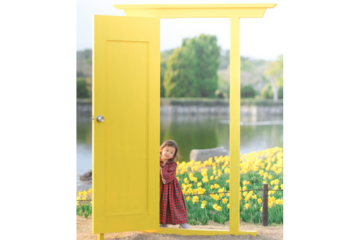
Photo Spots Now Open — Early Spring Limited!
New photo spots have appeared, featuring colorful flower windmills and a cheerful yellow door that will make you stop and take a picture! The flower windmills spin with a pleasant clatter, creating both a visual and auditory delight.
-
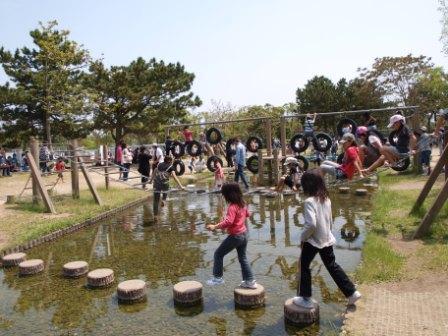
Children’s Area
The “Chibikko Plaza,” featuring a splash pool, along with the athletic area “Mizube no Trim” and the large white trampoline, are all popular spots for families. The plaza’s management building also offers a comfortable space where parents can rest while watching their children play.
-
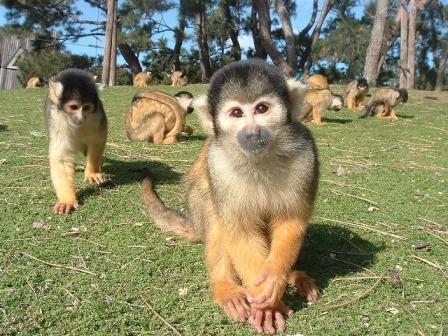
Animal Forest
Home to about 50 species and 500 animals, this area offers visitors the chance to interact with animals while learning about them. On the small hill in the center stands an observatory where you can enjoy a panoramic view of the entire park.
-
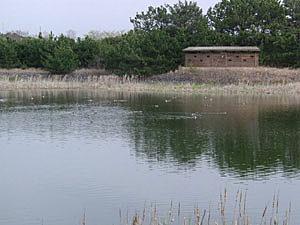
Wild Bird Forest
Located on the south side of Ikoi-no-Mori, “Wild Bird Pond” is a sanctuary for birds. Two observation huts allow for year-round birdwatching, where many species can be spotted throughout the seasons.
-
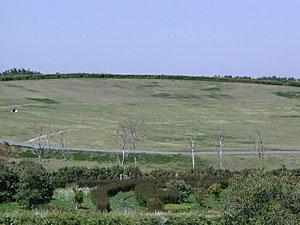
Open-Air Theater
A full-scale outdoor theater that can accommodate up to 20,000 people. Designed in an amphitheater style, it does not have a permanent stage, allowing for a variety of events and performances. When popular artists hold outdoor concerts here, visitors come from all over the prefecture and beyond.
-
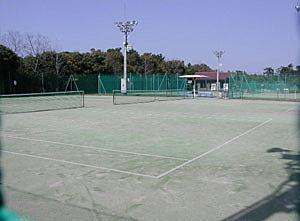
Tennis Courts
Located inside Hotel Uminonakamichi, the facility offers 14 omni courts and 4 hard courts suitable for tournaments. Shoes and racket rentals are available (540 yen each). For details, please contact Marina & Tennis.
-
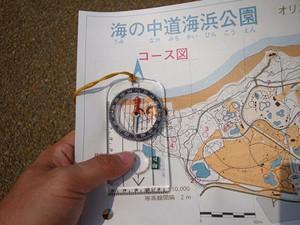
Orienteering Course
A nature-filled walking course where you can freely set your own route. Orienteering maps are available only at the West Gate.
-
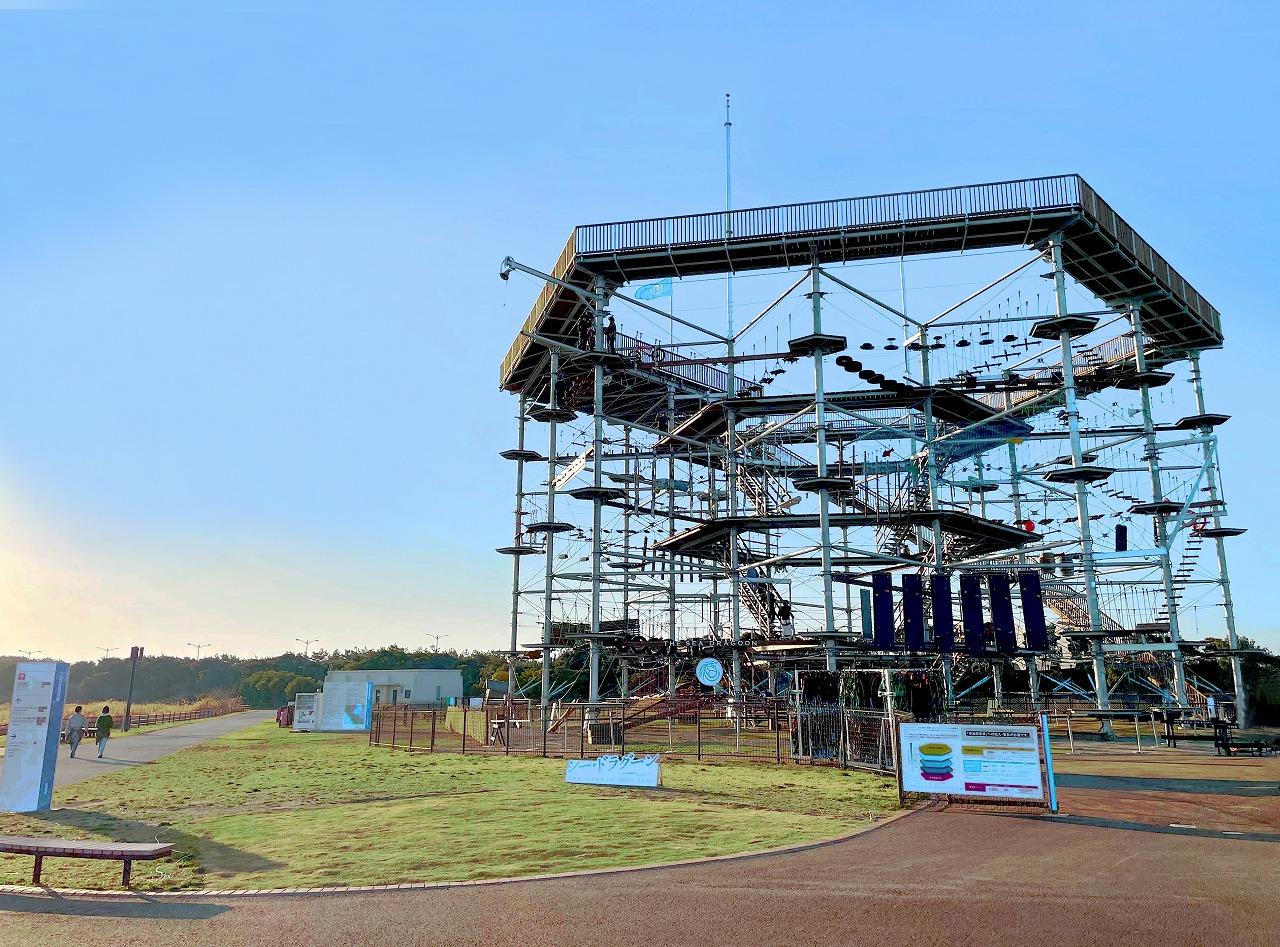
Sea Dragoon
Kyushu’s first athletic tower — a field-style athletic attraction built in a multi-level tower format, offering thrilling experiences for all ages.
Seasonal Flowers (Spring)
-
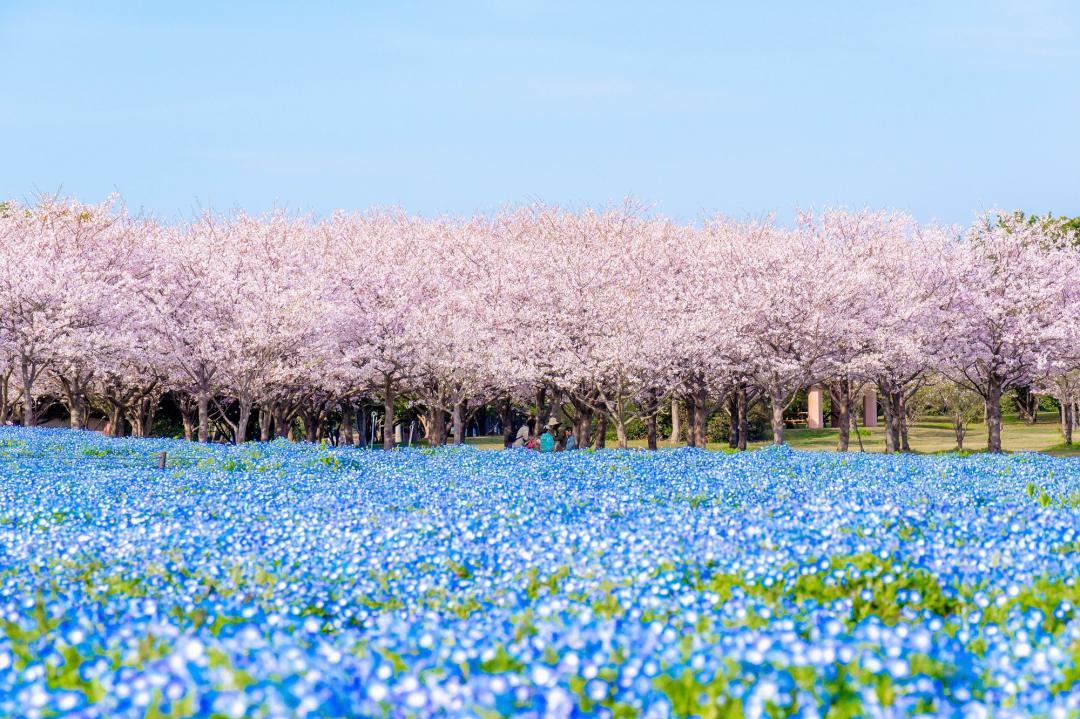
Cherry Blossoms
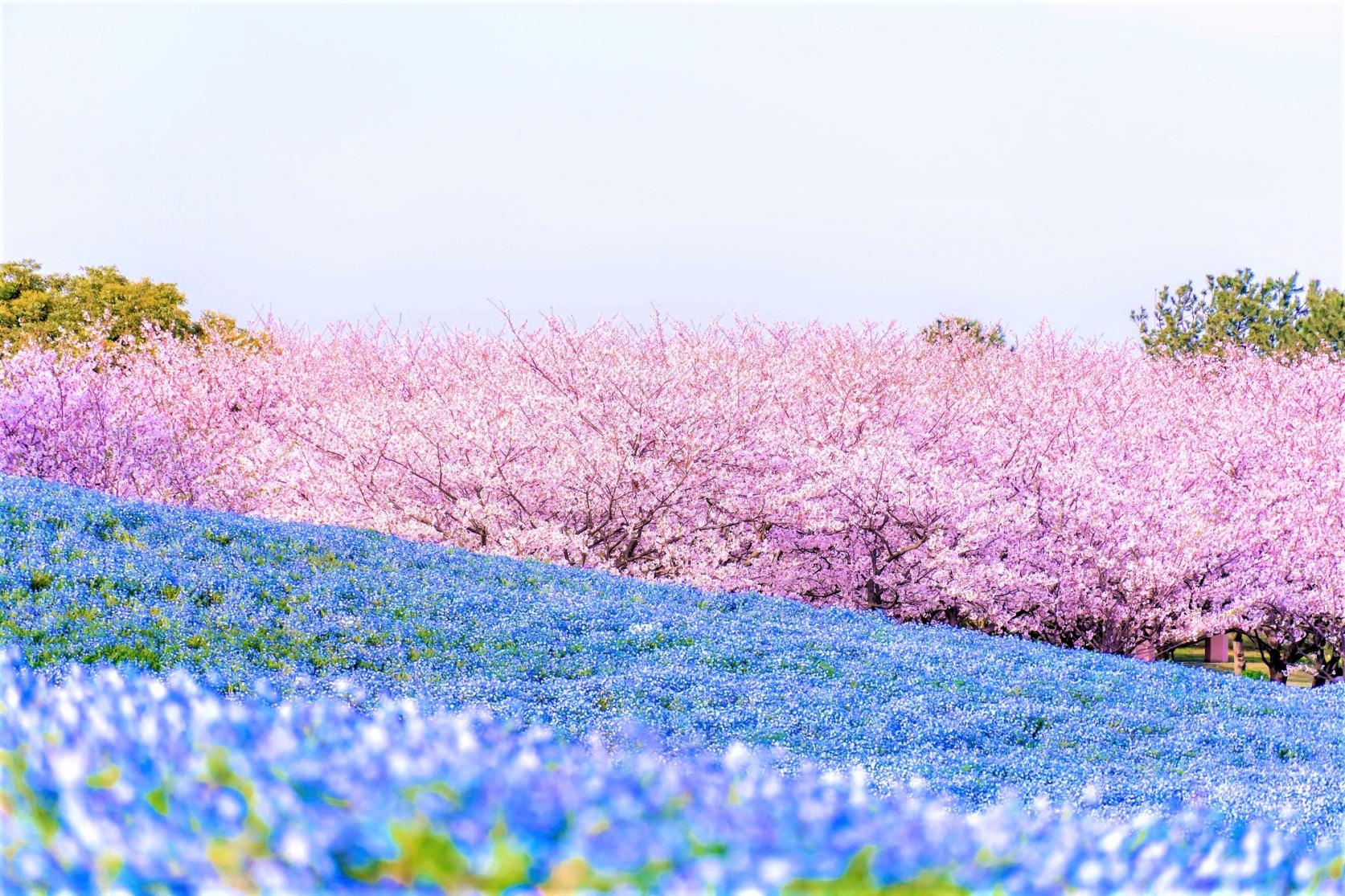
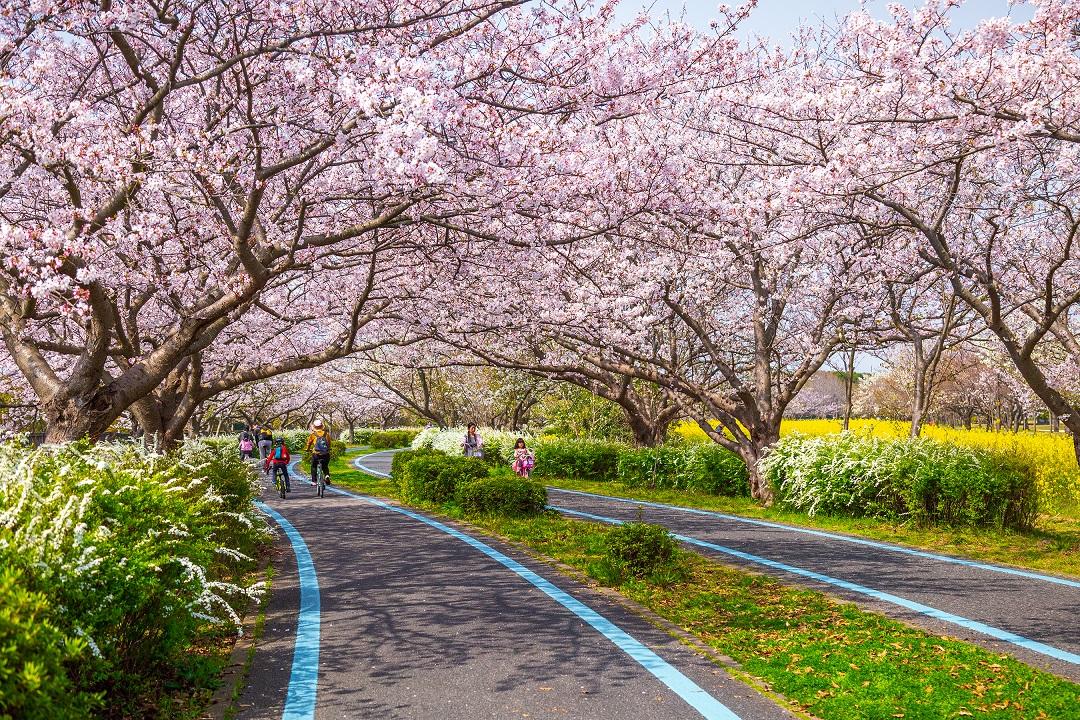
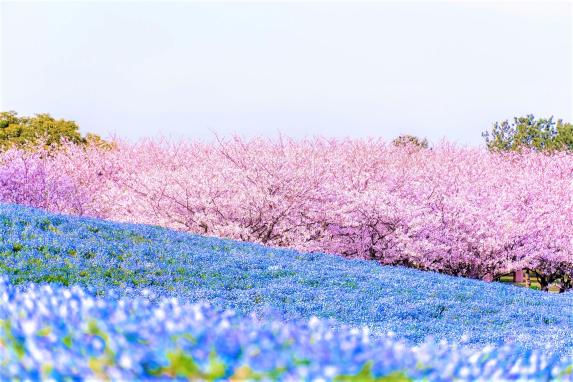
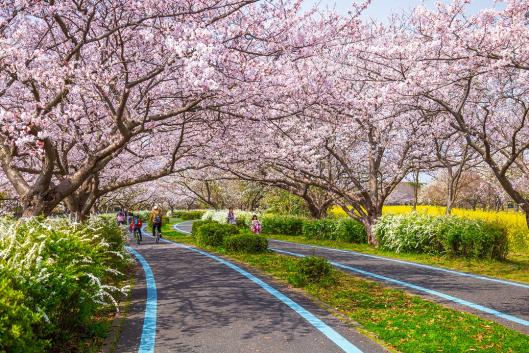
From late March, about 1,600 cherry trees bloom in harmony with nemophila, creating a soft pastel landscape at Flower Hill. Cycling through the cherry blossom tunnel near the West Cycling Center is a popular spring experience.
Best viewing period: Late March to early April -
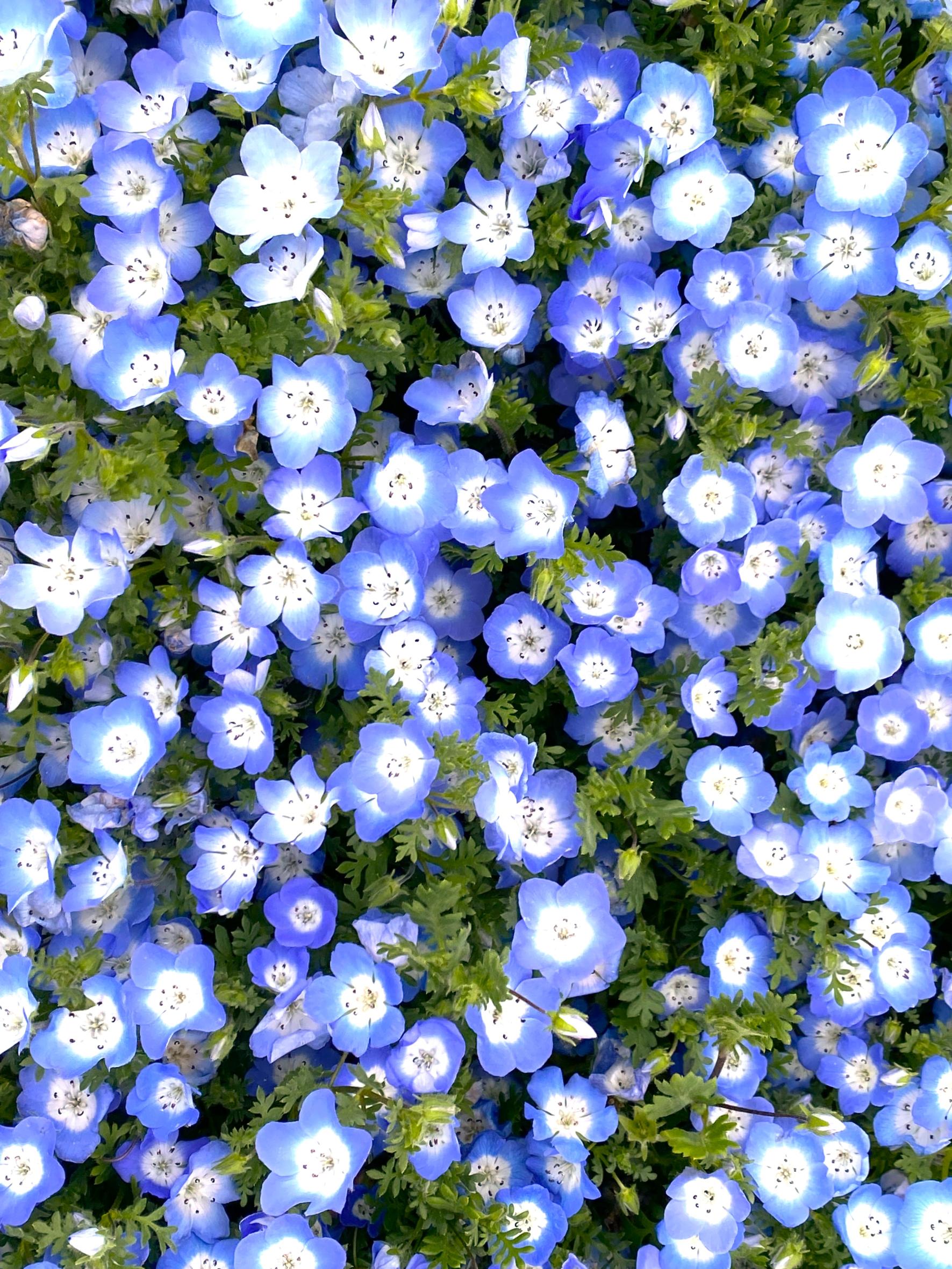
Nemophila
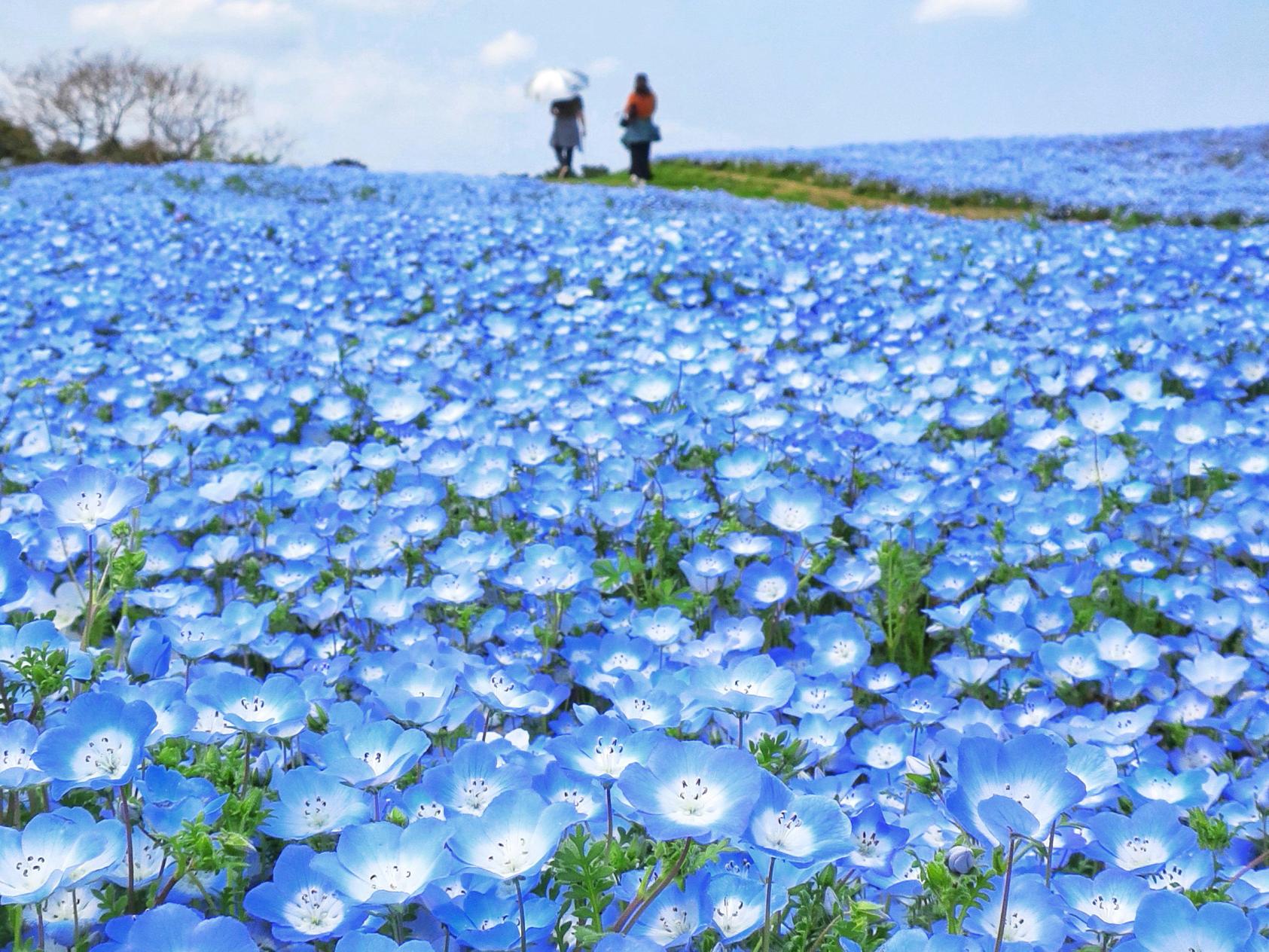
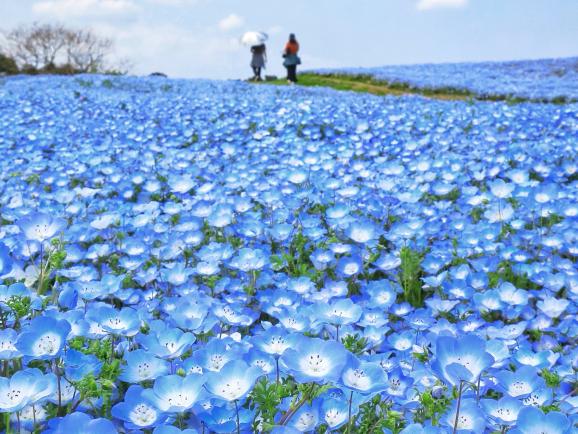
Native to North America, nemophila is an annual plant in the borage family. The variety in the park, Nemophila menziesii 'Insignis Blue', is affectionately called “Baby Blue Eyes” for its charming blue petals. In Japanese, it is known as "Rurikarakusa". The vast field of blue flowers looks like an ocean of blossoms.
Best viewing period: Early to late April -
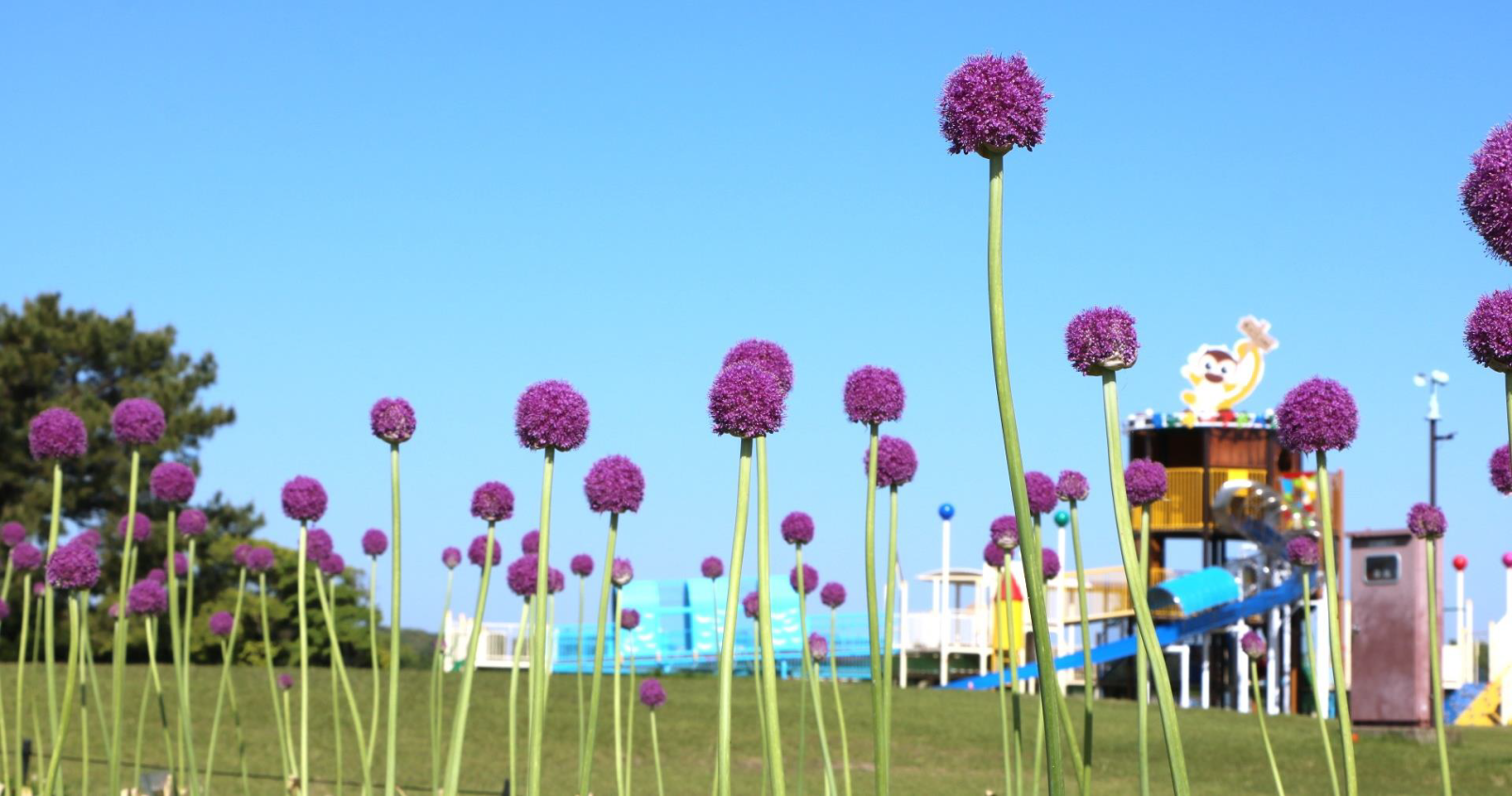
Allium giganteum
In the colorful flower beds, large purple globe-shaped blooms about 10 cm in diameter rise on 1-meter-tall stems, resembling stars in the sky. The name comes from Latin — “Allium” meaning “onion” and “giganteum” meaning “giant,” hence “giant onion flower.”
Best viewing period: Early to late May -
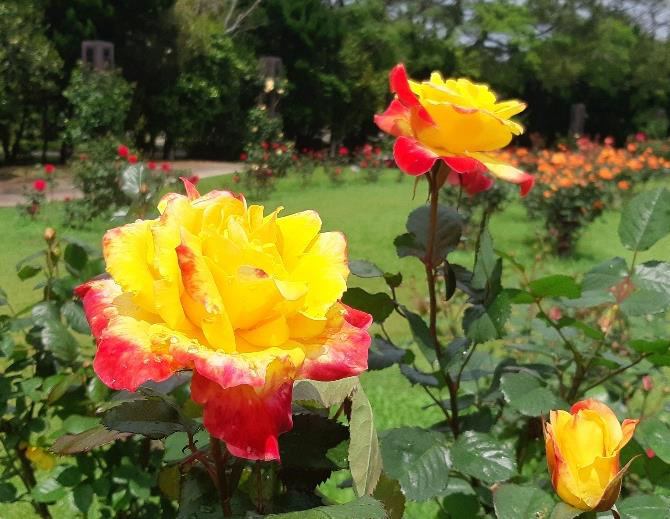
Spring Rose Garden
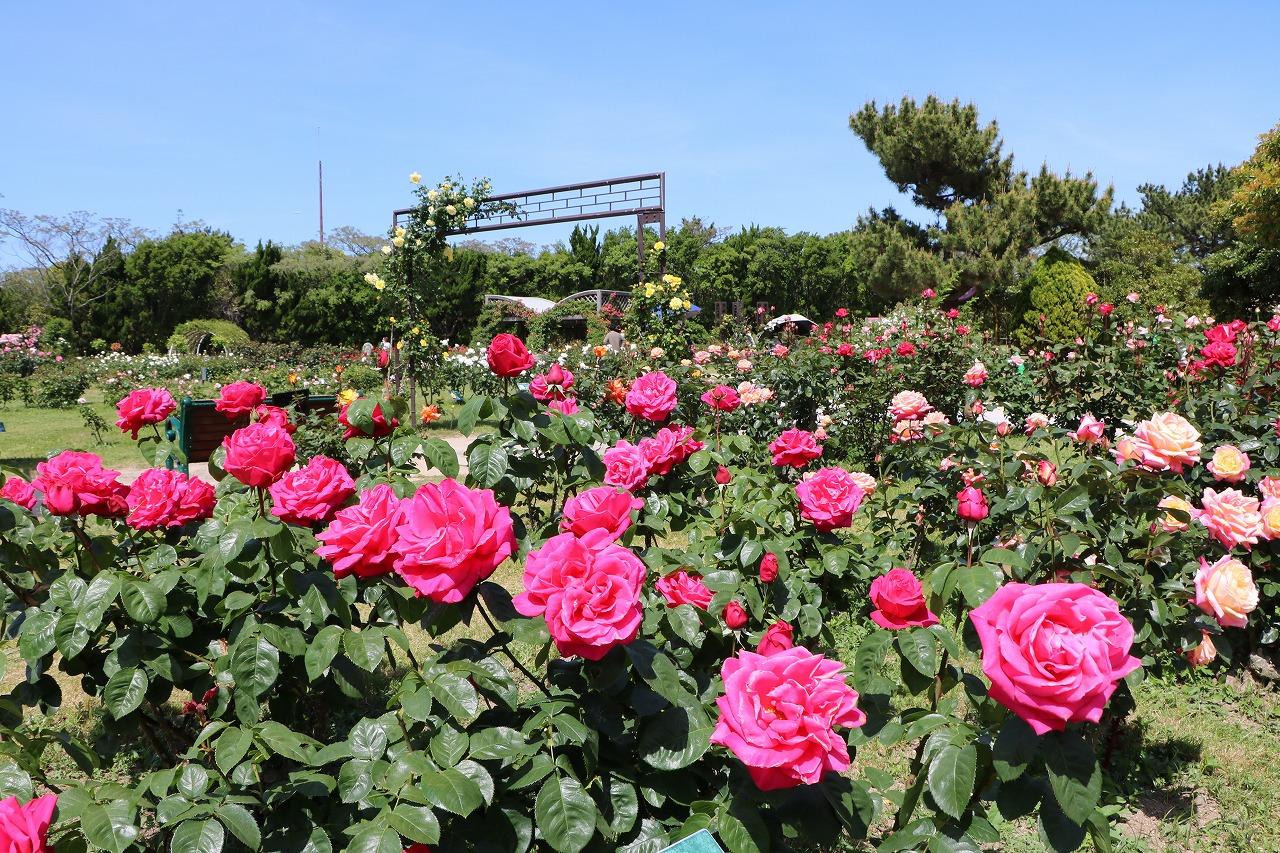
In spring, the rose garden bursts into color with 1,800 roses across 220 varieties. The air is filled with their rich fragrance, creating a sweet and soothing atmosphere that delights all visitors.
Best viewing period: Early to late May
Seasonal flowers (Summer)
-
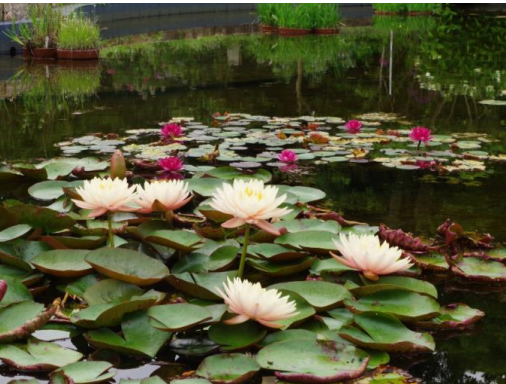
Hardy Water Lilies (Nymphaea, Family Nymphaeaceae)
Although often written as “水蓮”, meaning "water lotus" in Japanese, the correct characters are “睡蓮”, meaning “sleeping lotus”, named after the way the flowers close at dusk as if falling asleep. Their rhizomes are connected underwater like lotus roots. Six varieties are planted in the Flower Museum, and wild species can also be seen in the Duck Pond at the Light and Wind Plaza.
Best viewing period: May–August -
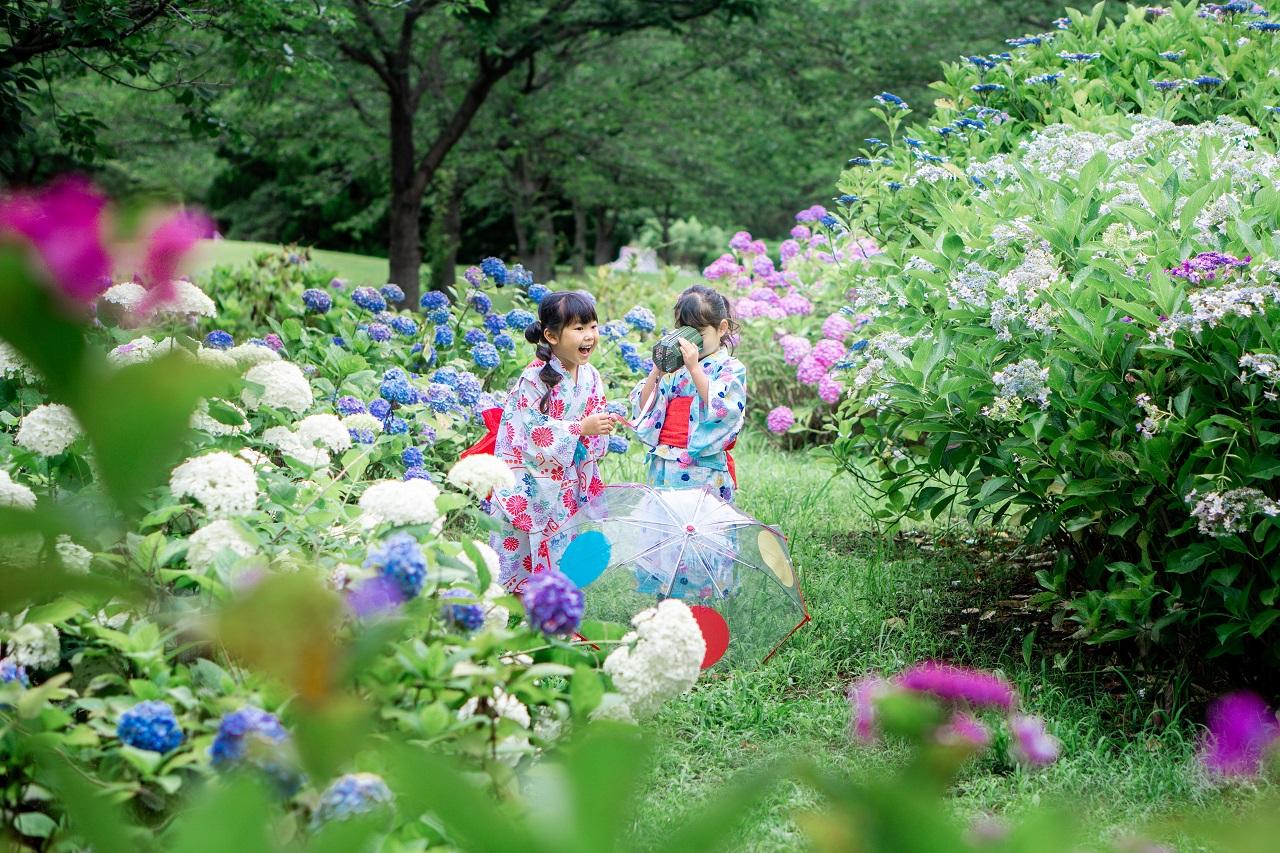
Hydrangeas
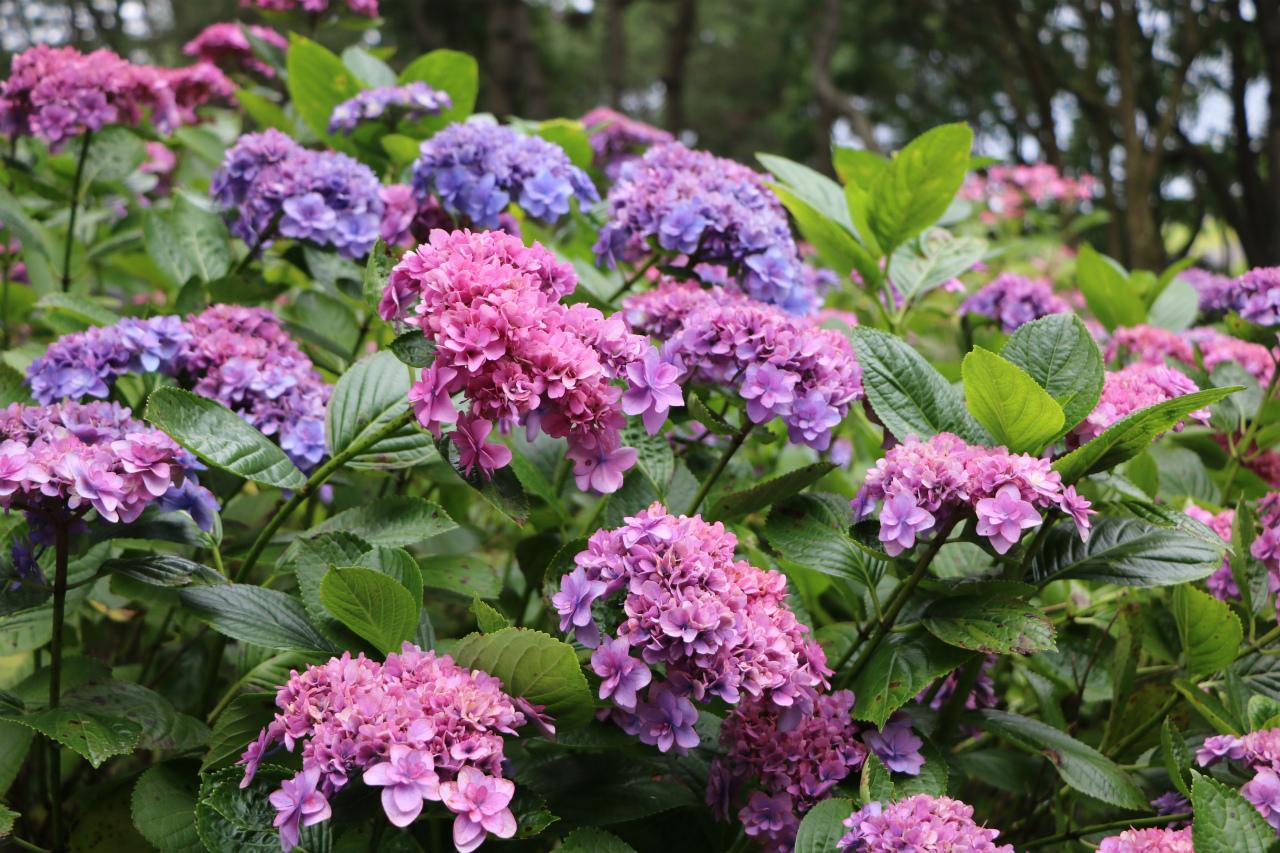
Around 10,000 hydrangeas of 40 varieties color the “Hydrangea Path” with their vivid hues.
Best viewing period: Early–late June -
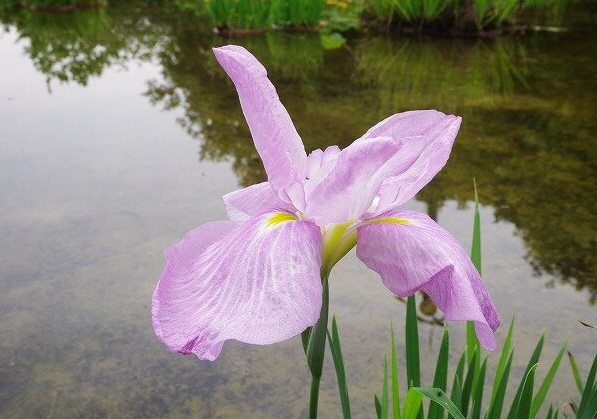
Japanese Iris (Iris ensata)
A cultivated plant developed from the wild Japanese iris (Iris ensata var. spontanea), which grows naturally in moist grasslands. With over 500 years of history, more than 5,000 varieties have been bred. The Flower Museum features about 100 plants of 5 varieties.
Best viewing period: June -
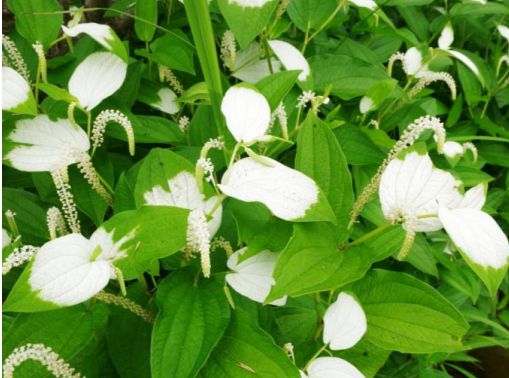
Hangeshō (Saururus chinensis)
In summer, part of its leaves turn white to act as petals, returning to green after flowering. Its name has two possible origins: (1) from its half-white “made-up” leaves (“半化粧”), and (2) from the traditional Japanese calendar term Hangeshō (around July 2), when it blooms.
Best viewing period: June–July -
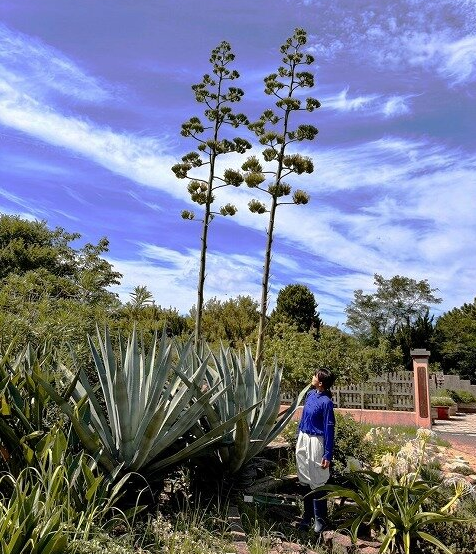
Agave (Agave americana)
The Agave americana takes about 30 years to mature and blooms only once before dying—a rare and fleeting spectacle. The flower stalk that began growing in May 2025 reached 6–7 meters and bloomed on July 19, 2025. Three large plants remain that may bloom again in 2026.
Best viewing period: Mid-July–early August -
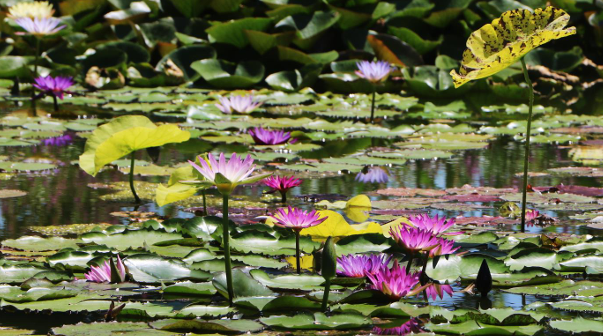
Tropical Water Lilies
Tropical water lilies are sensitive to cold, so they are kept in greenhouses during winter and displayed only in summer. Their cool, elegant appearance gives them the nickname “Water Fairy.”
Best viewing period: July–late September -
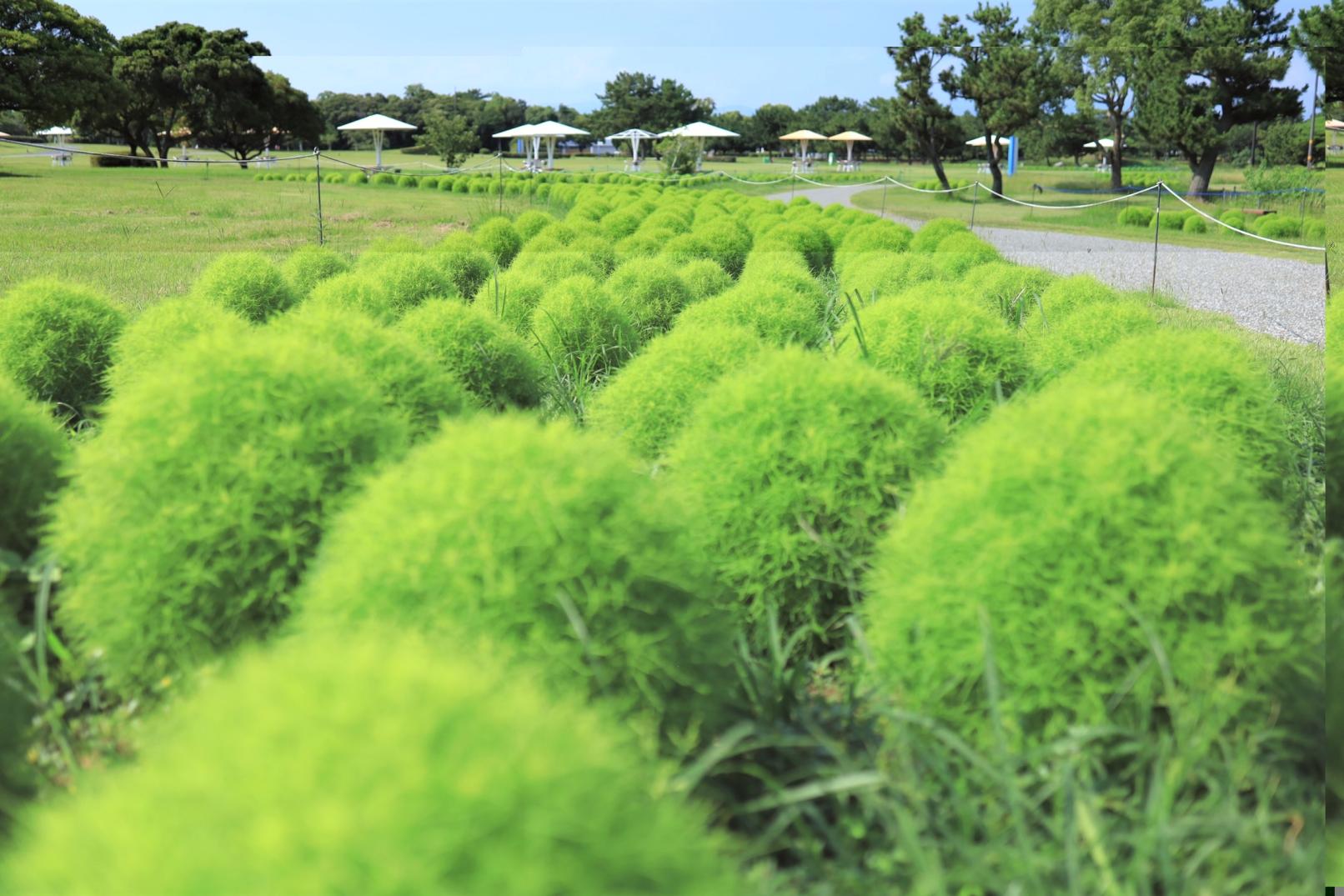
Summer Kochia (Bassia scoparia)
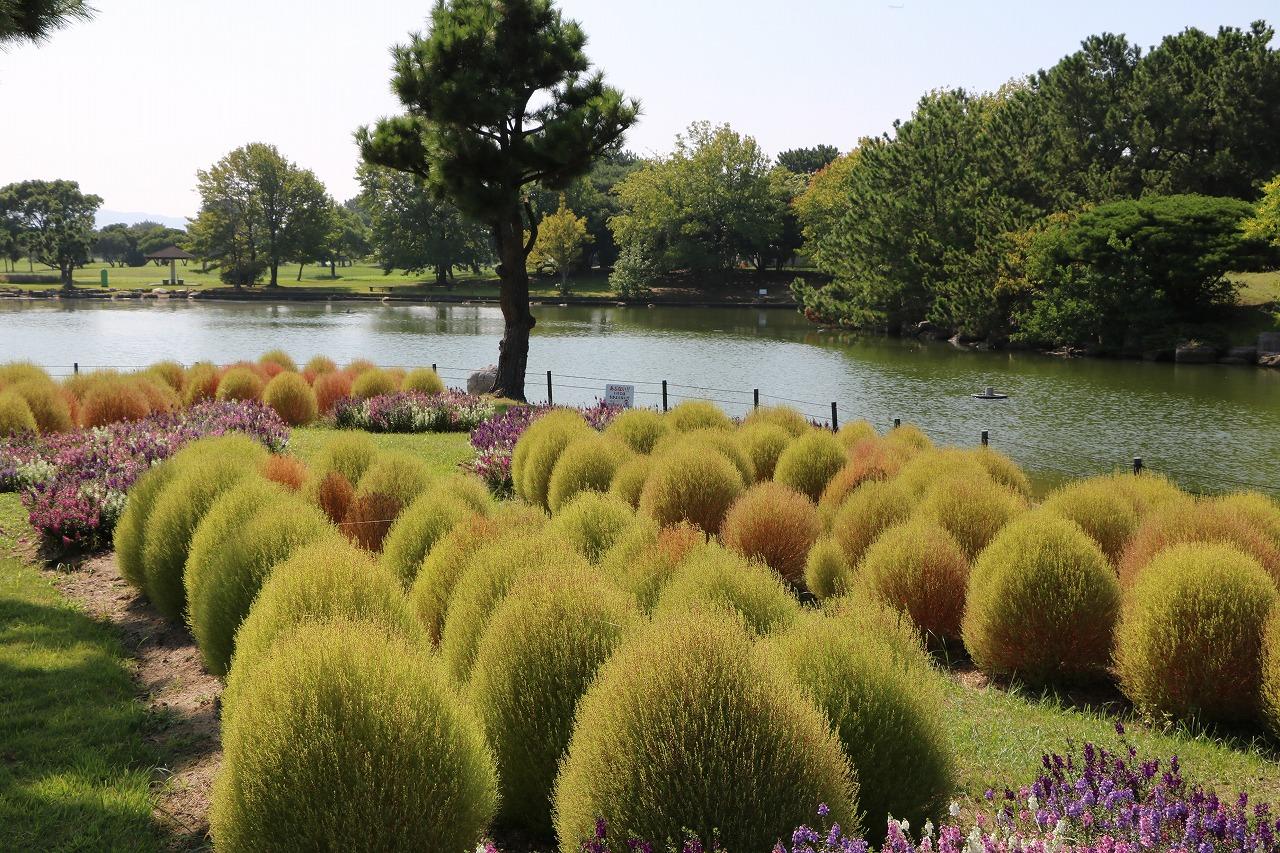
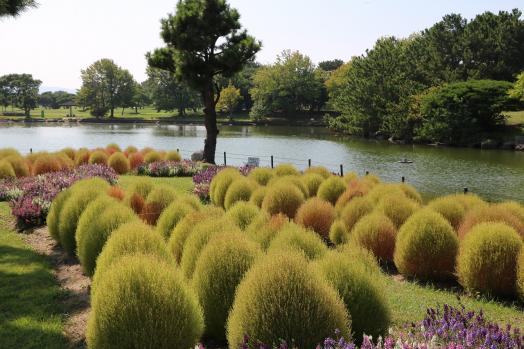
An annual plant of the Amaranth family, known in Japan as Hōkigi (“broom plant”), since its branches were traditionally bound to make brooms. The round, fluffy green bushes grow up to 80 cm tall, delighting visitors in the Rainbow and Colorful Flower Gardens during August.
Best viewing period: Early August–early September
Seasonal Flowers (Autumn)
-
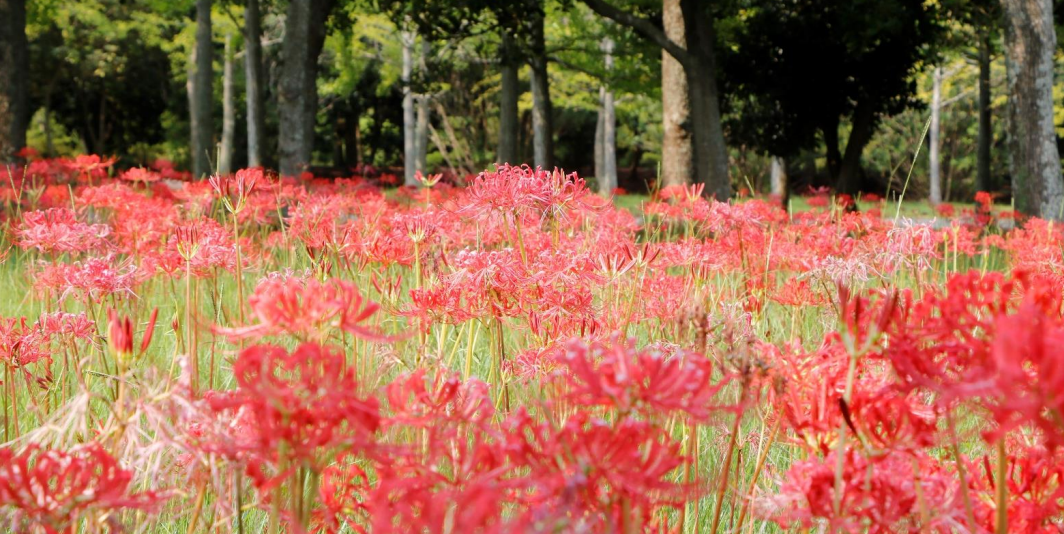
Red Spider Lily (Higanbana)
About 40,000 red spider lilies bloom in early autumn around the Adventure Pond area until late September. Unlike the ones that bloom along rice paddies, the lilies here grow in the shade of trees, glowing beautifully in the sunlight filtering through the leaves. Enjoy this picturesque spot that heralds the arrival of autumn with a sea of crimson flowers.
Best season: Early–late September -
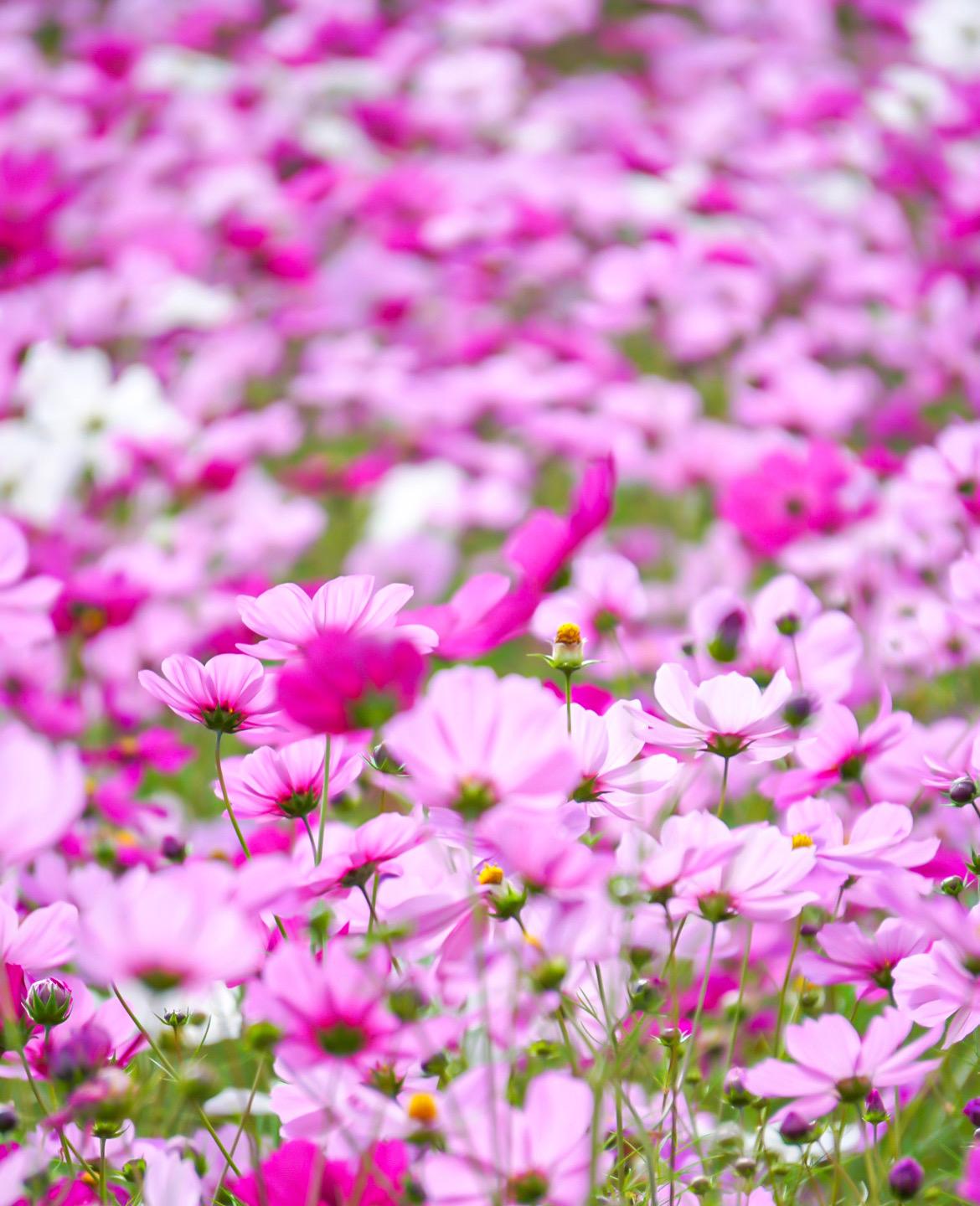
Cosmos
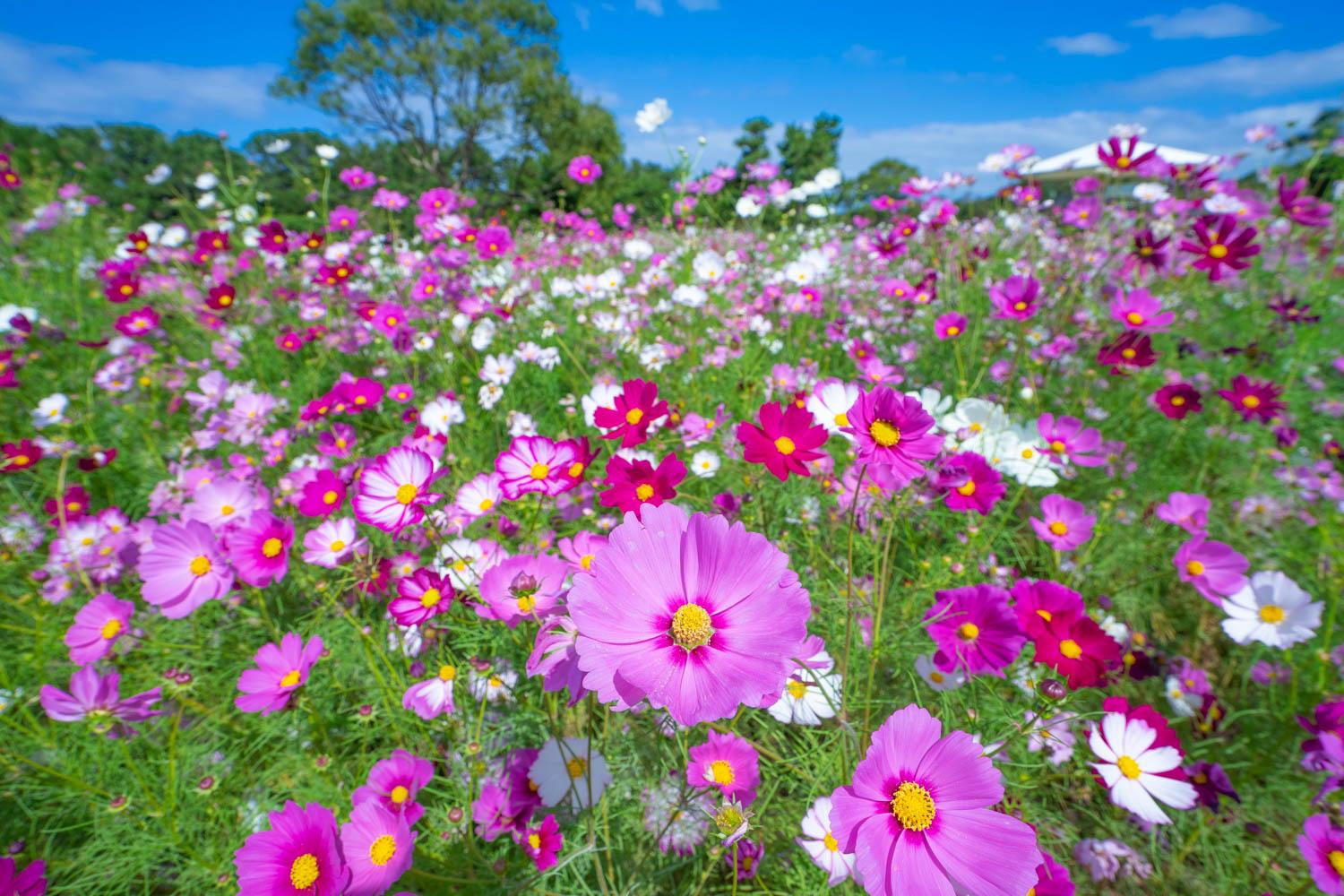
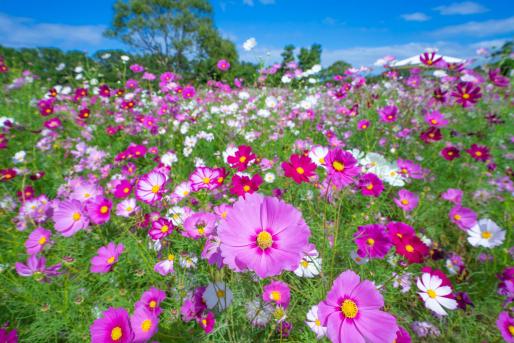
On the Flower Hill, 1.2 million cosmos bloom until late October. Enjoy the spectacular contrast of the clear autumn sky and the pink flowers covering the entire hillside.
Best season: Early–late October -
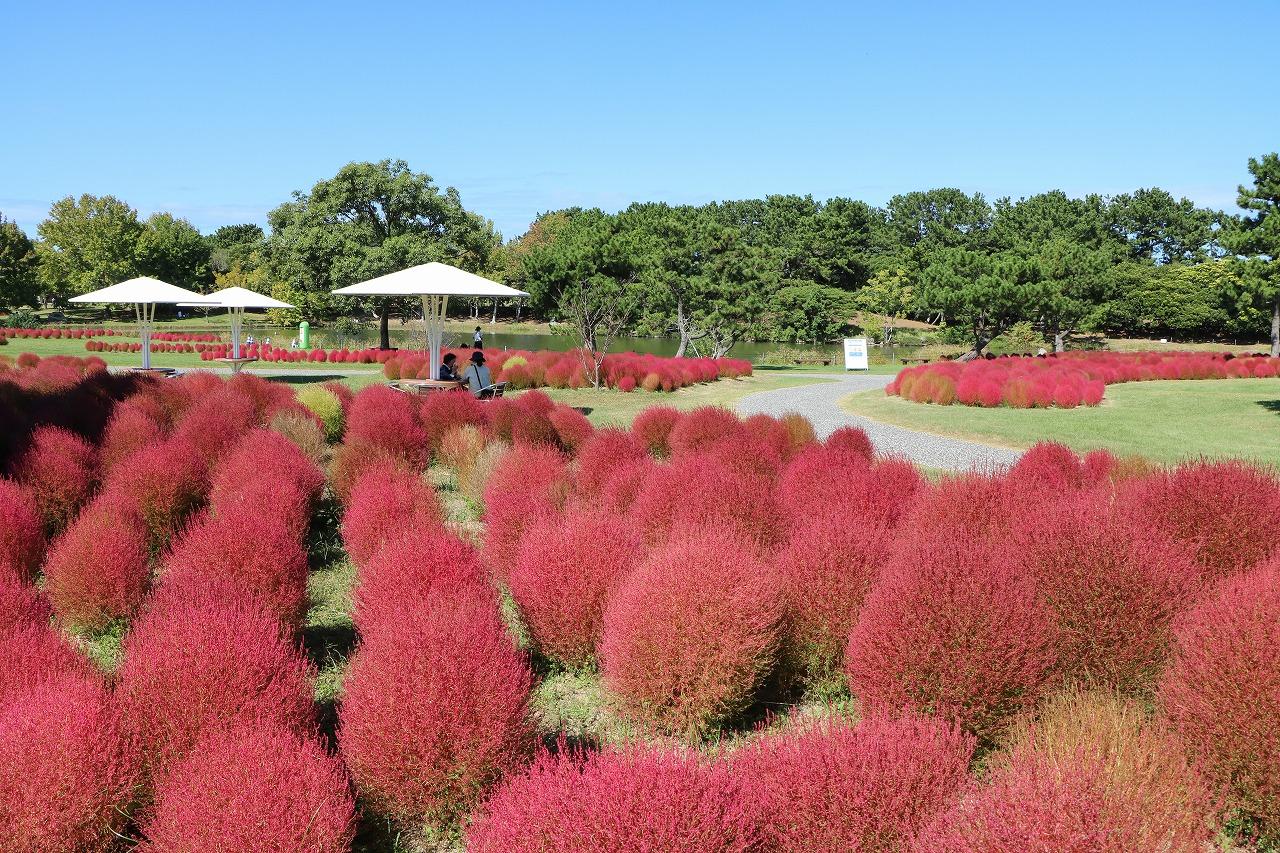
Autumn Kochia
These annual plants, also known as “broom cypress,” turn from bright lime green in August to vivid red in October. Around 2,300 kochia plants create a soft, colorful carpet that signals the arrival of autumn.
Best season: Mid–late October -
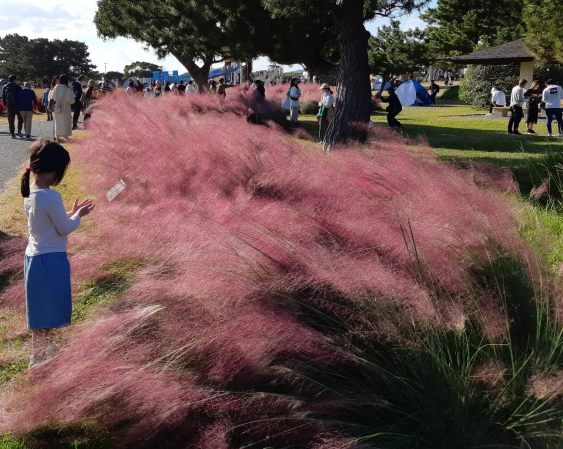
Muhlenbergia capillaris
A signature sight of autumn at Uminonakamichi. The pinkish-red plumes resemble waves, creating a dreamy scene by the pond. The planting area has expanded to 450㎡, making it even more impressive.
Best season: Mid-October–early November -
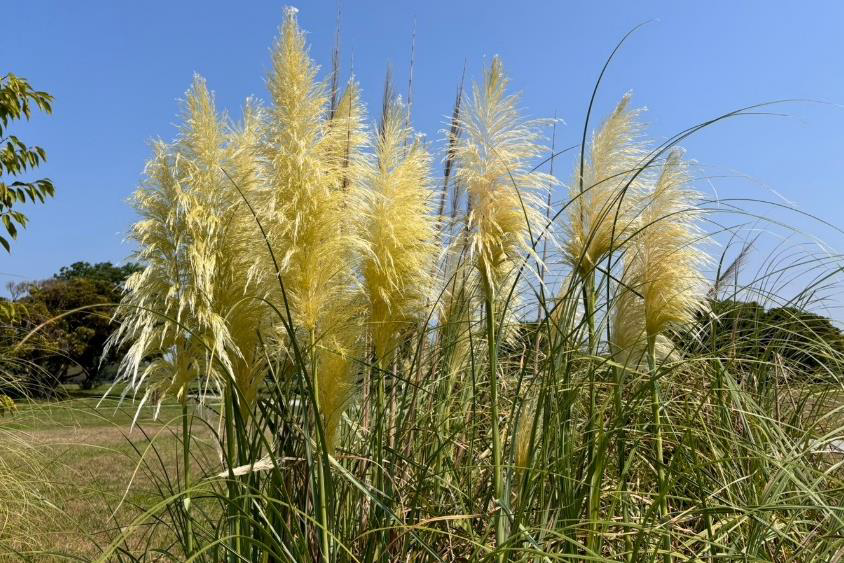
Pampas Grass
About 80 clusters of pampas grass near Flower Hill sway gracefully in the wind, their silvery-white plumes gleaming in the sunlight. Known as the “giant silver grass,” these tall plants, up to 3 meters, create a dynamic autumn view lasting through November.
Best season: Until November -
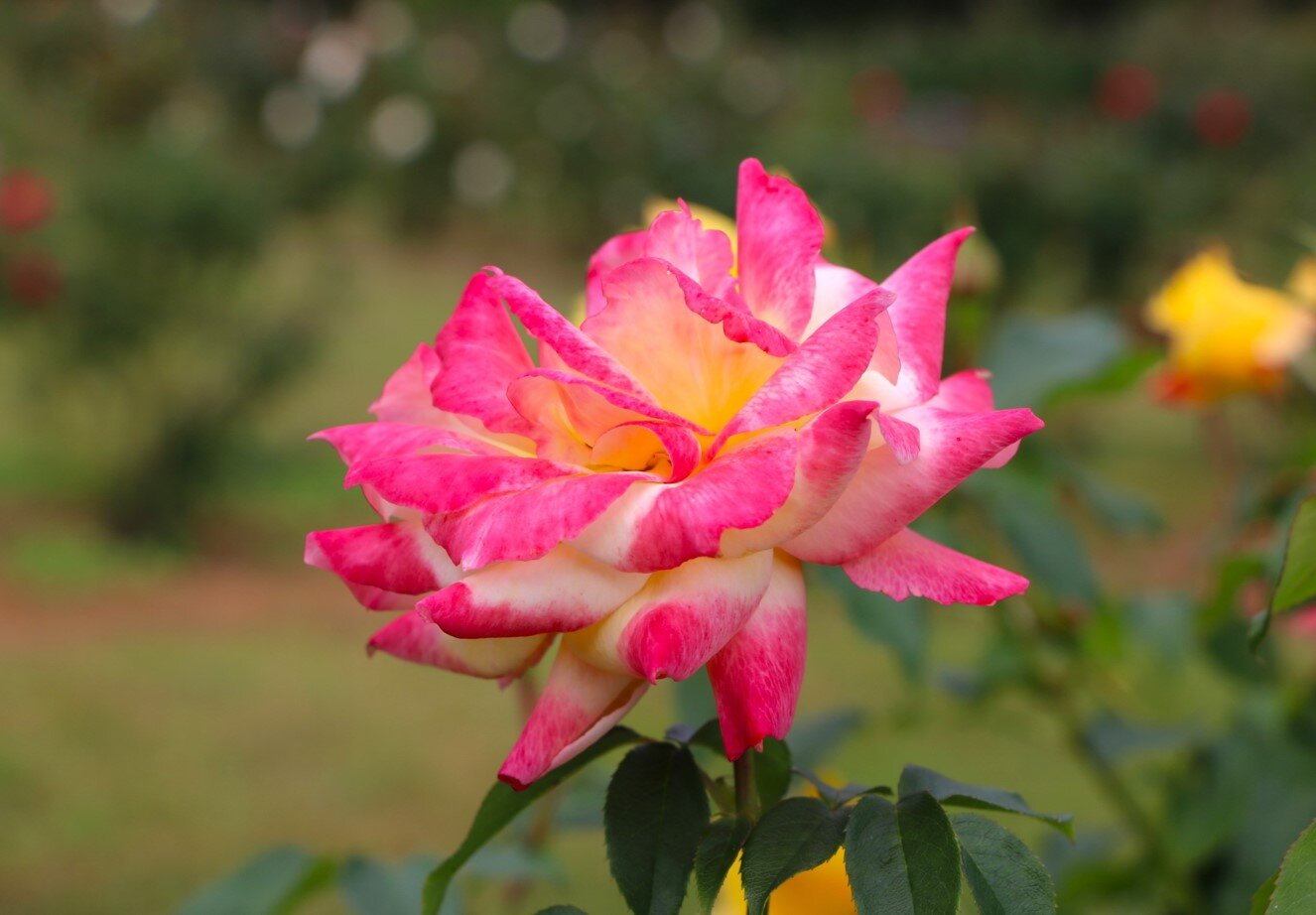
Autumn Roses
The rose garden features 1,200 roses across 220 varieties. Compared to spring, autumn roses are smaller but have a richer fragrance.
Best season: Late October–late November -
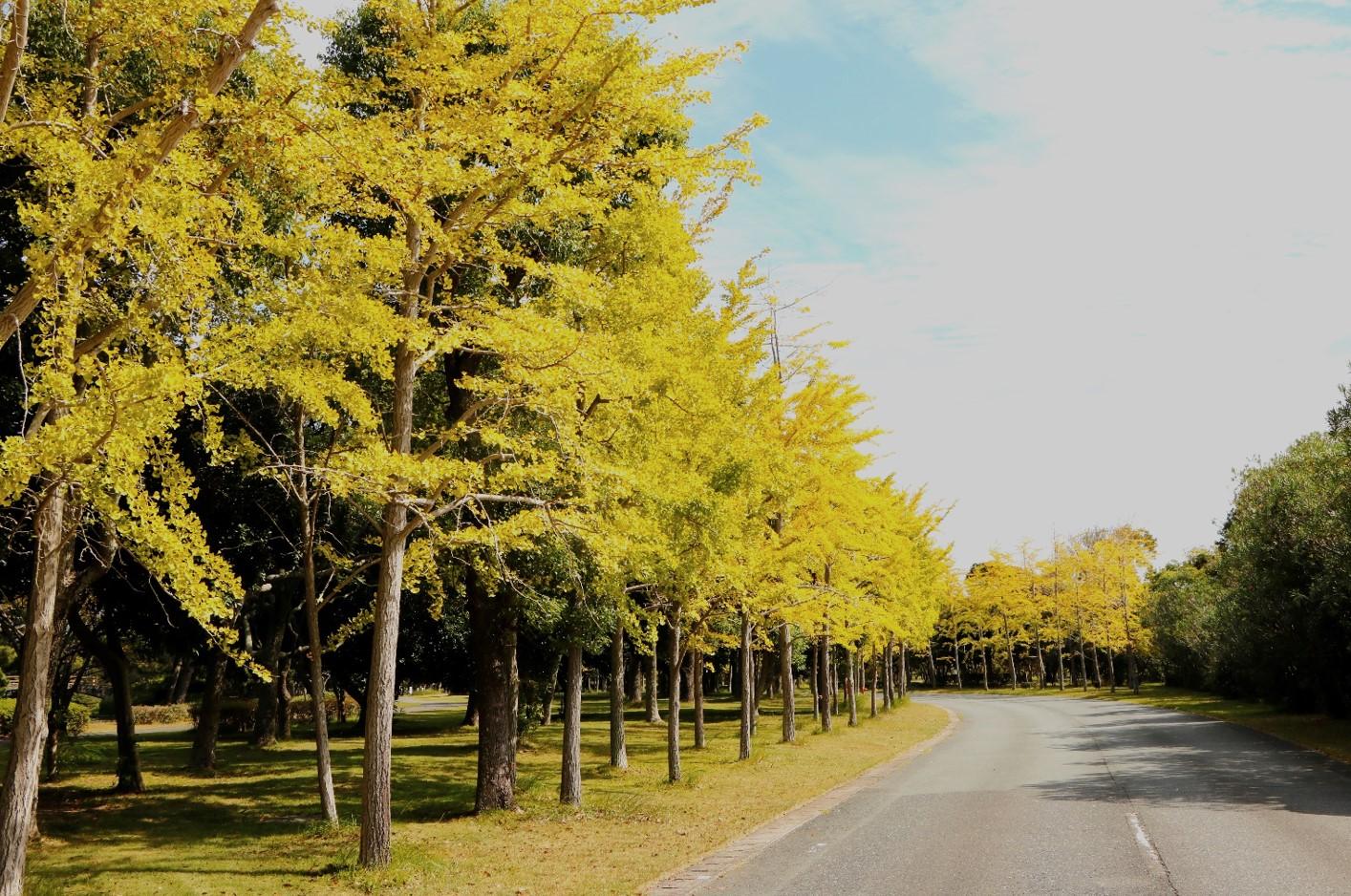
Ginkgo Trees
A row of about 350 ginkgo trees turns the walkway into a golden tunnel. Lined along the bus route, the open path is a hidden gem for photography lovers, reminiscent of a Beatles album cover.
Best season: Late October–mid-November
Seasonal Flowers (Winter)
-
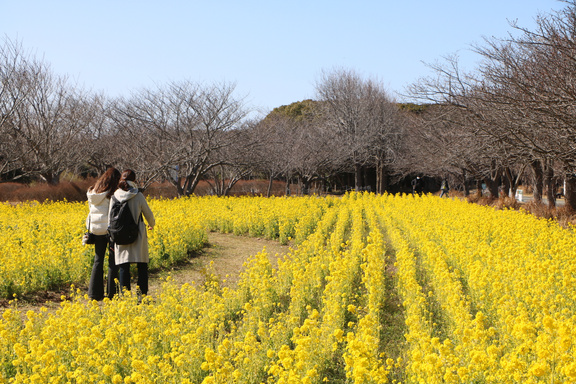
Canola Flowers (Nanohana)
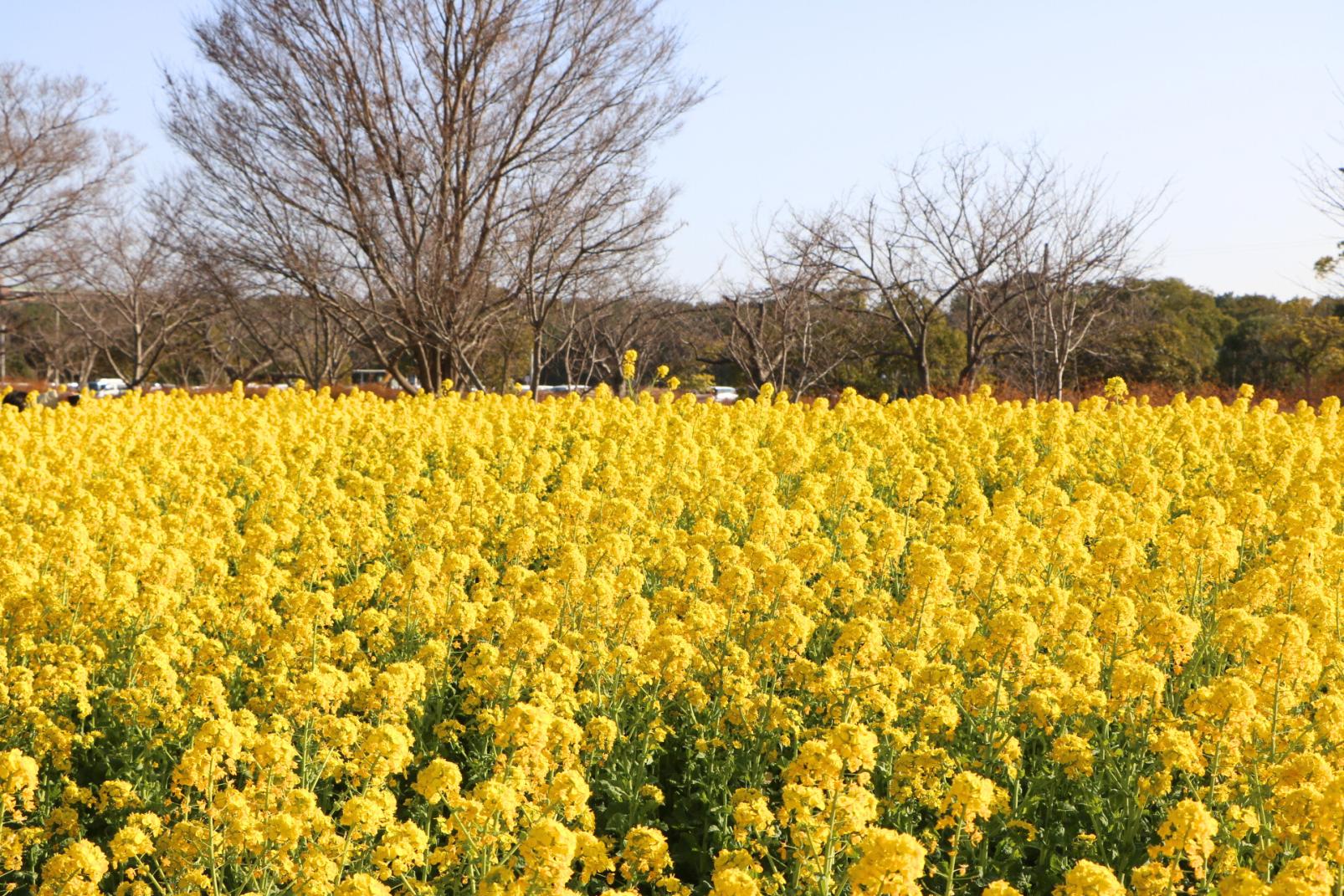
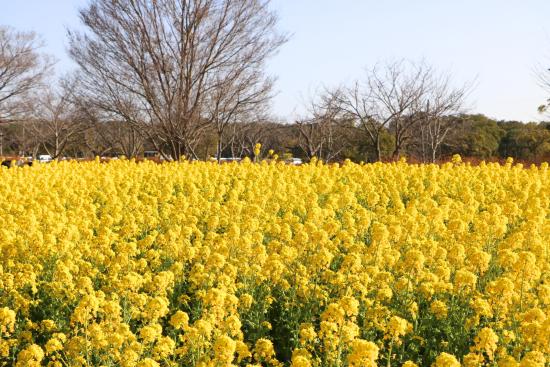
Near the Sky Dolphin area, about 150,000 bright yellow canola flowers bloom in full glory. They create a vivid contrast against the blue winter sky, adding cheerful color to Uminonakamichi in early spring. With walking paths through the flower fields, visitors can take stunning photos surrounded by blossoms—making it a favorite photo spot on sunny days.
Best season: Late December–late March -
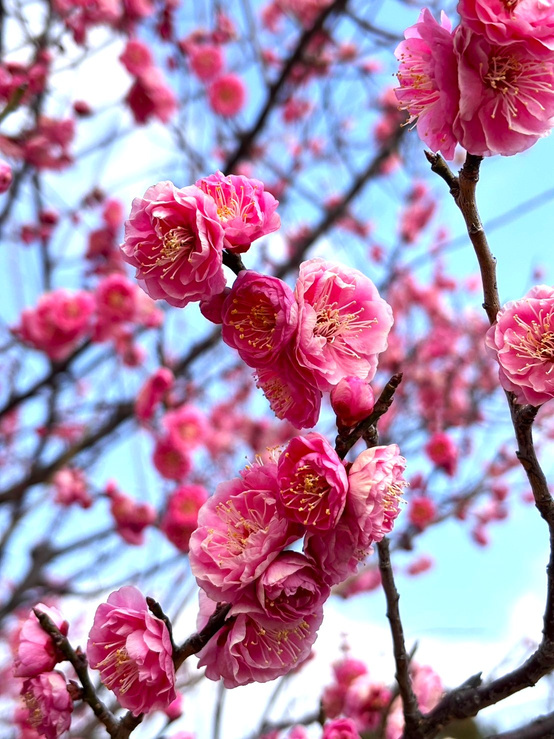
Plum Blossoms (Ume)
Around 120 plum trees, including red and pink varieties, fill the air with their sweet fragrance as they reach full bloom.
Best season: Late January–early March -
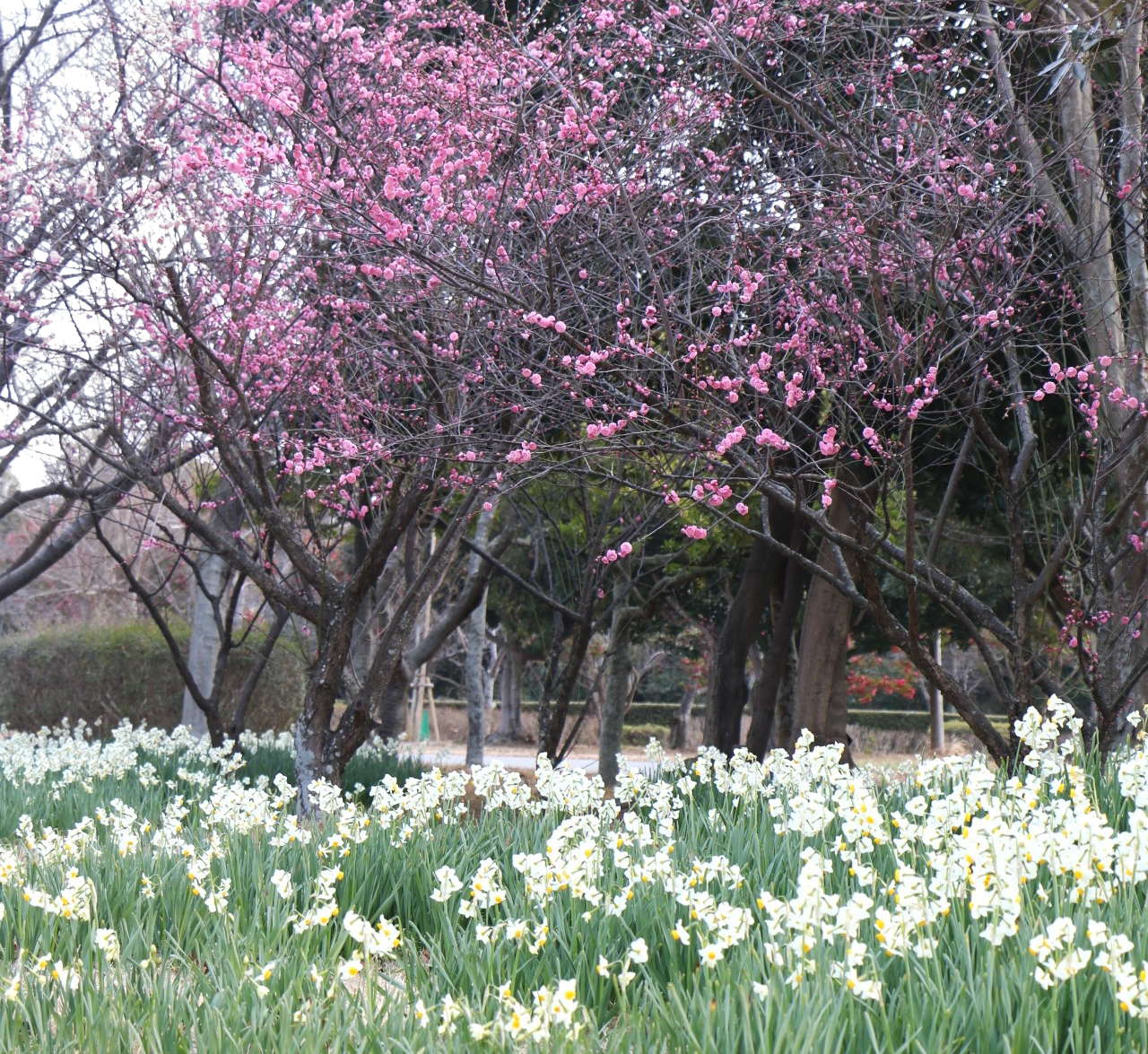
Daffodils (Suisen)
About 80,000 yellow Western daffodils bloom along the waterfront. In 2025, 2,000 more were added, making the scenery even more colorful. Japanese white daffodils also bloom nearby, creating a beautiful harmony of scent and color in the early spring air.
Best season: Mid-February–late March -
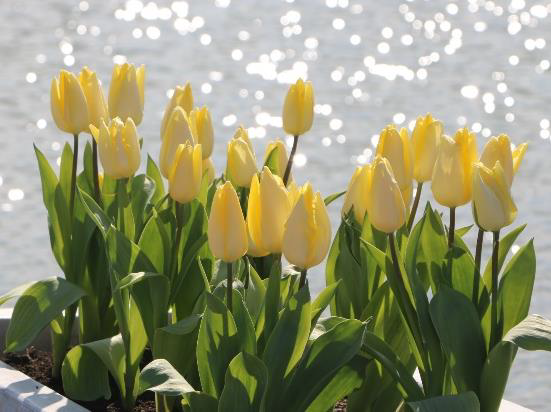
Ice Tulips
In the Toy Box Flower Bed, 36 planters display around 1,320 tulips blooming gracefully despite the cold. These “ice tulips” are chilled in summer to simulate winter and bloom early. Their petals last longer in the cold, allowing visitors to enjoy them for an extended period.
Best season: Mid-February–early March
Share


- Area
- Fukuoka Area
- Category
- Flowers & Plants Parks Leisure Facilities
 Neighborhood Sightseeing spots
-
Uminonakamichi Sunshine Pools
-
Marine World Uminonakamichi
-
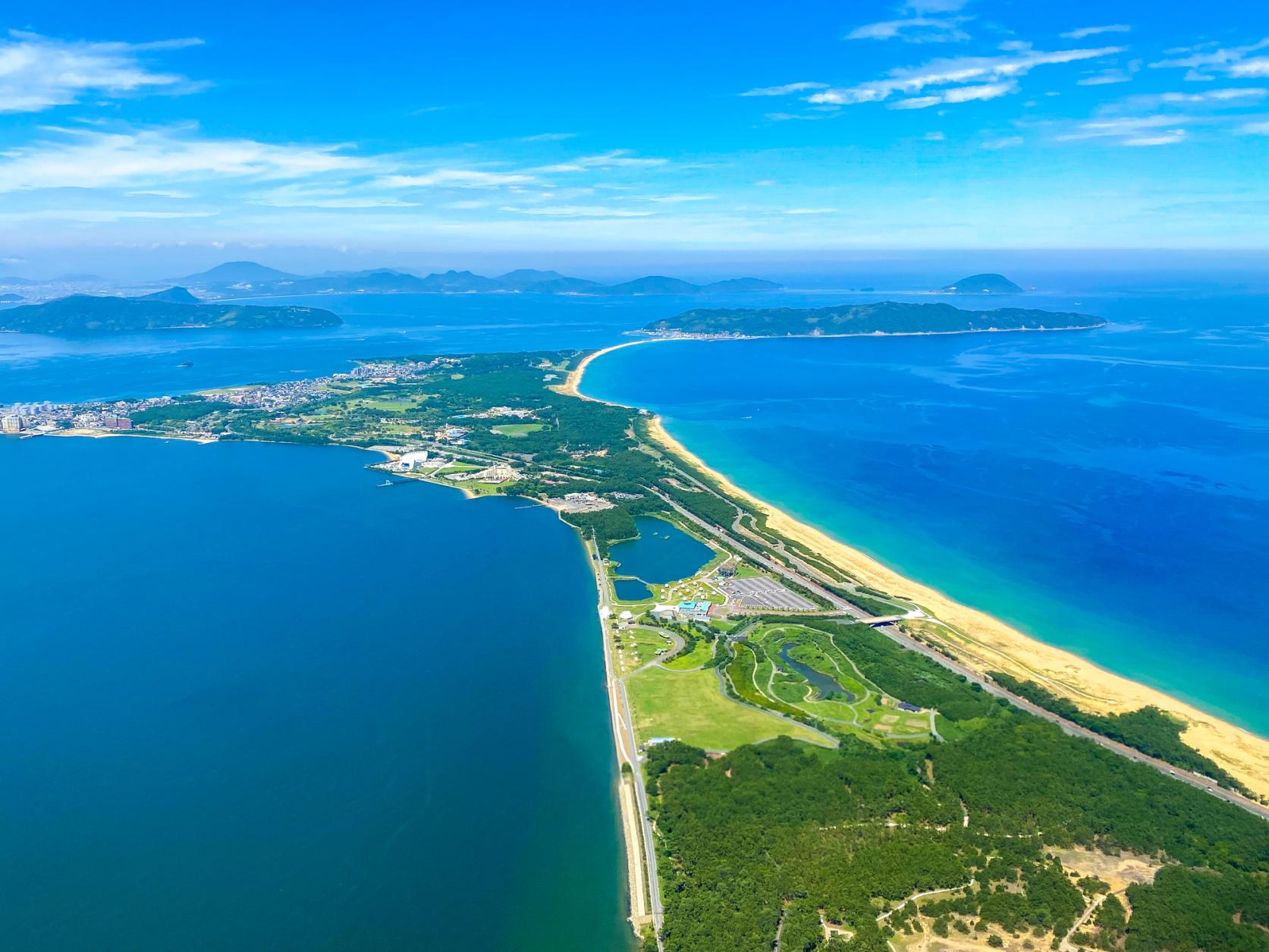
Umi no Nakamichi
-
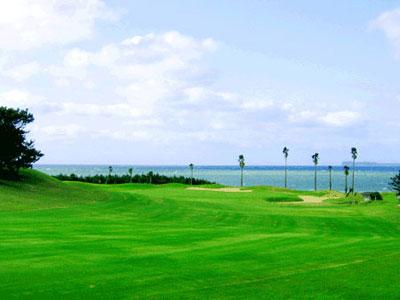
Saitozaki Seaside Country Club
-
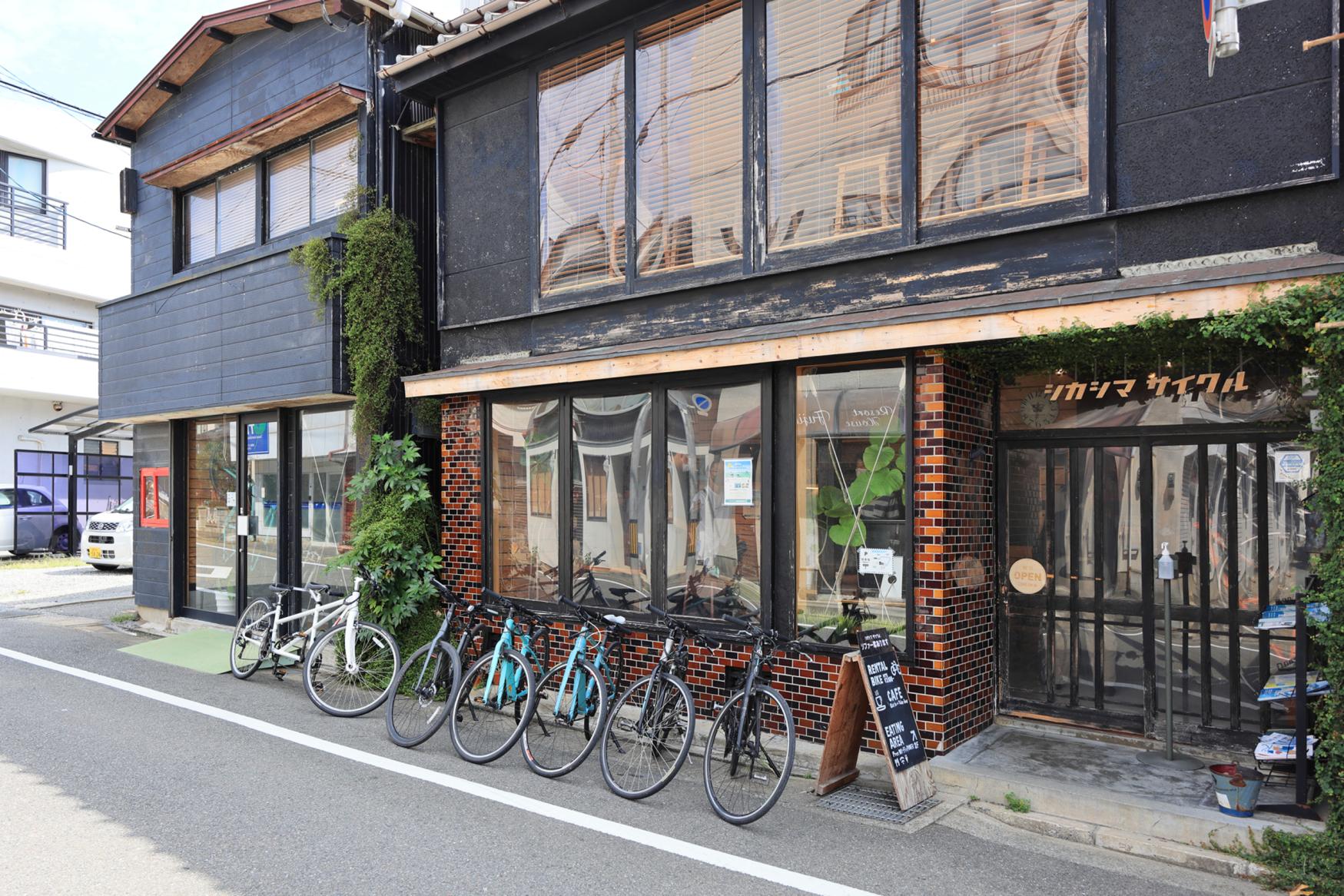
Shikashima Cycle
-
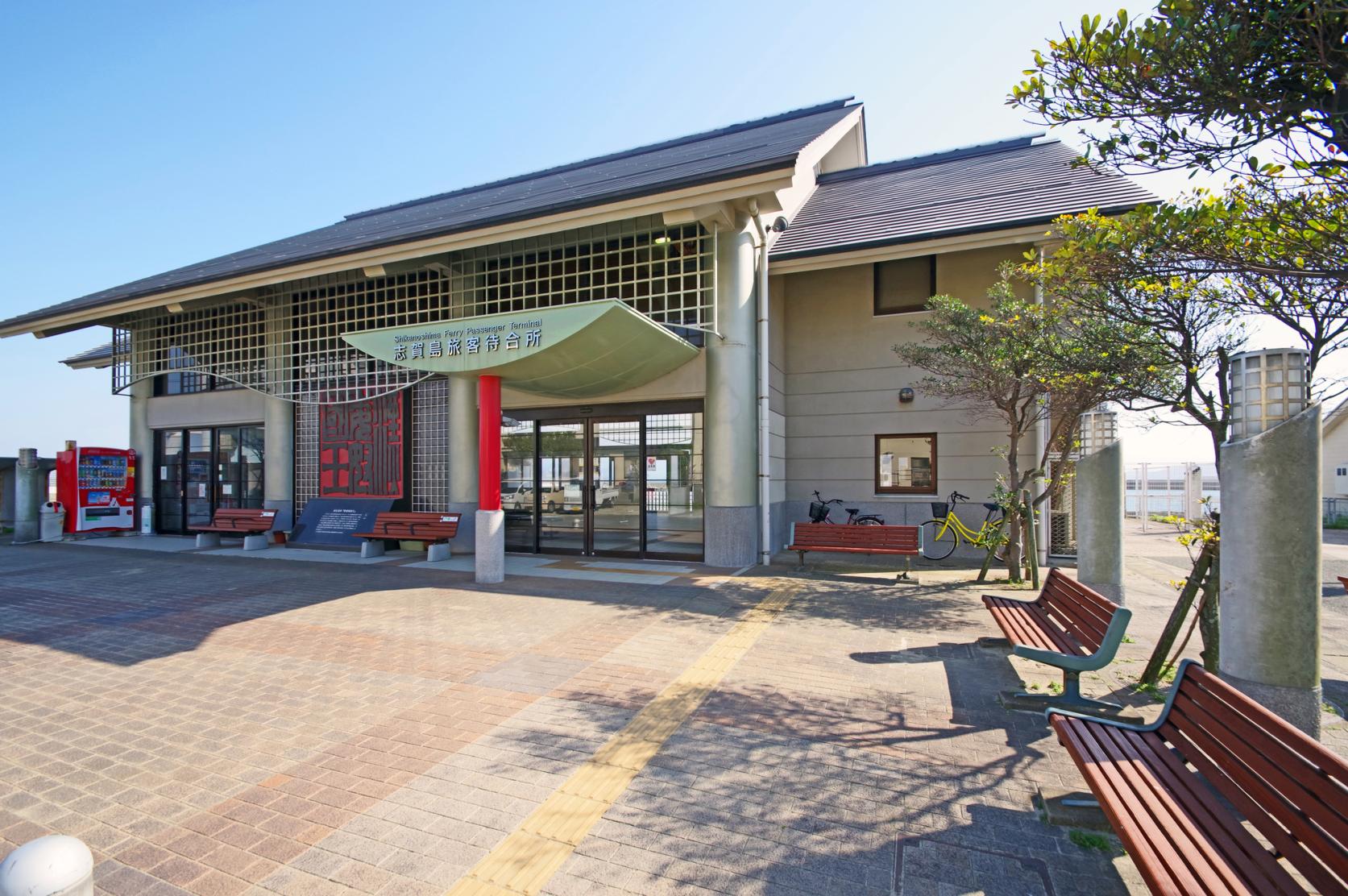
Fukuoka Municipal Ferry Service Shikanoshima waiting room
-
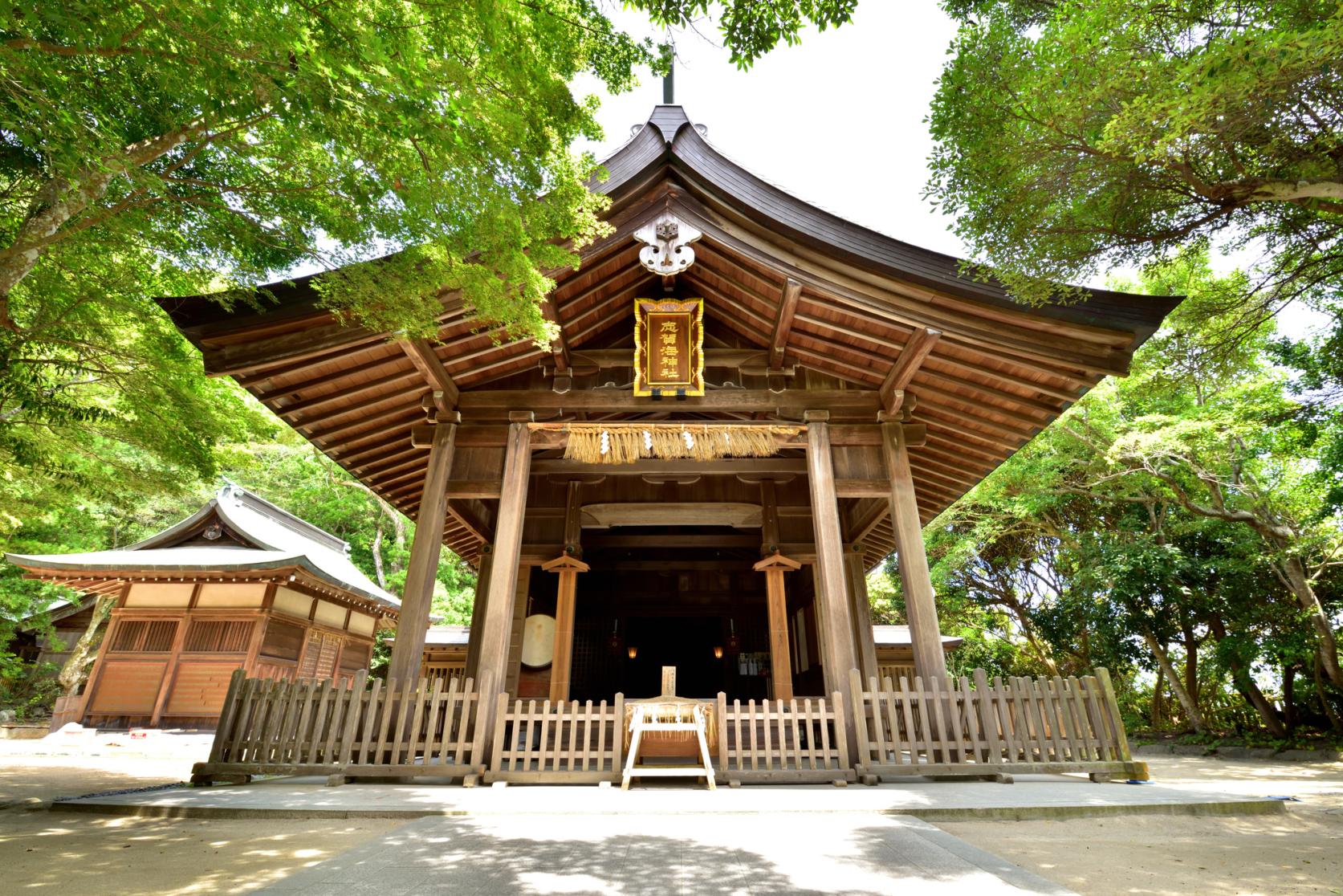
Shikaumi Shrine
-
Cycling Course at Gannosu Recreation Center
-

Shiomi Park
-
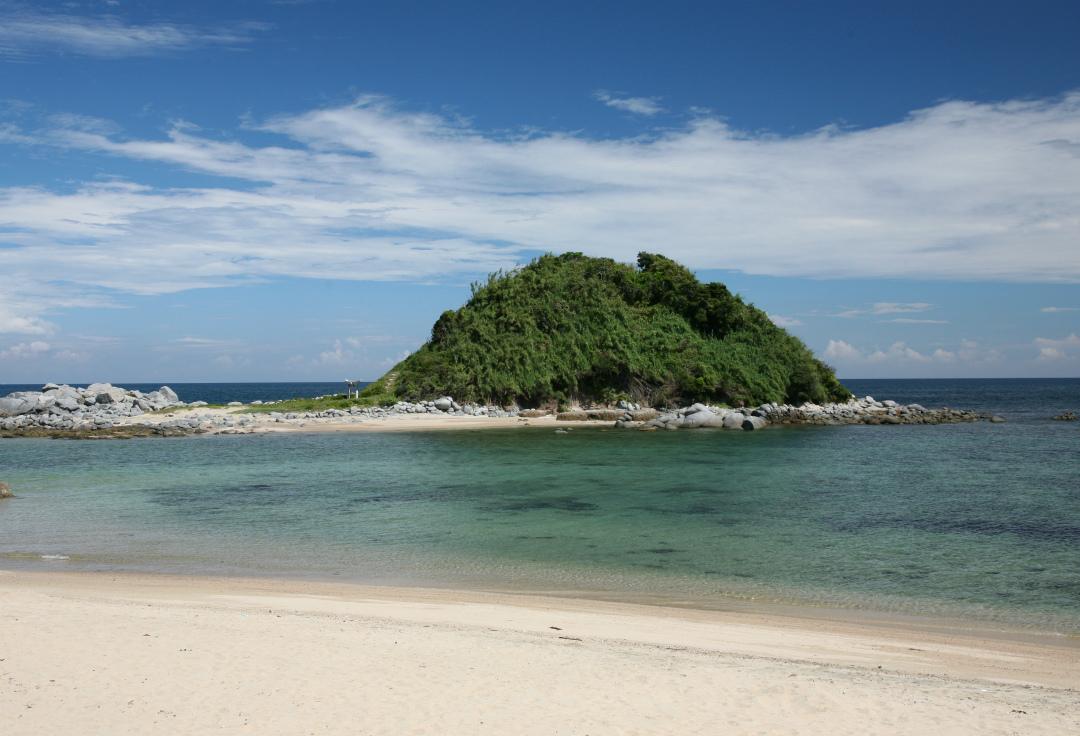
Shikaumi-jinja Shrine Okitsu-gu Shrine
-
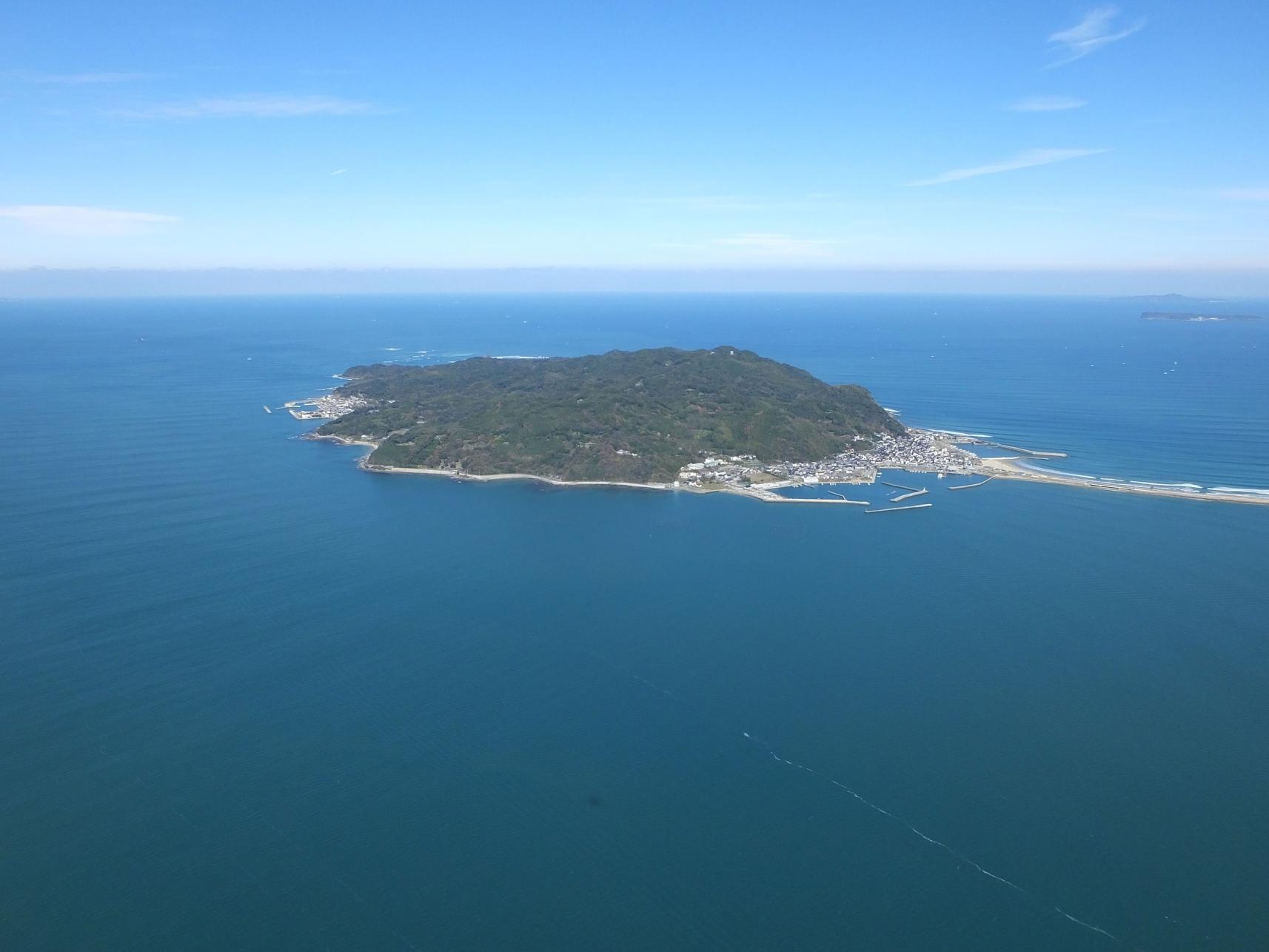
Shikanoshima Island
-
Kinin (Gold Seal) Park
-
Nokonoshima Island Park
-
Nokonoshima (islands)
-
Teriha Spa Resort Main Store
-
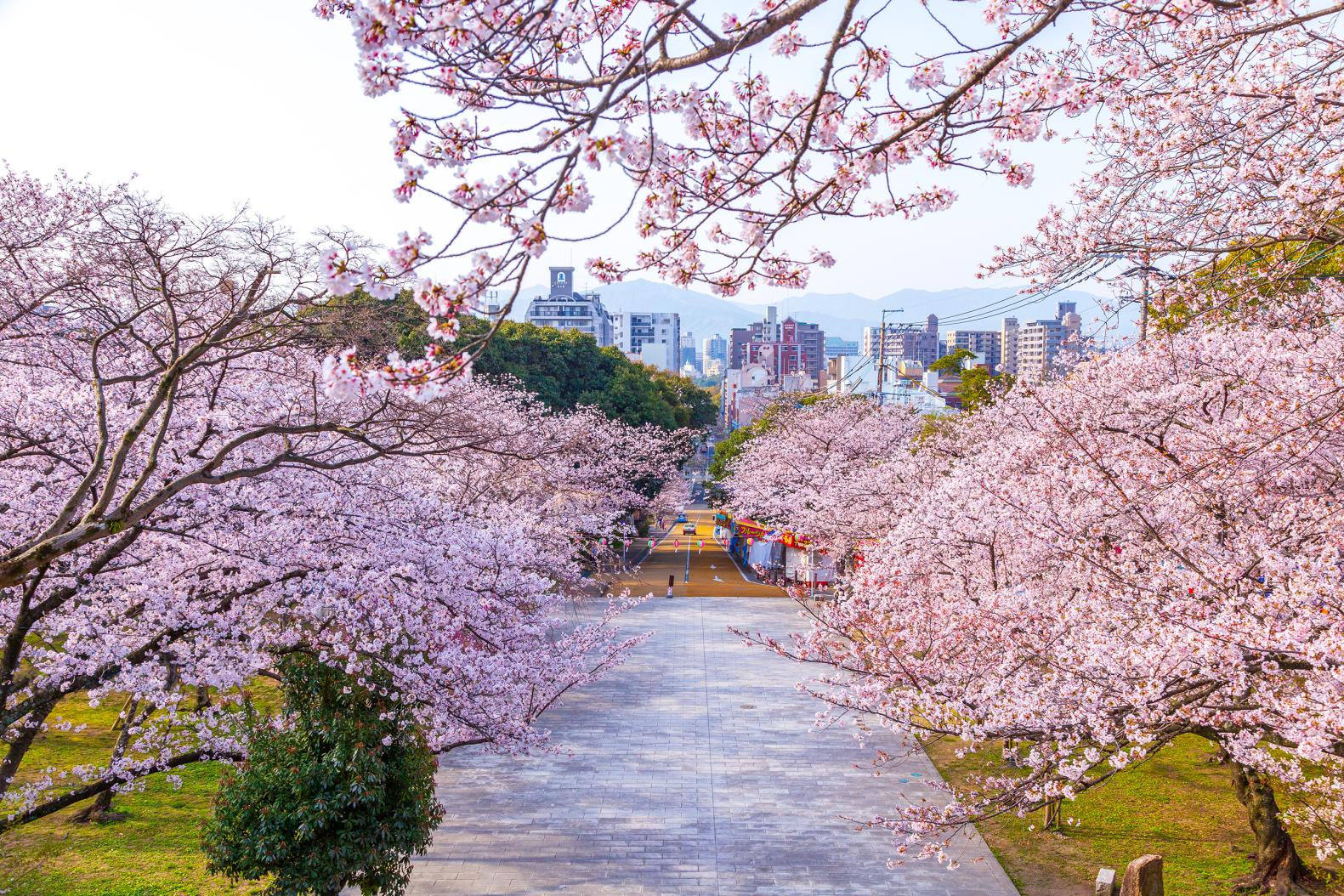
Nishi (West) Park
-
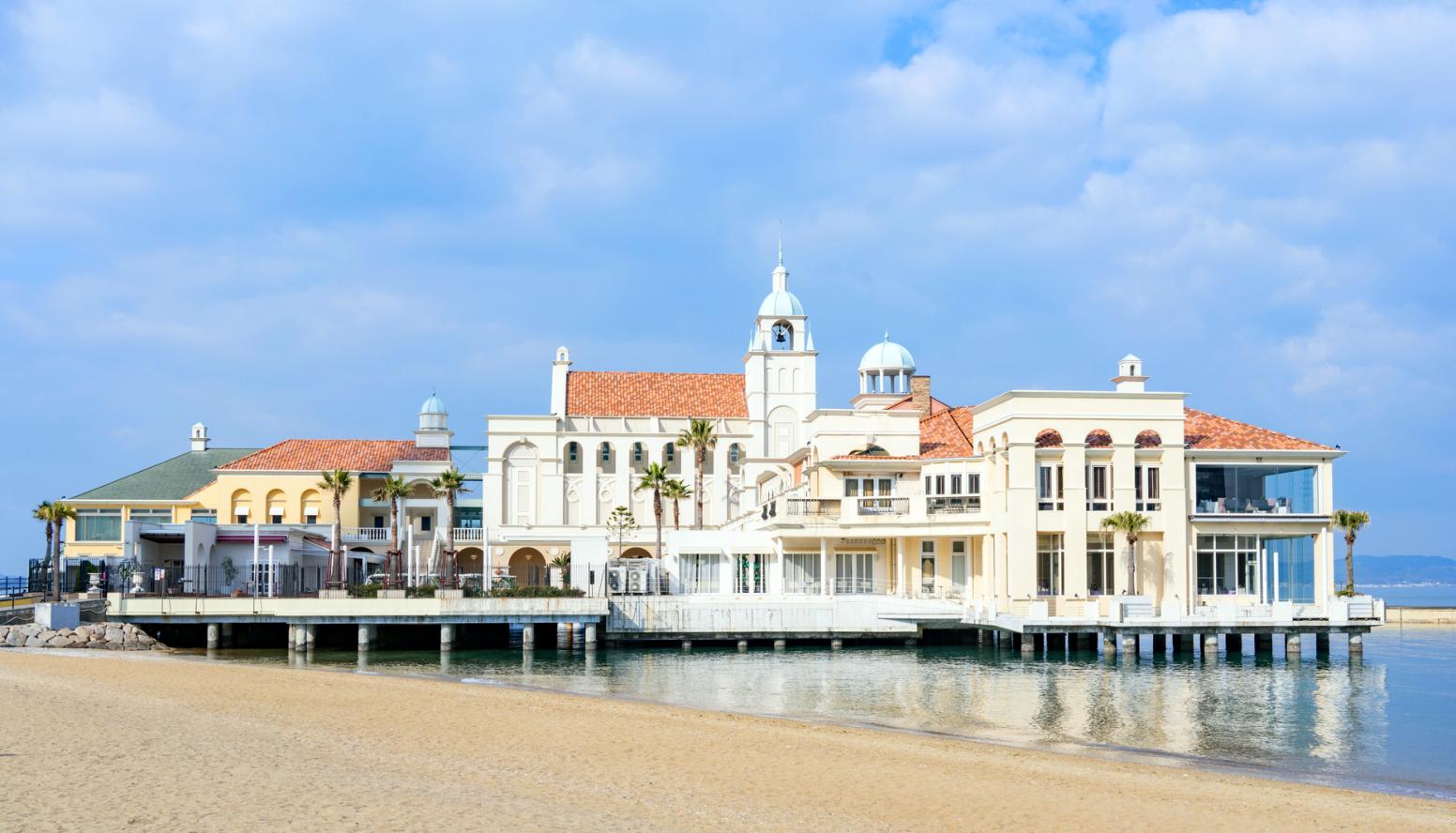
Marizon
-
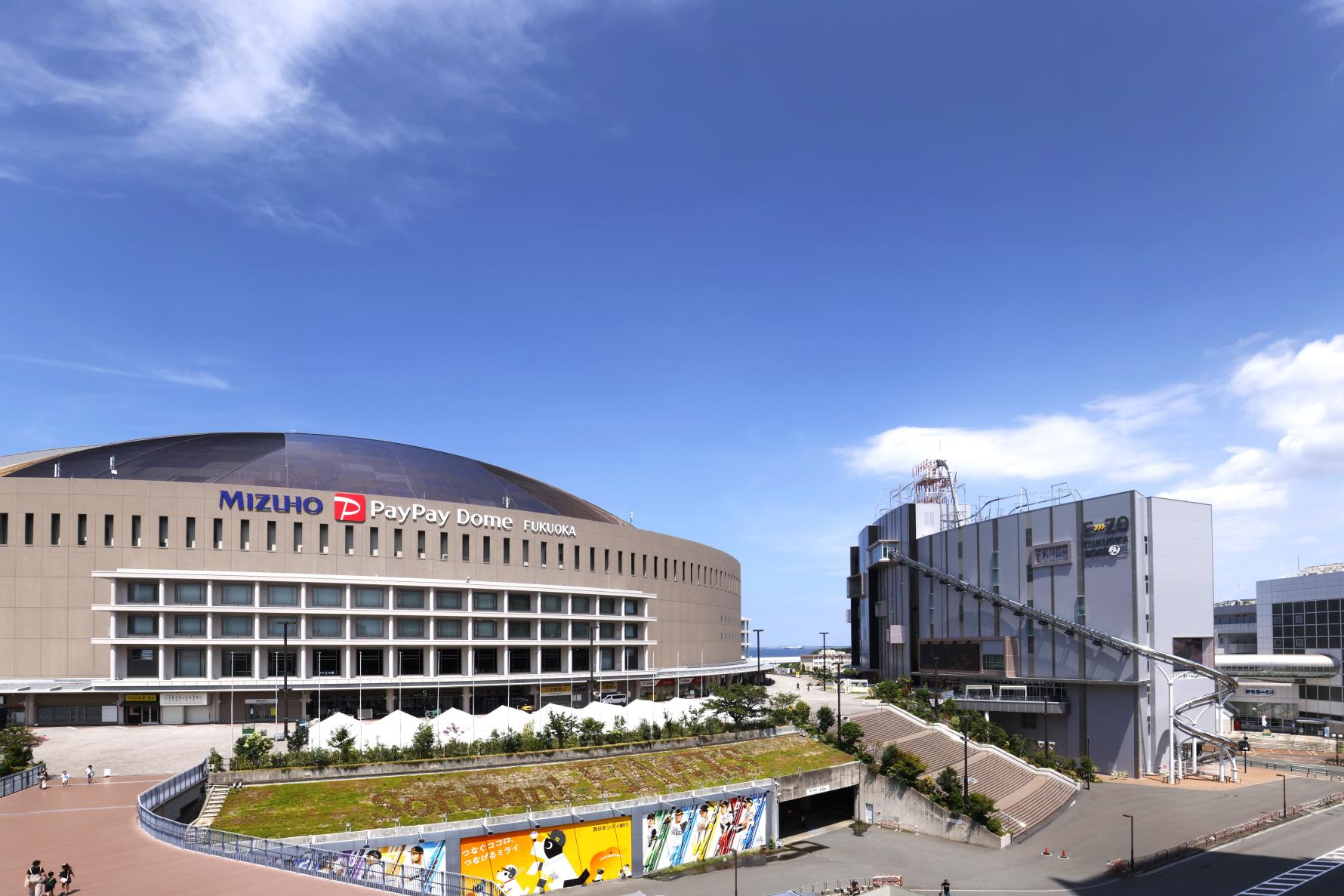
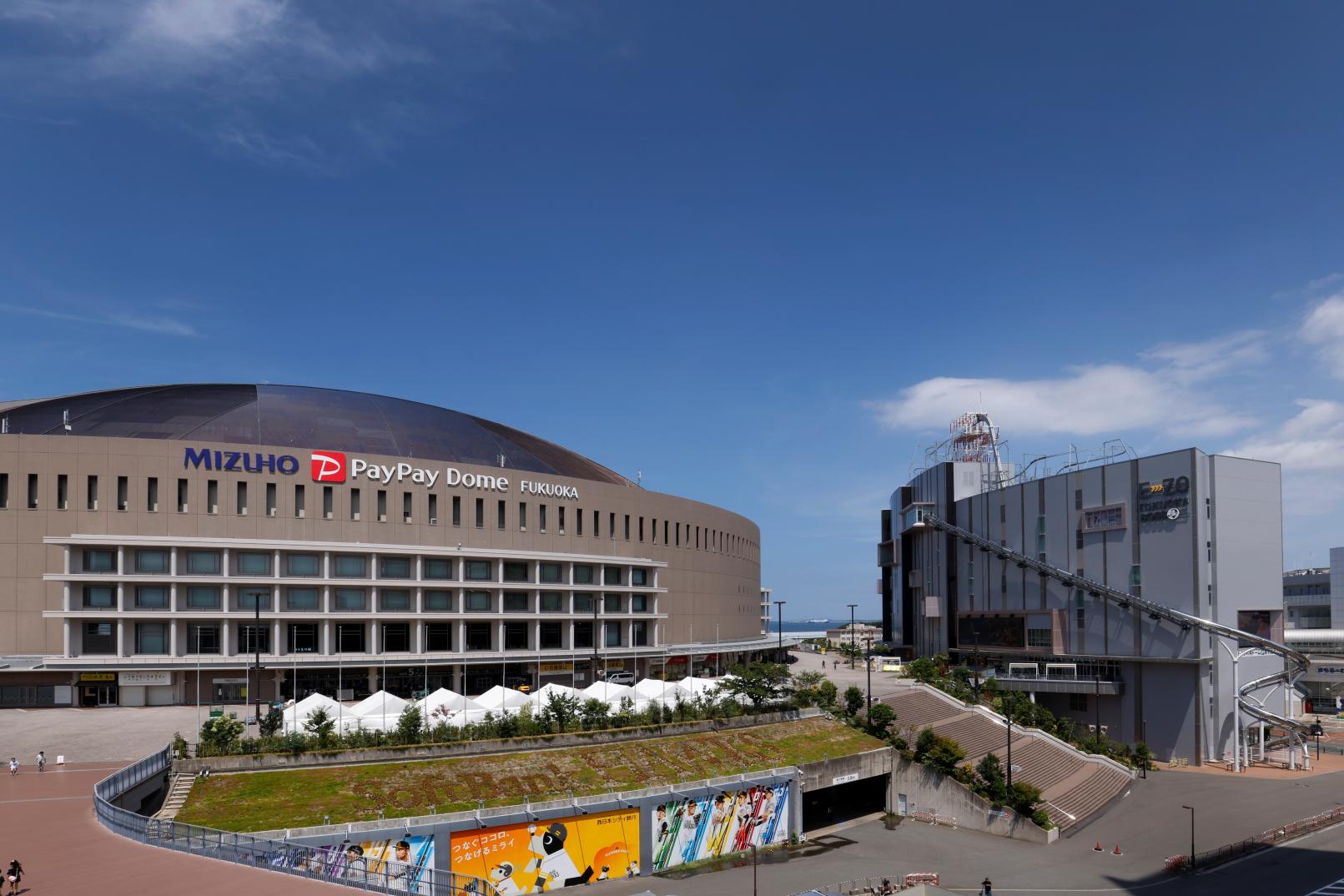
MIZUHO PayPay Dome FUKUOKA
-
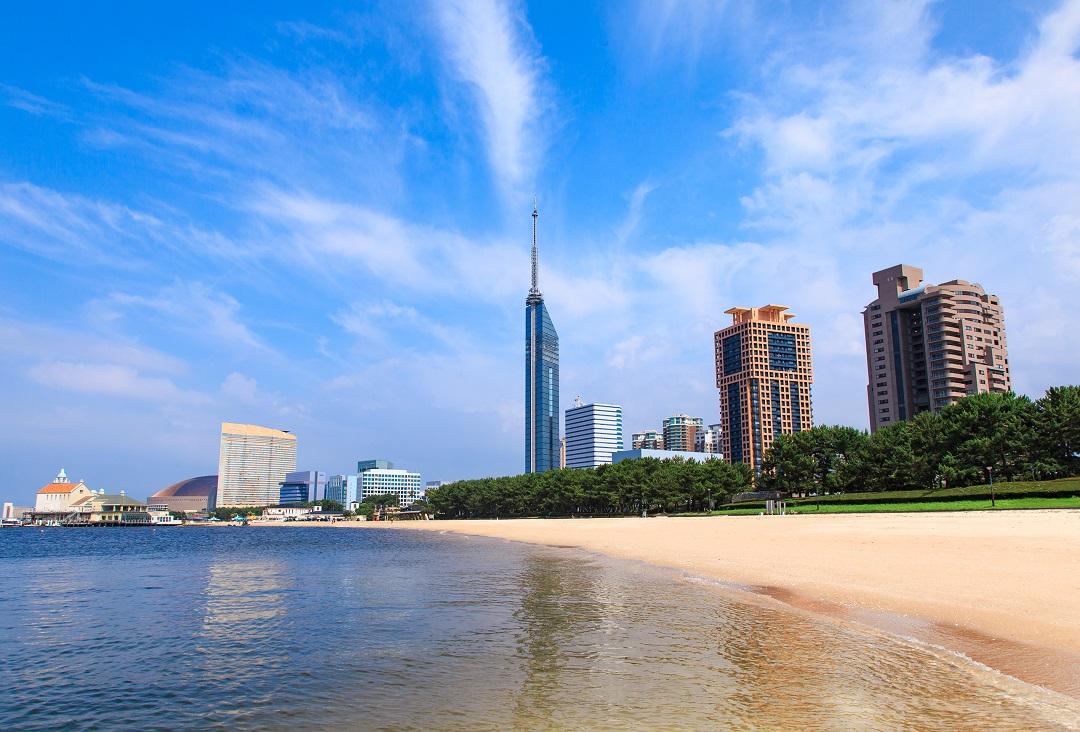
Seaside Momochi Beach Park
-
BOSS E・ZO FUKUOKA
 Related articles

 Model itineraries
Latest Most Read Articles
-
TIPS FOR TRAVELING IN FUKUOKA PREFECTURE
-
【2025】Your Guide to Fukuoka Prefecture's Best Fall Foliage Destinations
-
Fukuoka Has Onsen Too! A Complete Guide—from Day Trips to Famous Hot Springs
-
10 Recommended Dishes in Fukuoka! Discovering the Region’s Finest Foods
-
A Guide to Major Tourist Events and Festivals in Fukuoka Prefecture in February
-
【2026】Major September Events and Festivals in Fukuoka Prefecture
-
Admiring the Best Scenery that Nature Has to Offer in Itoshima
-
CYCLE FUKUOKA
-
How to experience Mojiko Retro in Kitakyushu
-
10 Recommended Shrines and Temples in Fukuoka!
-
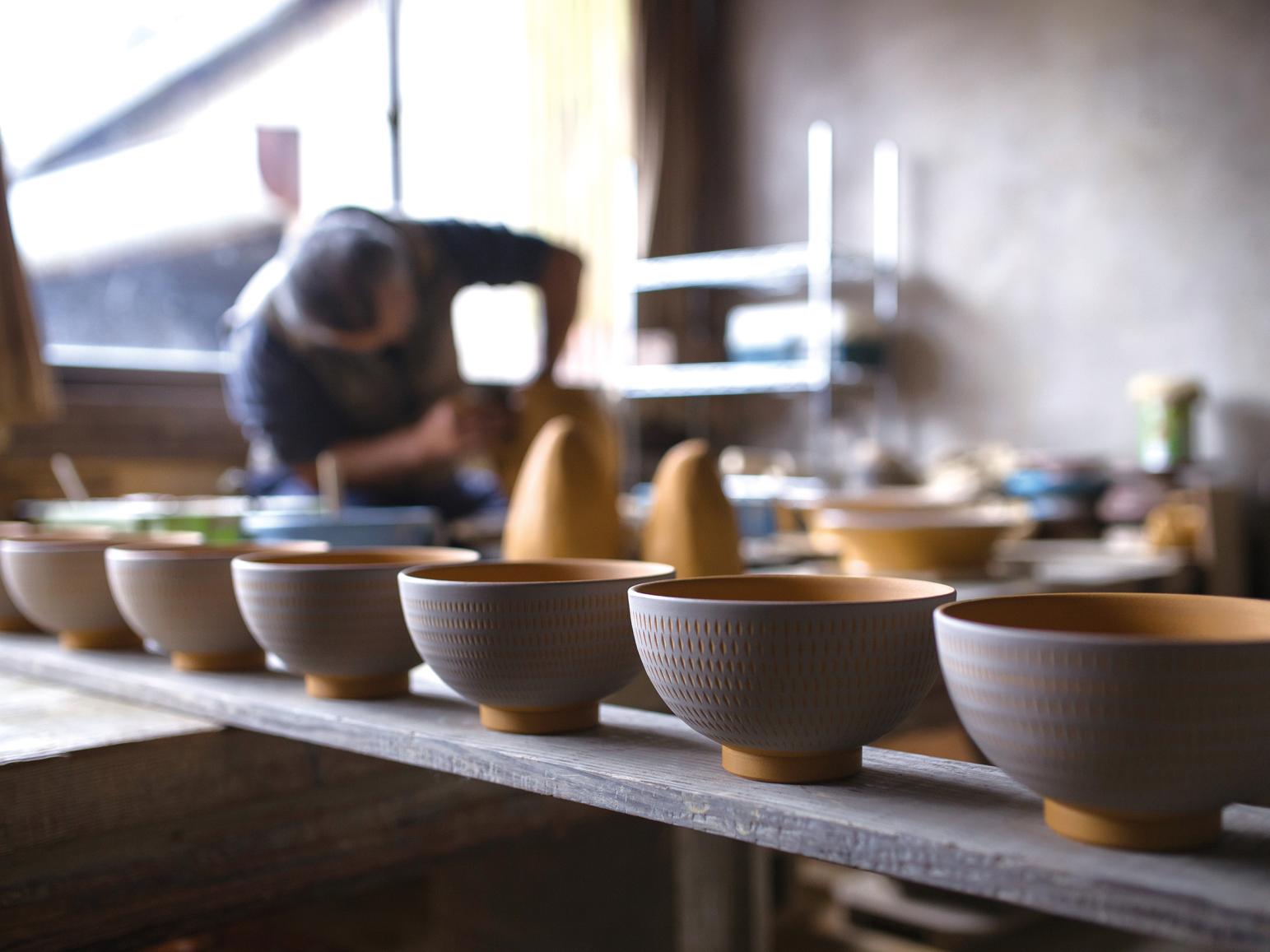
TRADITIONAL JAPANESE CRAFTS OF FUKUOKA ~Present Day Breath-taking Craftsmanship~
-
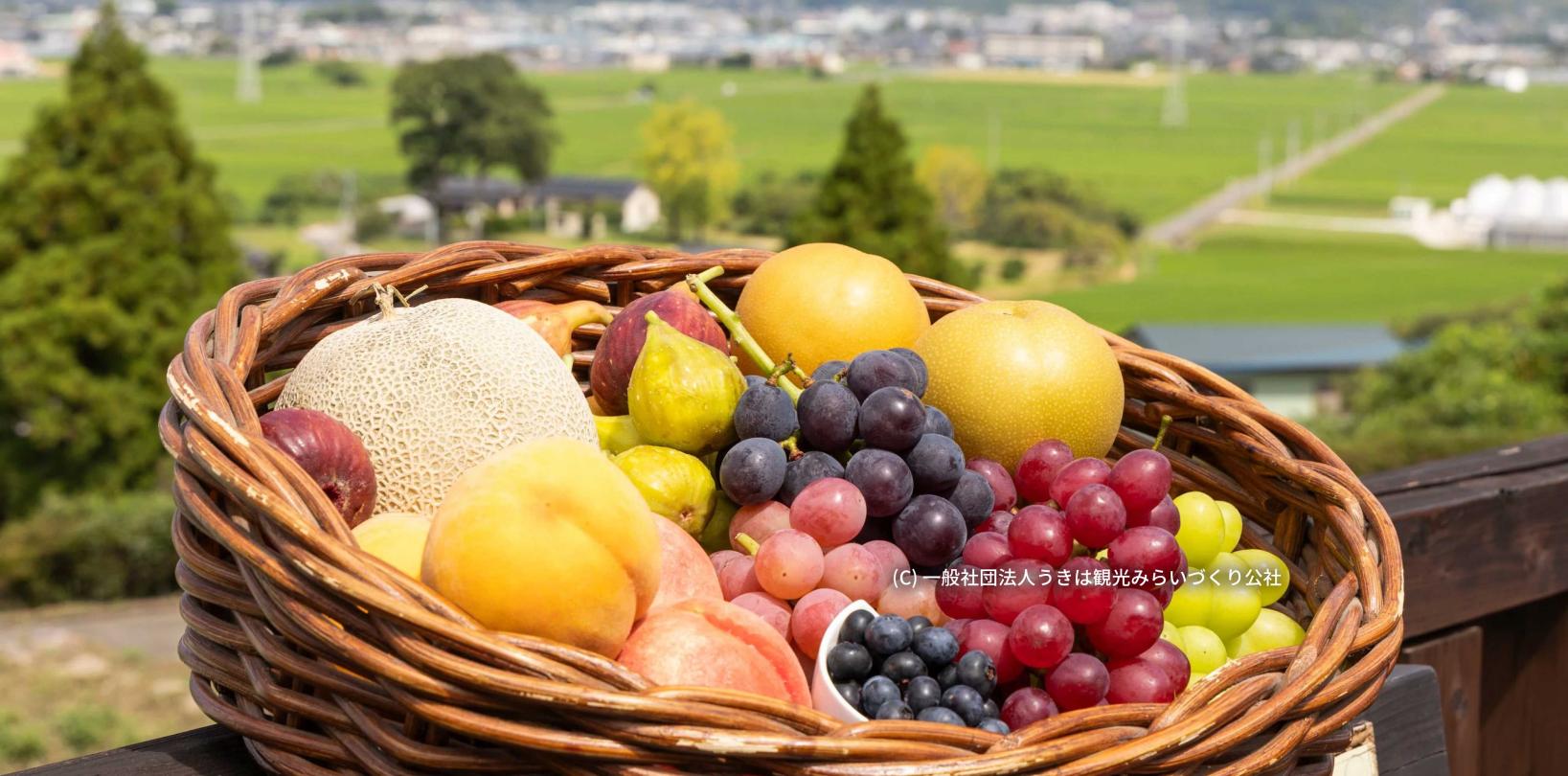
A guide to enjoying fruit picking in Fukuoka all year round! Featuring farms with all-you-can-eat options and attached cafes
-
![[2026] Strawberry Picking Spots in Fukuoka](https://www.crossroadfukuoka.jp/storage/special_features/49/responsive_images/9ZHgrqvQdpH8tM4IRF54DXu0aPBF3YGGkj5WOTGc__1673_1115.jpg)
[2026] Strawberry Picking Spots in Fukuoka
-

Kids will love it too! Recommended spots for family trips in Fukuoka Prefecture
-
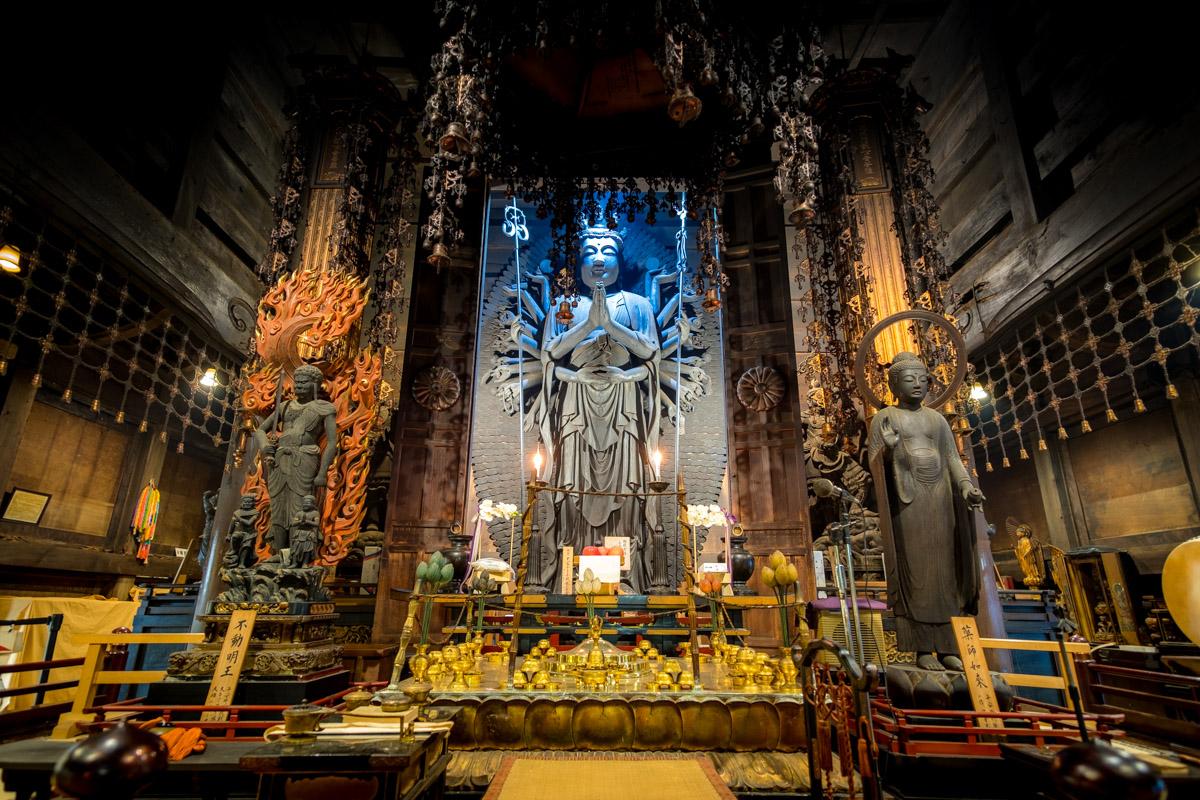
Raizan Sennyoji Daihioin Temple:
-
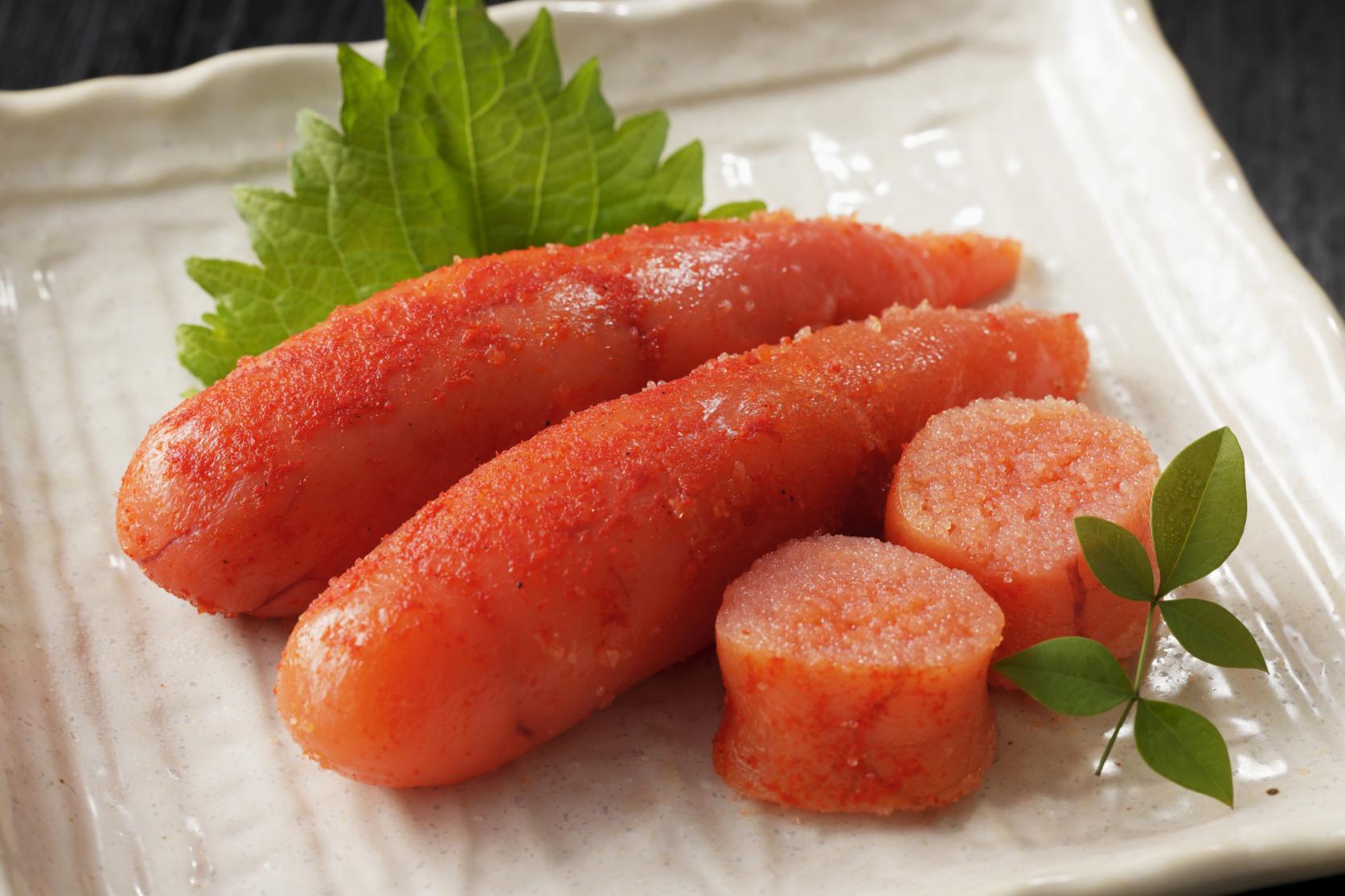
Fukuoka Prefecture is the place for enjoying the best mentaiko! Featuring lunch spots, hands-on experiences, and gifts
-
Here are the most popular souvenirs of Fukuoka that you won’t want to miss!
-
Local Life in Fukuoka City: Art, Beaches and Coffee
-
【2026】The Best Places to See Cherry Blossoms in Fukuoka
-
What is Kushida Shrine, the guardian shrine of Hakata? A comprehensive guide to highlights, goshuin, and access information
